1 June 1300: Margaret of France, Queen of England, goes into labour at Brotherton while hunting
George Alexander Cooke. 1817. Topographical and Statistical Description of the County of York. London: Brimmer and Co. for C. Cooke. Get it:
.Unedited excerpt
If an excerpt is used in the book, it will be shorter, edited and, where applicable, translated.
About six miles from Sherbourne is Brotherton, “where Thomas, son to King Edward I, was born; the Queen by chance labouring as she went en hunting.”-Leland. Near the church is a place of twenty acres, surrounded by a trench and wall, where stood the house in which the queen was delivered, and the tenants are bound to keep it surrounded by a wall of stone.


Comment
Comment
Is the wall still there? There must be something more in this.
Edward was then 60 years old, at least 40 years older than his bride. The wedding took place at Canterbury on 10 September 1299.[5] Margaret was never crowned due to financial constraints, being the first uncrowned queen since the Conquest. This in no way lessened her dignity as the king’s wife, however, for she used the royal title in her letters and documents, and appeared publicly wearing a crown even though she had not received one during a formal rite of investiture.[6]
Edward soon returned to the Scottish border to continue his campaigns and left Margaret in London, but she had become pregnant quickly after the wedding.[7] After several months, bored and lonely, the young queen decided to join her husband. Nothing could have pleased the king more, for Margaret’s actions reminded him of his first wife Eleanor, who had had two of her sixteen children abroad. In less than a year Margaret gave birth to a son, Thomas who was named after Thomas Becket, since she had prayed to him during her pregnancy. The next year she gave birth to another son, Edmund.
Something to say? Get in touch
Tags
Tags are assigned inclusively on the basis of an entry’s original text and any comment. You may find this confusing if you only read an entry excerpt.
- Brotherton (1) W/G ·
- Childbirth (5) W/G ·
- Edward I of England (4) W/G ·
- First War of Scottish Independence (4) W/G ·
- Hunting (10) W/G ·
- Margaret of France, Queen of England (1) W/G ·
- Pregnancy (9) W/G ·
- Thomas of Brotherton, 1st Earl of Norfolk (1) W/G ·
- West Riding of Yorkshire (150) W/G ·
Comment
Comment
Is the wall still there? There must be something more in this.
Edward was then 60 years old, at least 40 years older than his bride. The wedding took place at Canterbury on 10 September 1299.[5] Margaret was never crowned due to financial constraints, being the first uncrowned queen since the Conquest. This in no way lessened her dignity as the king’s wife, however, for she used the royal title in her letters and documents, and appeared publicly wearing a crown even though she had not received one during a formal rite of investiture.[6]
Edward soon returned to the Scottish border to continue his campaigns and left Margaret in London, but she had become pregnant quickly after the wedding.[7] After several months, bored and lonely, the young queen decided to join her husband. Nothing could have pleased the king more, for Margaret’s actions reminded him of his first wife Eleanor, who had had two of her sixteen children abroad. In less than a year Margaret gave birth to a son, Thomas who was named after Thomas Becket, since she had prayed to him during her pregnancy. The next year she gave birth to another son, Edmund.
Something to say? Get in touch
Similar
 29 December 1759: In an unusual case of genitive determinism, “Julius Caesar” Ibbetson – painter at first of ship’s hulls and later of landscapes – is delivered from his dead mother at Farnley Moor (Leeds)
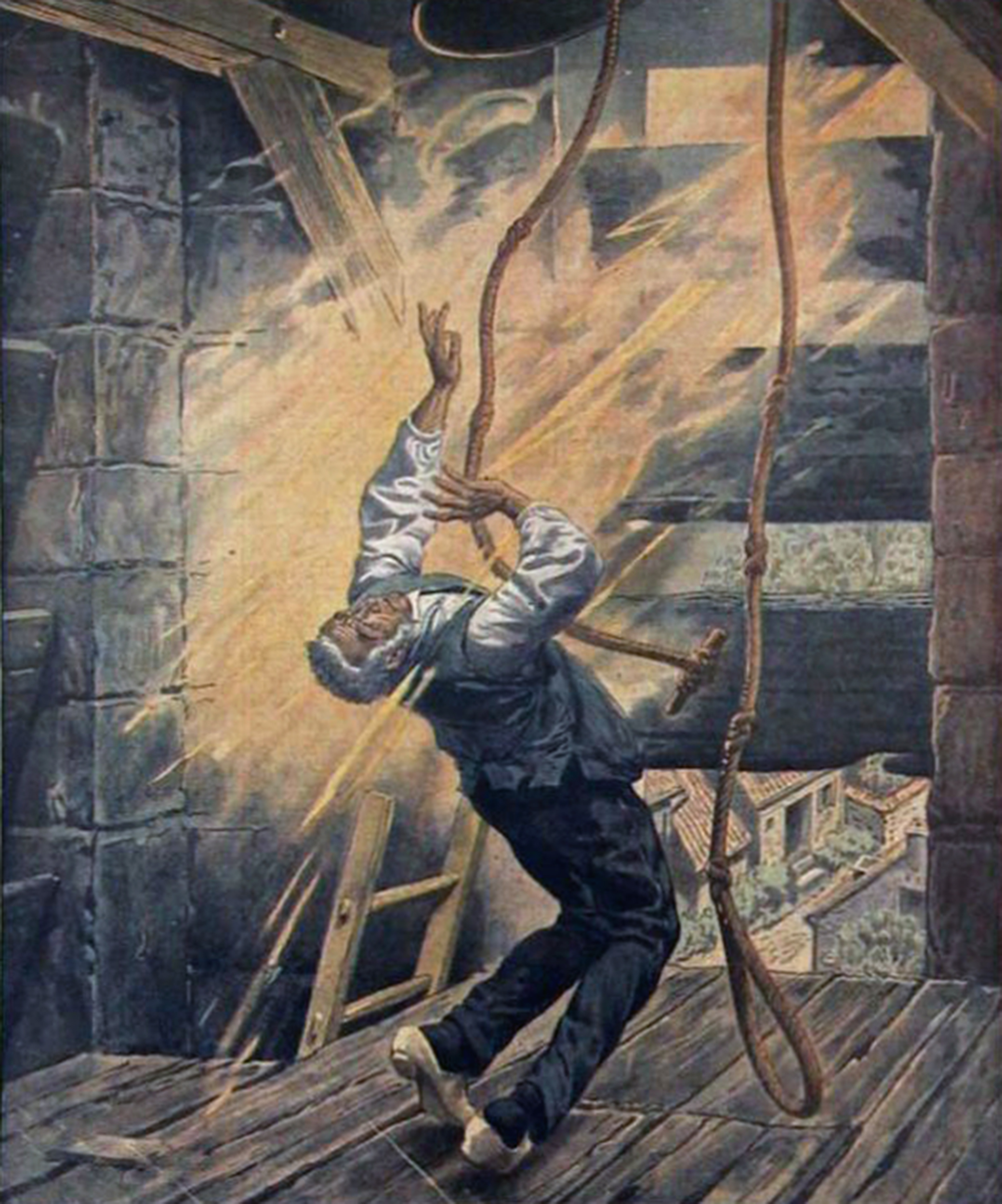 17 November 1812: A doggerel inscription at St. George’s, Doncaster, commemorates two sons of ringing master Robert Smith, one of whom died by his father’s bells
 19 August 1931: Lawrence Ennis of Dorman, Long & Co. of Middlesbrough, producer of steel and bridges, supervises closure of the arch on Sydney Harbour Bridge
Comment
Comment
Re this wave of unofficial strikes:
Major-General Sir Noel Holmes, chairman of the north-eastern division of the National Coal Board, in a statement yesterday on the strike at Grimethorpe Colliery, said that 140 coal-face workers, out of 2,682 employed at the pit, were not doing a fair day’s work. A committee representing management and workmen had decided that the stint for the 140 workers should be increased by 2ft., but they refused to accept its findings and came out on strike. The other coal-face workers came out in sympathy. “As much as I dislike mentioning this fact,” said Sir Noel Holmes, “it is only right to recall that at Grimethorpe since January 1, 1947, and before the present strike, there have been 26 sectional unofficial stoppages, which have lost 33,000 tons of coal to the nation. The present stoppage up to date represents a further loss of more than 40,000 tons.” (Times 1947/08/27)
Holmes’s Wikipedia article curiously doesn’t mention this phase of his career.
I’m guessing that the Welsh ex-Puritan authoritarian Communist Arthur Horner is the voice of the NUM in the above – see e.g. the Times for 9 September.
Interesting comments on the wartime coal boards by T.S. Charlton, colliery manager at Cortonwood:
The management of the collieries is in the hands of men trained primarily in management of mines and miners. They have a working knowledge of all the machinery available and how best it can be used, but the details of this side are left to the mechanical and electrical engineer. Labour costs are two-thirds of production costs, and therefore the handling and the best use of men are of the greatest importance to managers. Why it should have been decided that labour leaders should be good labour directors is, apart from the political issue, difficult to understand, unless it is on the old adage of “poacher turned gamekeeper.” Unless and until the production director has control of his labour side, I can see little hope of his schemes proving effective.
The miners have put forward suggestions to improve output, but they appear to do no more than improve the position of the miner. Can it be said that any suggestion already put forward by the men has put up the output figure? Why should it be assumed the men’s side of the pit production committees should be able to improve output in any way? Their training, inclinations, and very job depend upon their obtaining the best for their electors rather than for production.
(Charlton 1943/12/01)
Charlton was clearly a clever and capable man – it would be good to know more about him.
Something to say? Get in touch
Search
Subscribe/buy
Donate
Music & books
Place-People-Play: Childcare (and the Kazookestra) on the Headingley/Weetwood borders next to Meanwood Park.
Music from and about Yorkshire by Leeds's Singing Organ-Grinder.
 RSS feed
 Bluesky
 Extwitter