26 December 1570: Edmund Grindal, Puritan archbishop of York, orders the removal of rood-lofts (and their superstitious images), and the erection of pulpits
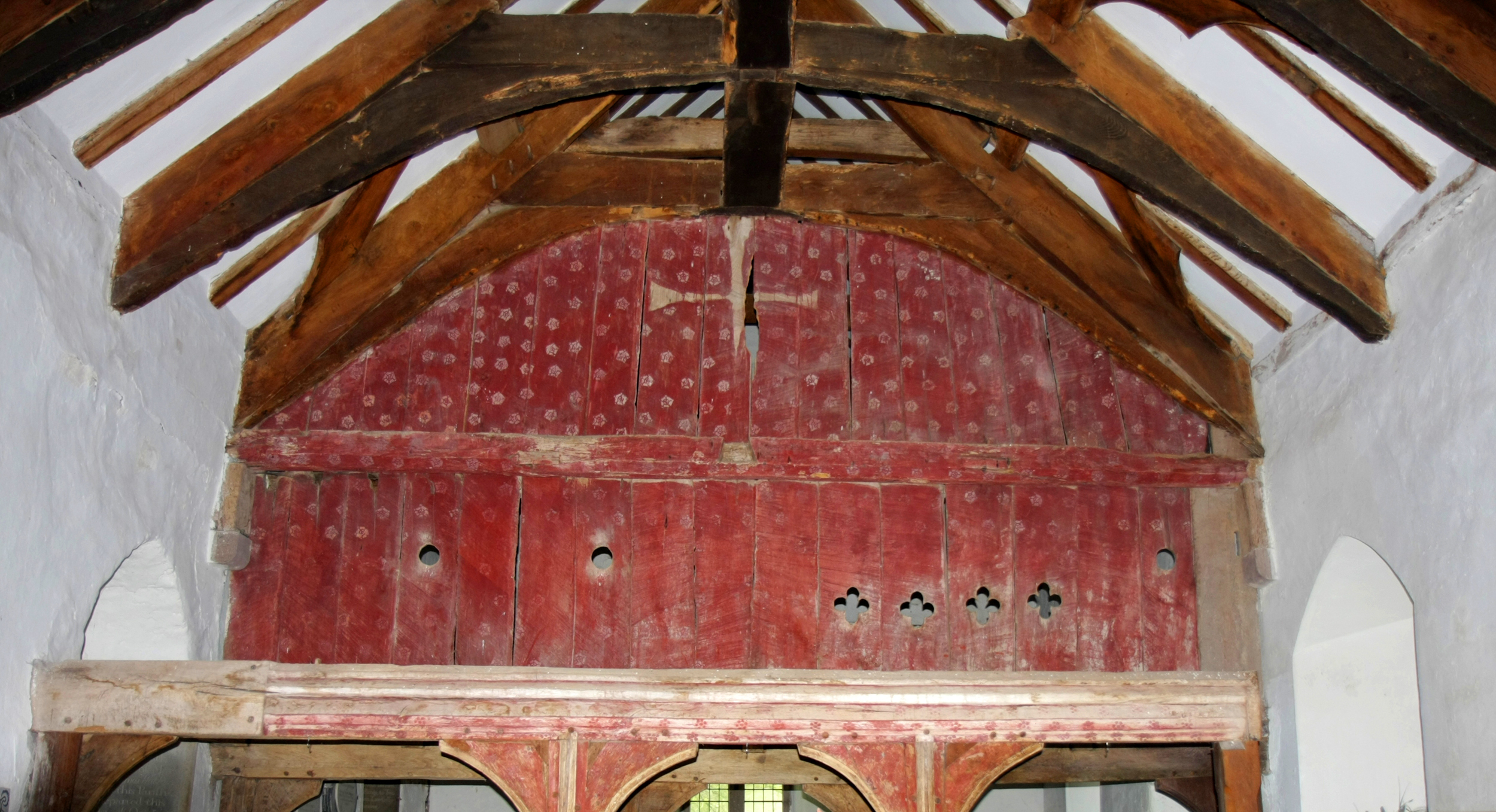
The 14th century rood loft and the upper part of the rood screen in St Ellyw’s Church, Llanelieu, Powys, Wales (Verbcatcher 2014).
John Strype. 1821. The History of the Life and Acts of the Most Reverend Father in God, Edmund Grindal, Vol. 1. Oxford: Clarendon Press. Get it:
.Unedited excerpt
If an excerpt is used in the book, it will be shorter, edited and, where applicable, translated.
Our Archbishop began his visitation this present year 1570, giving forth his commission, which bore date the 26th of December, at Bishopsthorp; issuing out commission then to the four Archdeacons of the diocese, and to the Bishop of Man, “for the pulling down and demolishing those sustentacula, commonly called roodlofts, placed at the door of the choir of every parish church, as footsteps and monuments of the old idolatry and superstition.” [For it seems those roodlofts (at least in many churches) were still remaining in these northern parts.] “And this in pursuance of the Queen’s injunctions, and an order of her Commissioners for ecclesiastical causes to that purpose.” To each of which commissions a schedule of three articles were annexed, (together with a printed copy of the foresaid orders, which was as followeth:
These articles following, we Edmonde, by the permission of God, Archbishop of York, Primate of England, and Metropolitan, do command and enjoin to be put in execution within the archdeaconry of York, by the Archdeacon of the same, or his Official, with speed and effect.
I. Imprimis, That the fourme and order appointed in the printed schedule hereunto annexed, for taking down roodlofts, be duly and precisely observed within the said archdeaconry, as well within places exempt as not exempt.
II. Item, That every Parson, Vicar, Curate, and other Mynister within the said archdeaconry, as well in places exempt as not exempt, when he readeth morning or evening prayer, or any part thereof, shall stand in a pulpit to be erected for that purpose, and turn his face to the people, that he may be the better heard, and the people the better edifyed; provided always, that when the churches are very small, it shall suffyce that the Mynister stand in his accustomed stall in the queere, so that a convenient desk or lecterne, with a rowme to turn his face toward the people, be there provyded, at the charges of the parish. The judgment and order whereof, and also the fourme and order of the pulpit, as before, in greater churches, we do refer unto the same Archdeacon, or his Official. Provyded also, that all the prayers and other service appointed for the mynistration of the holy Communion, be said and done at the communion table only.
III. Item, That every Mynister saying any publick prayers, or ministring the sacraments, or other rites of the Church, shall wear a comely surplesse with sleeves; and that the parish provyde a decent table, standing in a frame, for the communion table: and that no linnen clothes, called altar-clothes, and before used about masses, be laid upon the communion table; but that new be provyded, where provision hath not so been made afore.


Comment
Comment
At some stage in 1571, either on the eve of or during a metropolitan visitation to his wayward flock, Grindal issued yet more injunctions:
By the heeding of which injunctions one may observe, how old Popish customs still prevailed in these northern quarters, and therefore what need there was of this general visitation; as the frequent use and veneration of crosses, months minds, obits and anniversaries, the chief intent whereof was praying for the dead; the superstitions used in going the bounds of the parishes; morris dancers and minstrels coming into the church in service-time, to the disturbance of God’s worship, putting the consecrated bread into the receiver’s mouth, as among the Papists the Priest did the wafer; crossing and breathing upon the elements in the celebration of the Lord’s Supper, and elevation; oil, tapers, and spittle in the other sacrament of Baptism; pauses and intermissions in reading the services of the Church; praying Ave-Maries and Pater-nosters upon beads; setting up candles in the churches to the Virgin Mary on Candlemas-day, and the like.
Something to say? Get in touch
Tags
Tags are assigned inclusively on the basis of an entry’s original text and any comment. You may find this confusing if you only read an entry excerpt.
- Anglicanism (3) W/G ·
- Archbishop of York (18) W/G ·
- Baptism (6) W/G ·
- Beating the bounds (1) W/G ·
- Beeldenstorm (1) W/G ·
- Bishop of Sodor and Man (1) W/G ·
- 📌Bishopthorpe Palace (4) W/G ·
- 📌Bishopthorpe (6) W/G ·
- Calvinism (8) W/G ·
- Candlemas (3) W/G ·
- Catholic Church (57) W/G ·
- Church architecture (2) W/G ·
- Church of England (94) W/G ·
- Elizabeth I (1533-1603) (15), ruled 1558-1603, established an English Protestant church W/G ·
- Grindal, Edmund (ca. 1519-1583) (5), Calvinist Puritan, refugee from Mary, then under Elizabeth I successively Bishop of London, Archbishop of York, Archbishop of Canterbury W/G ·
- Mary, mother of Jesus (2) W/G ·
- Month’s mind (1) W/G ·
- Prayer beads (1) W/G ·
- Pulpit (2) W/G ·
- Requiem (1) W/G ·
- Rood screen (1) W/G ·
- Sacramental bread (2) W/G ·
- 📌York (165) W/G ·
Comment
Comment
At some stage in 1571, either on the eve of or during a metropolitan visitation to his wayward flock, Grindal issued yet more injunctions:
By the heeding of which injunctions one may observe, how old Popish customs still prevailed in these northern quarters, and therefore what need there was of this general visitation; as the frequent use and veneration of crosses, months minds, obits and anniversaries, the chief intent whereof was praying for the dead; the superstitions used in going the bounds of the parishes; morris dancers and minstrels coming into the church in service-time, to the disturbance of God’s worship, putting the consecrated bread into the receiver’s mouth, as among the Papists the Priest did the wafer; crossing and breathing upon the elements in the celebration of the Lord’s Supper, and elevation; oil, tapers, and spittle in the other sacrament of Baptism; pauses and intermissions in reading the services of the Church; praying Ave-Maries and Pater-nosters upon beads; setting up candles in the churches to the Virgin Mary on Candlemas-day, and the like.
Something to say? Get in touch
Similar
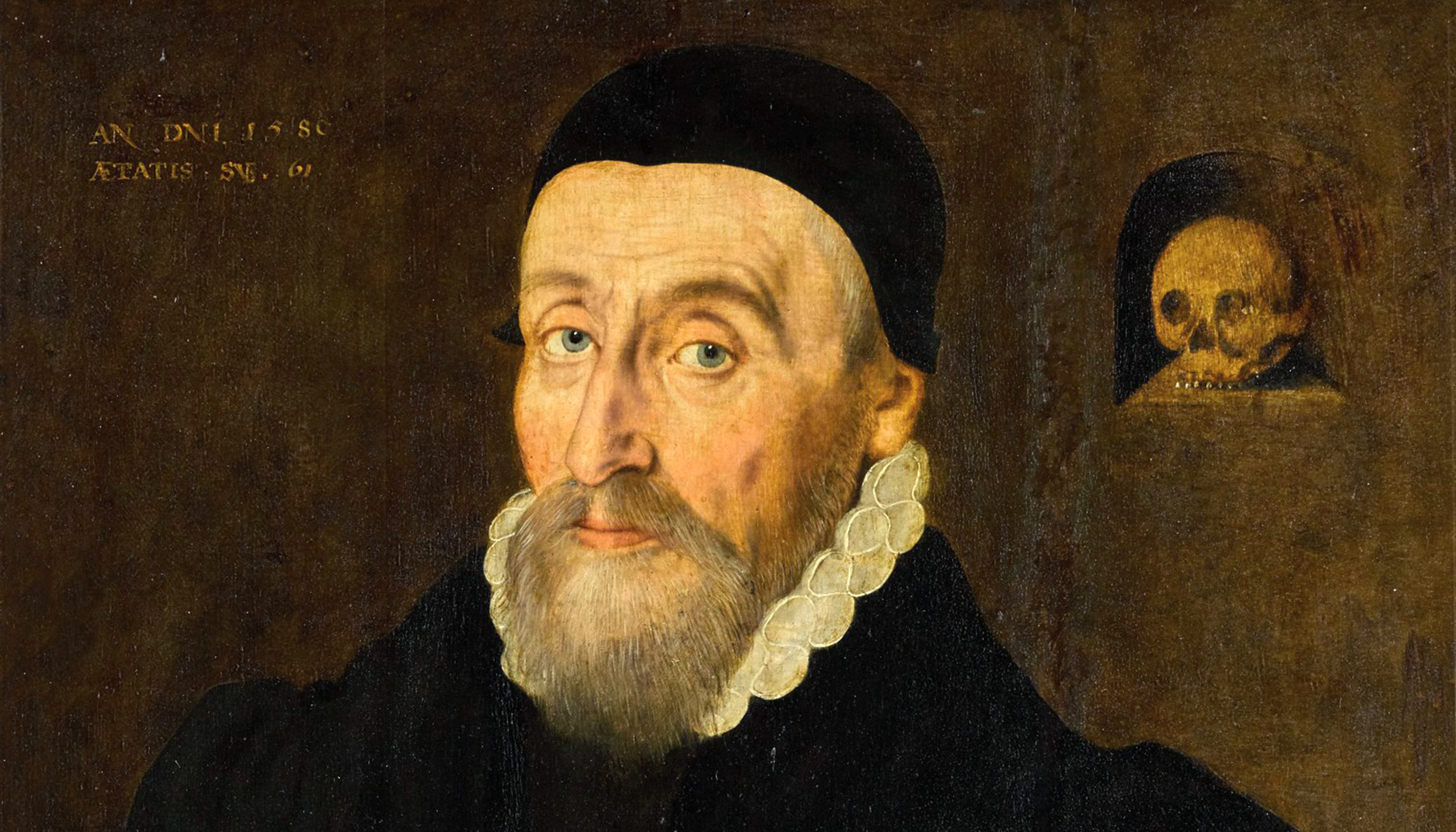 29 August 1570: On arriving in Yorkshire, Archbishop Grindal declares war on bloody-minded folk-Catholicism
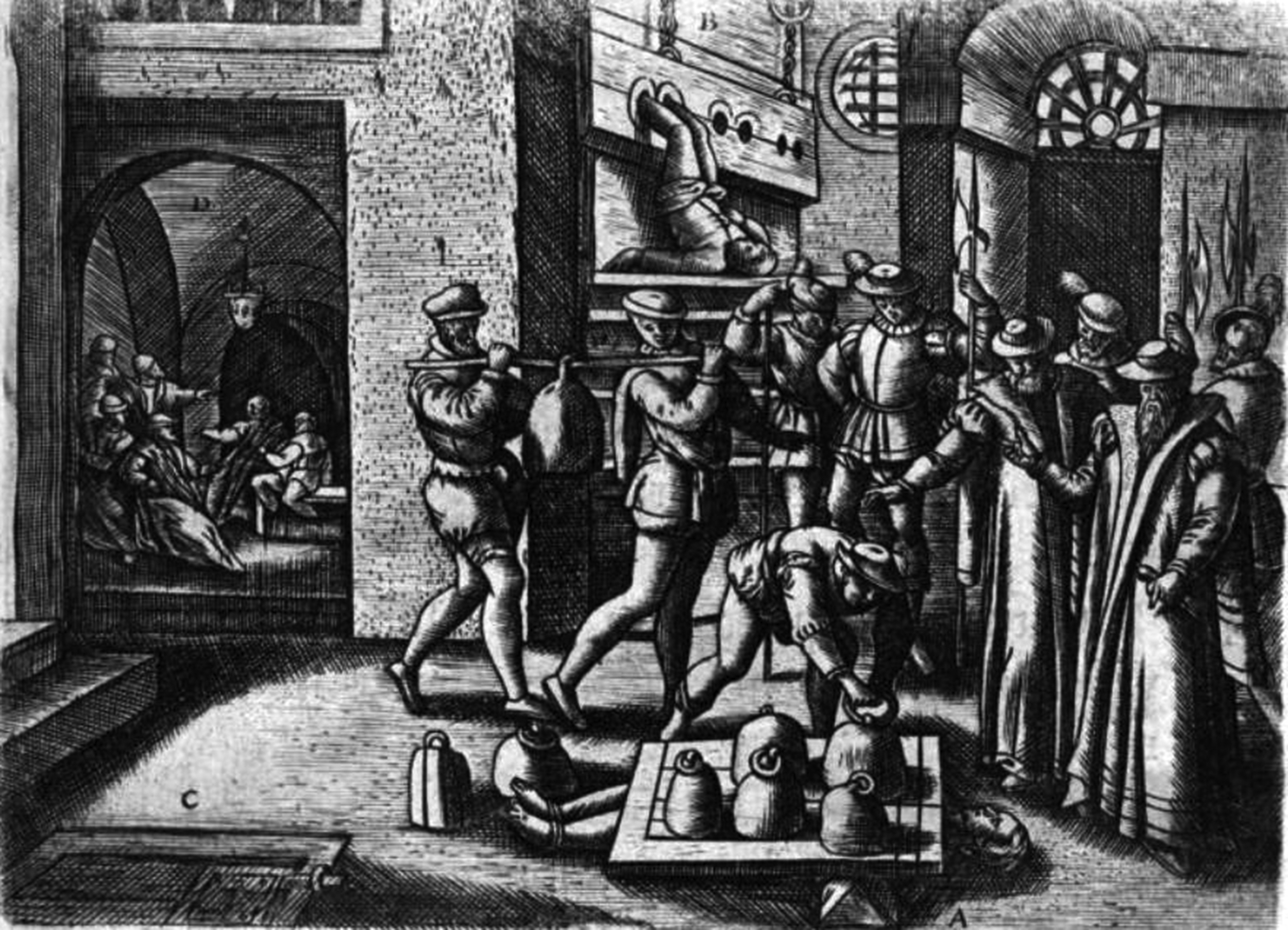 15 March 1586: Offered a jury acquittal, Margaret Clitherow of York, concealer of priests, chooses martyrdom and is crushed under her own front door
Comment
Comment
This is a Jesuit hagiography, and I don’t know to what extent the source reflects the substance of Dolben’s remarks. Wikipedia takes a more benevolent view of him:
In the aftermath of the Popish Plot, Dolben tried many of the accused, including Sir Thomas Gascoigne, 2nd Baronet and Sir Miles Stapleton; due to his impartial trait of pointing out inconsistencies in the prosecution’s evidence, both were acquitted.[4] At the trial of Mary Pressicks, who was accused of saying that “We shall never be at peace until we are all of the Roman Catholic religion”, Dolben saved her life by ruling that the words, even if she did speak them, could not amount to treason.[5] As a result of this and his opposition to Charles II’s removal of the City Corporation’s writs, he was “according to the vicious practise of the time” dismissed on 18 April 1683. Again working as a barrister, Dolben prosecuted Algernon Sidney in November 1683 before being reinstated as a Justice of the King’s Bench on 18 March 1689. Records from 29 April show him “inveighing mightily against the corruption of juries [during the Glorious Revolution]”,[1] and he continued sitting as a Justice until his death from an apoplectic fit on 25 January 1694,[6] and was buried in Temple Church.
Vulgar almanacs glory in death sentences and executions, but I suppose one (1) is called for.
Something to say? Get in touch
Search
Subscribe/buy
Donate
Music & books
Place-People-Play: Childcare (and the Kazookestra) on the Headingley/Weetwood borders next to Meanwood Park.
Music from and about Yorkshire by Leeds's Singing Organ-Grinder.
 RSS feed
 Bluesky
 Extwitter