29 September 1704: Deeds, conveyances, and wills in the West Riding must henceforth be publicly registered in Wakefield to be considered valid
William Nelson. 1707. The office and authority of a justice of peace, 2nd Ed. London: Charles Harper. Get it:
.Unedited excerpt
If an excerpt is used in the book, it will be shorter, edited and, where applicable, translated.
This part of Yorkshire is the chiefest place in the north of England for woollen manufacture, and most of the traders in wool there are freeholders; but because there was no register, they found it difficult to borrow money on land securities, which though really good, yet did not satisfy the lenders, therefore a law was made for a public register to be kept at Wakefield, in which a memorandum of all deeds and wills, were to be registered at the election of the party, and those which were not registered should be accounted fraudulent.

Comment
Comment
Titles of this act, the succeeding one in 1707, also applicable to the West Riding, and similar legislation passed for the North and East Ridings, taken from the consolidating act of 1884:
- 2 & 3 Anne, c. 4. An Act for the publick registring of all deeds, conveyances, and wills that shall be made of any honors, manors, lands, tenements, or hereditaments within the west riding of the county of York after the nine-and-twentieth day of September one thousand seven hundred and four.
- 6 Anne, c. 20. An Act for inrollments of bargains and sales within the west riding of the county of York in the register office there lately provided, and for making the said register more effectual.
- 6 Anne, c. 62. An Act for the publick registring of all deeds, conveyances, wills, and other incumbrances that shall be made of or that may affect any honors, manors, lands, tenements, or hereditaments within the east riding of the county of York or the town and county of the town of Kingston-upon-Hull after the nine-and-twentieth day of September one thousand seven hundred and eight, and for the rendring the register in the west riding more complete.
- 8 Geo. II. c. 6. An Act for the publick registring of all deeds, conveyances, wills, and other incumbrances that shall be made of or that may affect any honors, manors, lands, tenements, or hereditaments within the north riding of the county of York after the nine-and-twentieth day of September one thousand seven hundred and thirty-six.
(HMG 1884)
The act apparently says that Wakefield was chosen as “the nearest market town to the centre or middle of the said West Riding” (Wakefield Town Council 1864).
The West Riding Registry of Deeds was not the oldest, “the Bedford Level registry … having been established after the Bedford Level Corporation charter of 1637 and the act of parliament of 1649, and recognised as a registry, if not before, at any rate in 1663, when the governor and company were constituted commissioners of sewers for the Level.”
Elections were held, and “competition for the appointment was very keen, for the registrar took all fees after paying the modest administrative expenses, which were very small in proportion to the gross receipts,” although, election expenses may have approached or exceeded income.
In 1817 it is reported that “a considerable part of the hall was literally crowded with beauty and fashion, which contributed not a little to enliven and adorn the scene.” In 1842,
During the whole of the morning of the first day, the officers had experienced great difficulty in resisting the pressure of votes endeavouring to reach the poll-booths, and at about half-past two the force became so great as to break down the barriers which had been erected, and the body of voters borne along by those behind were driven forward to the tables, which were upset and broken in all directions. The election was now carried on amid a scene of violence seldom surpassed (Tate 1944).
I haven’t yet read Jean Howell’s Deeds registration in England: a complete failure? (Howell 1999/07).
Something to say? Get in touch
Tags
Tags are assigned inclusively on the basis of an entry’s original text and any comment. You may find this confusing if you only read an entry excerpt.
- Anne I (1665-1714) (1), from 1702 Queen of England, Scotland, and Ireland, and then, from the Acts of Union in 1707, of Great Britain and Ireland W/G ·
- Conveyancing (1) W/G ·
- Deeds registration (3) W/G ·
- East Riding of Yorkshire (67) W/G ·
- 📌Kingston upon Hull (74) W/G ·
- Land (economics) (1) W/G ·
- Land management (2) W/G ·
- North Riding of Yorkshire (51) W/G ·
- Northallerton (6) W/G ·
- 📌Wakefield (37), cathedral city on the River Calder in the West Riding/West Yorkshire W/G ·
- West Riding of Yorkshire (150) W/G ·
- Will and testament (12) W/G ·
- Woollen (21) W/G ·
Comment
Comment
Titles of this act, the succeeding one in 1707, also applicable to the West Riding, and similar legislation passed for the North and East Ridings, taken from the consolidating act of 1884:
- 2 & 3 Anne, c. 4. An Act for the publick registring of all deeds, conveyances, and wills that shall be made of any honors, manors, lands, tenements, or hereditaments within the west riding of the county of York after the nine-and-twentieth day of September one thousand seven hundred and four.
- 6 Anne, c. 20. An Act for inrollments of bargains and sales within the west riding of the county of York in the register office there lately provided, and for making the said register more effectual.
- 6 Anne, c. 62. An Act for the publick registring of all deeds, conveyances, wills, and other incumbrances that shall be made of or that may affect any honors, manors, lands, tenements, or hereditaments within the east riding of the county of York or the town and county of the town of Kingston-upon-Hull after the nine-and-twentieth day of September one thousand seven hundred and eight, and for the rendring the register in the west riding more complete.
- 8 Geo. II. c. 6. An Act for the publick registring of all deeds, conveyances, wills, and other incumbrances that shall be made of or that may affect any honors, manors, lands, tenements, or hereditaments within the north riding of the county of York after the nine-and-twentieth day of September one thousand seven hundred and thirty-six.
(HMG 1884)
The act apparently says that Wakefield was chosen as “the nearest market town to the centre or middle of the said West Riding” (Wakefield Town Council 1864).
The West Riding Registry of Deeds was not the oldest, “the Bedford Level registry … having been established after the Bedford Level Corporation charter of 1637 and the act of parliament of 1649, and recognised as a registry, if not before, at any rate in 1663, when the governor and company were constituted commissioners of sewers for the Level.”
Elections were held, and “competition for the appointment was very keen, for the registrar took all fees after paying the modest administrative expenses, which were very small in proportion to the gross receipts,” although, election expenses may have approached or exceeded income.
In 1817 it is reported that “a considerable part of the hall was literally crowded with beauty and fashion, which contributed not a little to enliven and adorn the scene.” In 1842,
During the whole of the morning of the first day, the officers had experienced great difficulty in resisting the pressure of votes endeavouring to reach the poll-booths, and at about half-past two the force became so great as to break down the barriers which had been erected, and the body of voters borne along by those behind were driven forward to the tables, which were upset and broken in all directions. The election was now carried on amid a scene of violence seldom surpassed (Tate 1944).
I haven’t yet read Jean Howell’s Deeds registration in England: a complete failure? (Howell 1999/07).
Something to say? Get in touch
Similar
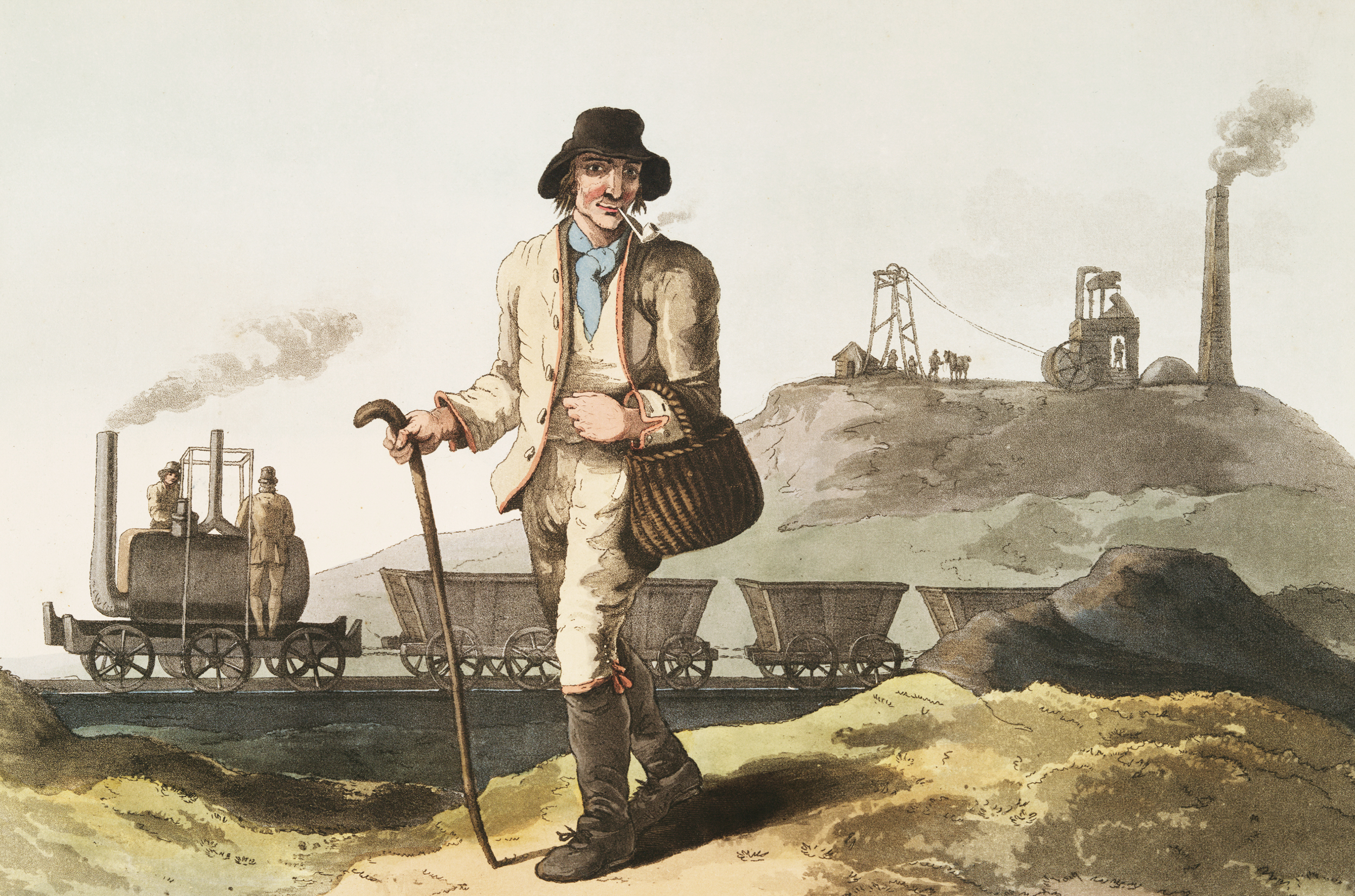 9 June 1758: Entry into law of the first dedicated railway enabling act, for Richard Humble and Charles Brandling’s wagonway from Middleton Colliery to the Aire at Leeds
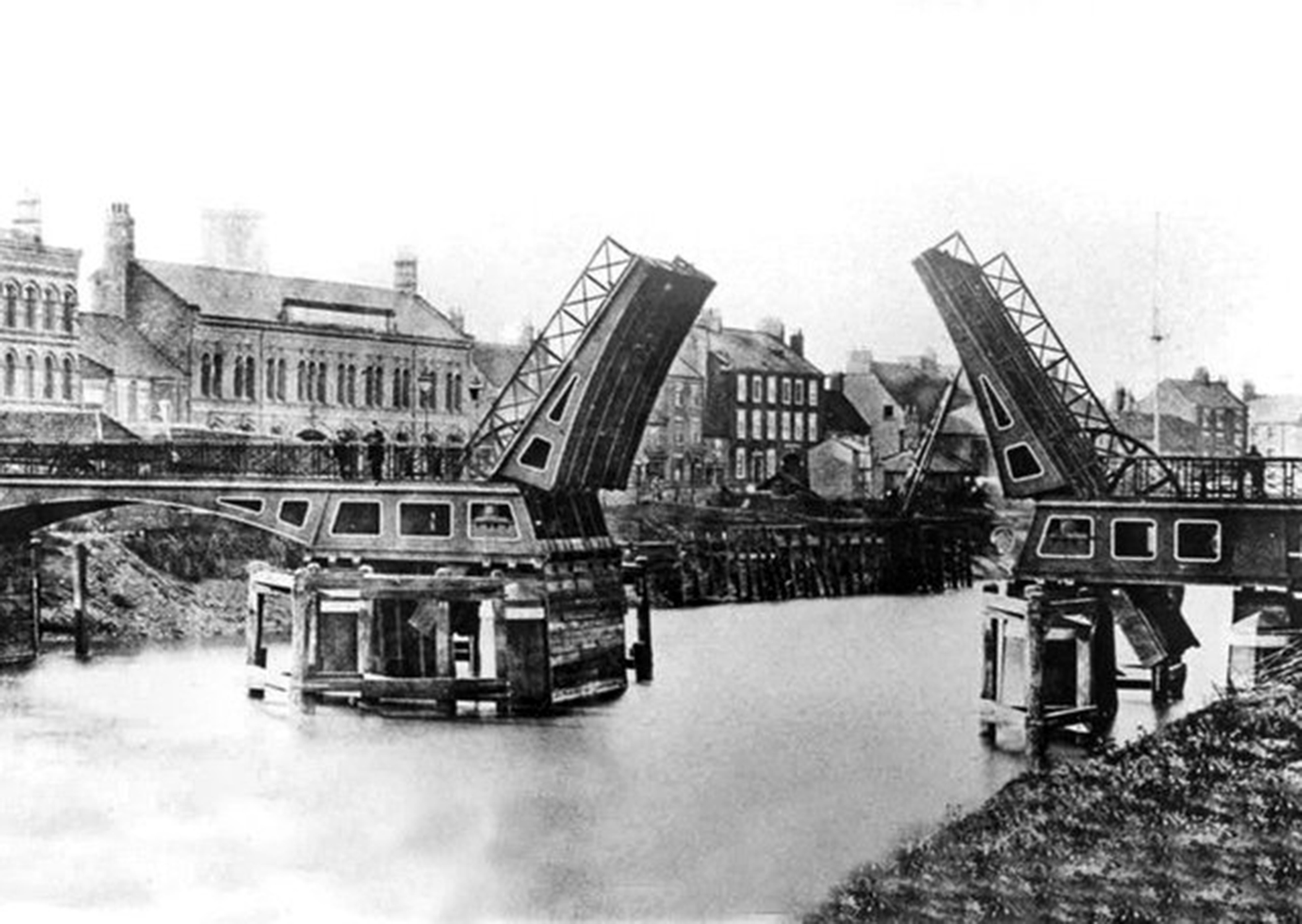 1 July 1840: The opening of the Hull and Selby Railway terminates the threat to Hull’s port from Goole, Scarborough and Bridlington
 17 May 1823: “Doncaster fertiliser manufacturers imported more than a million bushels of skeletons from Waterloo and other Napoleonic battlefields in 1822”
Comment
Comment
Andrew Junior left to look after himself.
The manner of his father’s death, and the fact that the poet himself was born in reclaimed Holderness, should give pause to those who take offence at his lines on Holland:
How did they rivet with gigantic piles,
Thorough the centre their new-catched miles,
And to the stake a struggling country bound,
Where barking waves still bait the forced ground,
Building their watery Babel far more high,
To reach the sea, than those to scale the sky!
Yet still his claim the injured ocean laid,
And oft at leap-frog o’er their steeples played,
As if on purpose it on land had come
To show them what’s their mare liberum.
A daily deluge over them does boil;
The earth and water play at level coil.
The fish ofttimes the burgher dispossessed,
And sat, not as a meat, but as a guest (Marvell 1665).
I must find out more about Mrs. Skinner of Thornton, North Lincolnshire, who adopted him.
Marvell was not the only person with reason to dislike the crossing:
There are some good towns on the sea-coast; but I include not Barton, which stands on the Humber, as one of them, being a straggling mean town, noted for nothing but an ill-favoured dangerous passage, or ferry, over the Humber to Hull; where, in an open boat, in which we had about 15 horses, and 10 or 12 cows, mingled with about 17 or 18 passengers, we were about 4 hours tossed about on the Humber, before we could get into the harbour at Hull. Well may the Humber take its name from the noise it makes; for in an high wind it is incredibly great and terrible, like the crash and dashing together of ships (Defoe 1748).
In “To a Coy Mistress” Marvell laments his lover’s absence in the lines “I by the tide/ Of Humber would complain” (Marvell 1898), which inspired Angela Leighton to a rather excellent poem, “By the Tide of Humber” (Leighton 2023) which I hope I’ll be allowed to use.
I haven’t managed to access Nicholas von Maltzahn’s “Death by Drowning: Marvell’s ‘Lycidas’.”
Something to say? Get in touch
Search
Subscribe/buy
Donate
Music & books
Place-People-Play: Childcare (and the Kazookestra) on the Headingley/Weetwood borders next to Meanwood Park.
Music from and about Yorkshire by Leeds's Singing Organ-Grinder.
 RSS feed
 Bluesky
 Extwitter