3 July 1769: Thomas Pennant goes bird-watching at Flamborough Head
Thomas Pennant. 1771. A Tour in Scotland. 1769. Chester: John Monk. Get it:
.Unedited excerpt
If an excerpt is used in the book, it will be shorter, edited and, where applicable, translated.
Went to Flamborough-Head. The town is on the North side, consists of about one hundred and fifty small houses, entirely inhabited by fishermen, few of whom, as is said, die in their beds, but meet their fate in the element they are so conversant in. Put myself under the direction of William Camidge, Ciceroni of the place, who conducted me to a little creek at that time covered with fish, a fleet of cobles having just put in. Went in one of those little boats to view the Head, coasting it for upwards of two miles. The cliffs are of a tremendous height, and amazing grandeur; beneath are several vast caverns, some closed at the end, others are pervious, formed with a natural arch, giving a romantic passage to the boat, different from that we entered. In some places the rocks are insulated, are of a pyramidal figure, and soar up to a vast height; the bases of most are solid, but in some pierced thro’, and arched; the color of all these rocks is white, from the dung of the innumerable flocks of migratory birds, which quite cover the face of them, filling every little projection, every little hole that will give them leave to rest; multitudes were swimming about, others swarmed in the air, and almost stunned us with the variety of their croaks and screams; I observed among them corvorants, shags in small flocks, guillemots, a few black guillemots very shy and wild, auks, puffins, kittiwakes *, and herring gulls. Landed at the same place, but before our return to Flamborough, visited Robin Leith’s hole, a vast cavern, to which there is a narrow passage from the land side; it suddenly rises to a great height, the roof is finely arched, and the bottom is for a considerable way formed in broad steps, resembling a great but easy stair-cafe; the mouth opens to the sea, and gives light to the whole.

Comment
Comment
Something to say? Get in touch
Tags
Tags are assigned inclusively on the basis of an entry’s original text and any comment. You may find this confusing if you only read an entry excerpt.
- Auk (2) W/G ·
- Birdwatching (1) W/G ·
- Black guillemot (1) W/G ·
- Coble (1) W/G ·
- Common guillemot (1) W/G ·
- Cormorant (1) W/G ·
- European herring gull (1) W/G ·
- European shag (1) W/G ·
- 📌Flamborough Head (5) W/G ·
- 📌Flamborough (3) W/G ·
- Kittiwake (1) W/G ·
- Ornithology (3) W/G ·
- Pennant, Thomas (1726-98) (1), Welsh naturalist, traveller, writer and antiquarian W/G ·
- Puffin (1) W/G ·
- Seabird (1) W/G ·
- Traditional fishing boat (1) W/G ·
Comment
Comment
Something to say? Get in touch
Similar


Comment
Comment
I think the blue-and-white-striped flag is artistic idealism, and that it reminds readers to the (ahem) barry (field) of thirteen azure (deep ultramarine) and argent (silver) on the canton of the flag given in 1775 by Abraham Markoe to his Philadelphia Light Horse, later the First Troop Philadelphia City Cavalry, which, according to Wikipedia, fought at the battles of Trenton, Princeton, Brandywine, and Germantown, and which often served as George Washington’s personal bodyguard:
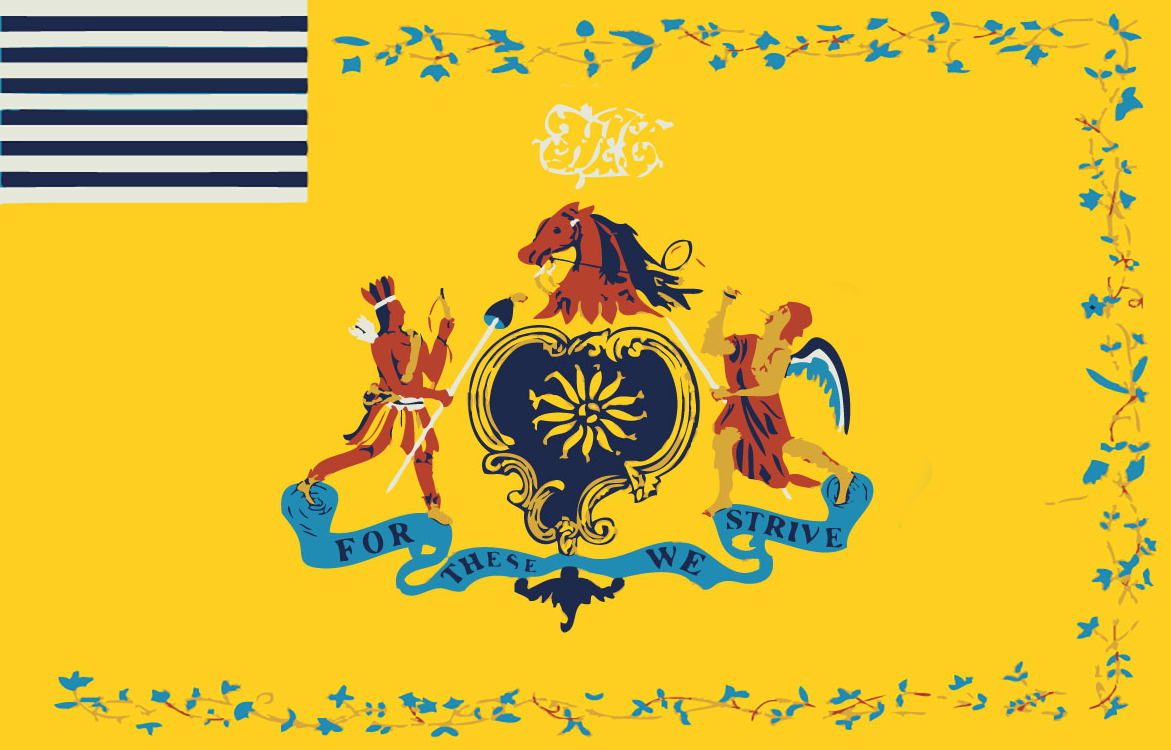
Similarly, the stars and stripes design shown in The Life and History of PAUL JONES, the English Corsair wasn’t afaik in circulation or perhaps even existence in 1779, and reflects instead popular vexillology at the time and place of the book’s publication – Portsea in around 1820:

What symbols was the so-called pirate/privateer Jones actually displaying that day? I’ve read an attempt to answer the question, but can’t remember where.
Something to say? Get in touch
Search
Subscribe/buy
Donate
Music & books
Place-People-Play: Childcare (and the Kazookestra) on the Headingley/Weetwood borders next to Meanwood Park.
Music from and about Yorkshire by Leeds's Singing Organ-Grinder.
 RSS feed
 Bluesky
 Extwitter