14 October 1769: The poet Thomas Gray travels from Skipton to Otley
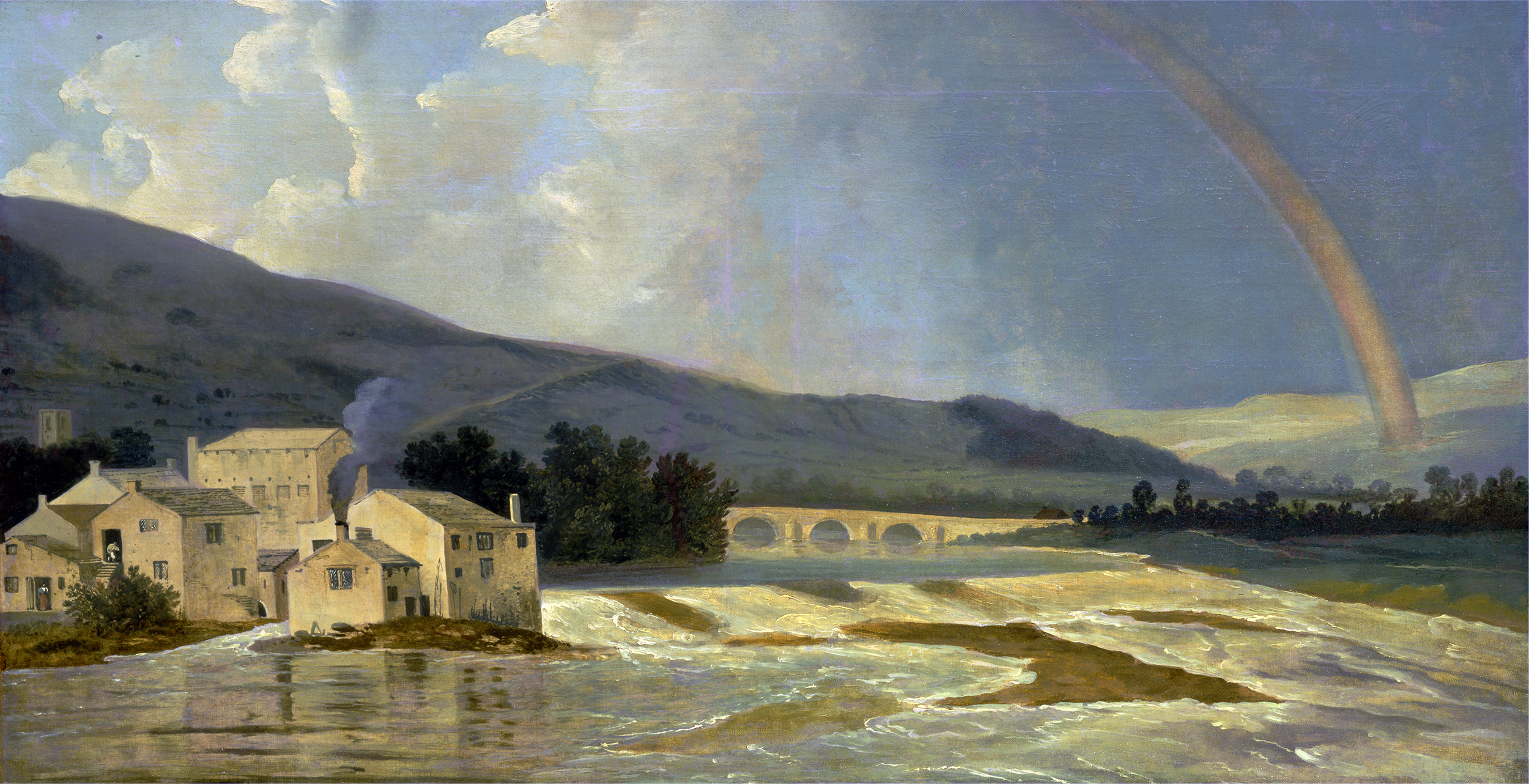
Otley Bridge on the River Wharfe (Hodges 1783ish).
Thomas Gray. 1820. The Poems and Letters of Thomas Gray. Ed. William Mason. London: R. Priestley. Get it:
.Unedited excerpt
If an excerpt is used in the book, it will be shorter, edited and, where applicable, translated.
Oct. 14. Leaving my comfortable inn, to which I had returned from Gordale, I set out for Skipton, sixteen miles. From several parts of the road, and in many places about Settle, I saw at once the three famous hills of this country, Ingleborough, Penigent, and Pendle; the first is esteemed the highest, and their features not to be described, but by the pencil.*
Craven, after all, is an unpleasing country when seen from a height; its valleys are chiefly wide, and either marshy or inclosed pasture, with a few trees. Numbers of black cattle are fatted here, both of the Scotch breed, and a larger sort of oxen with great horns. There is little cultivated ground, except a few oats.
Skipton, to which I went through Long-Preston and Gargrave, is a pretty large market-town, in a valley, with one very broad street gently sloping downwards from the castle, which stands at the head of it. This is one of our good Countess’s building, but on old foundations; it is not very large, but of a handsome antique appearance, with round towers, a grand gateway, bridge, and moat, surrounded by many old trees. It is in good repair, and kept up as a habitation of the Earl of Thanet, though he rarely comes thither: what with the fleet, and a foolish dispute about chaises, that delayed me, I did not see the inside of it, but went on, fifteen miles, to Otley; first up Shode-bank, the steepest hill I ever saw a road carried over in England, for it mounts in a straight line (without any other repose for the horses than by placing stones every now and then behind the wheels) for a full mile; then the road goes on a level along the brow of this high hill over Rumbald-moor, till it gently descends into Wharldale, so they call the vale of the Wharf, and a beautiful vale it is, well-wooded, well-cultivated, well-inhabited, but with high crags at a distance, that border the green country on either hand; through the midst of it, deep, clear, full to the brink, and of no inconsiderable breadth, runs in long windings the river. How it comes to pass that it should be so fine and copious a stream here, and at Tadcaster (so much lower) should have nothing but a wide stony channel without water, I cannot tell you. I passed through Long-Addingham, Ilkeley (pronounced Eecly) distinguished by a lofty brow of loose rocks to the right; Burley, a neat and pretty village, among trees; on the opposite side of the river lay Middleton Lodge, belonging to a catholic gentleman of that name; Weston, a venerable stone fabrick, with large offices, of Mr. Vavasour, the meadows in front gently descending to the water, and behind a great and shady wood; Farnley (Mr. Fawkes’s) a place like the last, but larger, and rising higher on the side of the hill. Otley is a large airy town, with clean but low rustic buildings, and a bridge over the Wharf; I went into its spacious gothic church, which has been new-roofed, with a flat stucco-ceiling; in a corner of it is the monument of Thomas Lord Fairfax, and Helen Aske, his lady, descended from the Cliffords and Latimers, as her epitaph says; the figures, not ill-cut (particularly his in armour, but baré-headed) lie on the tomb. I take them to be the parents of the famous Sir Thomas Fairfax.

Comment
Comment
I take it that the weir here is in the same position as the current one. The church is visible in the background, but what are the other buildings to the left?
Something to say? Get in touch
Tags
Tags are assigned inclusively on the basis of an entry’s original text and any comment. You may find this confusing if you only read an entry excerpt.
- Addingham (1) W/G ·
- All Saints’ Church (1) W/G ·
- Burley in Wharfedale (2) W/G ·
- Fairfax, Thomas (1612-71) (7), politician, general and Parliamentary commander-in-chief during the English Civil War, finally rejected Cromwell, participated in the Restoration and was spared by Charles II W/G ·
- Fairfax, Thomas (ca. 1560-1640) (1), 1st Lord Fairfax of Cameron, military officer, diplomat, politician, peer, horse-lover, born in Bilbrough, lived at Denton Hall under James I, buried in a great altar-tomb at Otley W/G ·
- 📌Farnley Hall (6), stately home on the Wharfe near Otley, built in Elizabethan times by the Danbys, but the manor is in Domesday Book as Fernelei W/G ·
- Gray, Thomas (1716-71) (2), poet, letter-writer, and classical scholar at Cambridge University, known for his Elegy Written in a Country Churchyard W/G ·
- Hodges, William (1744-97) (2), painter for James Cook on his second voyage to the Pacific Ocean W/G ·
- Ilkley Moor (4) W/G ·
- Ilkley (8) W/G ·
- Middleton Park (2) W/G ·
- Otley Chevin (2) W/G ·
- 📌Otley (13) W/G ·
- River Wharfe (8) W/G ·
- Rombalds Moor (2) W/G ·
- Skipton (7) W/G ·
- Tadcaster (10) W/G ·
- Weir (1) W/G ·
- West Riding of Yorkshire (150) W/G ·
- 📌Weston, North Yorkshire (3) W/G ·
- Wharfedale (9) W/G ·
Comment
Comment
I take it that the weir here is in the same position as the current one. The church is visible in the background, but what are the other buildings to the left?
Something to say? Get in touch
Similar
 30 May 1835: Alfred Austin, future poet laureate, “Banjo-Byron that twangs the strum-strum,” is born into rural splendour at Ashwood, 48 Headingley Lane, Leeds
 19 October 1816: Serenaded by the military, decorated barges leave Leeds for Liverpool to celebrate the completion, after almost 50 years, of the canal uniting east and west
 2 July 1644: Henry Slingsby of the Royalist York garrison recounts Prince Rupert’s defeat at Marston Moor today, which ends Charles I’s hopes in the north
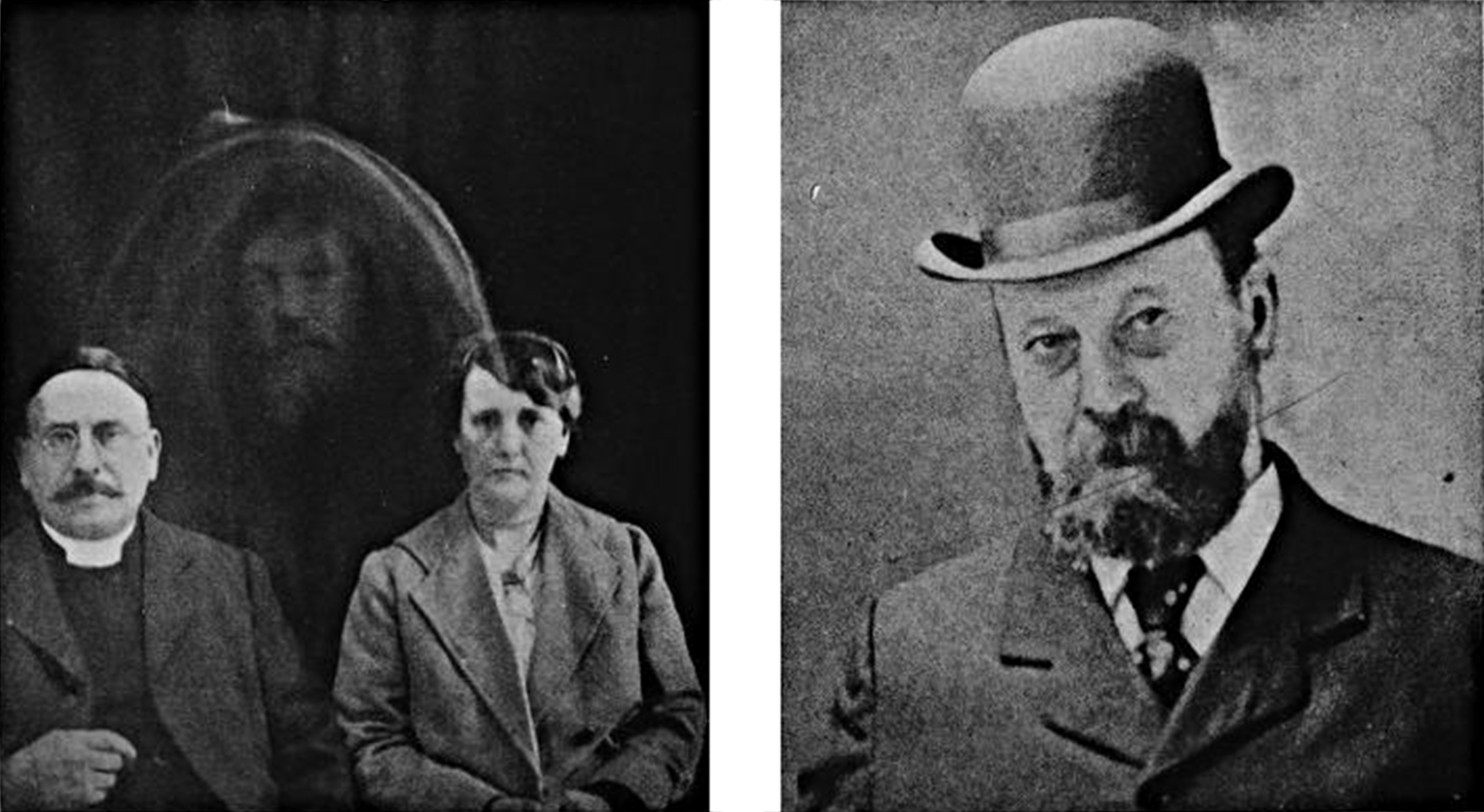 30 January 1934: The wife of the Vicar of Weston, near Otley, has a nocturnal premonition of the death of the composer Frederick Delius
Comment
Comment
Editor Greig comments:
The main interest of this paragraph lies not in Hodges, whose father was a blacksmith in Clare Market, off Old Drury-lane, but in Mr. Fawkes (of Farnley), who was one of Turner’s earliest friends and patrons. The great artist first made his acquaintance about 1802, and before long he became a regular visitor to Farnley Hall, the members of its household regarding him with deep esteem, they finding him always full of fun and high spirits. He was known as “Overturner” by the Fawkes, because, while driving the family home one day, he upset the cart.
Something to say? Get in touch
Search
Subscribe/buy
Donate
Music & books
Place-People-Play: Childcare (and the Kazookestra) on the Headingley/Weetwood borders next to Meanwood Park.
Music from and about Yorkshire by Leeds's Singing Organ-Grinder.
 RSS feed
 Bluesky
 Extwitter