24 January 1805: Painter Joseph Farington hears how Julius Cæsar Ibbetson left his (Cæsarean) birthplace of Farnley Moor (Leeds) to pursue a career in art in Hull
Joseph Farington. 1924. The Farington Diary, Vol. 3 (September 14, 1804, to September 19, 1806). Ed. James Greig. London: Hutchinson and Co. Get it:
.Unedited excerpt
If an excerpt is used in the book, it will be shorter, edited and, where applicable, translated.
West shewed us a letter recd. by Him from Julius Ibbetson in 1782, in which He gives a short history of His progress in the art. He was born a few miles from Leeds in Yorkshire,—had a strong inclination to painting excited in Him he scarcely knew how,—and His Father encouraged the feeling.—Seeing an advertisement for an apprentice to a Painter, He went with His Father to Hull, 70 miles distant, to the person who advertised, and there saw all the implements of the art but nothing more. Confiding that the advertiser was an artist, Ibbetson was bound apprentice to him, but immediately found that His occupation was only to be to get His master money by painting from daylight to night the inside & outside of Ships in the Port of that town.
His remonstrances against this were ridiculed by His Master, & He could only practise drawing & other painting, at stolen Hours. He did, notwithstanding so far advance in the art as to paint several Signs which were much admired.—At the end of 5 years, His Master proposed to quit the business & to sell the remainder of His time, viz: 2 years, to a person who was to succeed to it; on which Ibbetson ran away from Hull and came to London, where He got employ from a person who had previously been under His Hull master.
While in this situation He obtained admission into Mr. West’s House in Newman St. where He painted a chest for one of the Servants, & where for the first time He saw pictures which excited in Him a feeling “which affected His very toes” —In 1788 He laid out a solitary half guinea to subscribe to a print to be engraved of the Battle of La Hogue, and being afterwards told that Mr. West wd. let him have an impression witht. paying the remainder in 1782 He wrote the whimsical letter to him stating all the above particulars—He added that He had been for 4 years in the hands of those Harpies the Picture dealers, and described their frauds with humour and acrimony.


Comment
Comment
Something to say? Get in touch
Tags
Tags are assigned inclusively on the basis of an entry’s original text and any comment. You may find this confusing if you only read an entry excerpt.
- Apprenticeship (4) W/G ·
- Farington, Joseph (1747-1821) (13), landscape painter and diarist, inter alia of Turner W/G ·
- Farnley, Leeds (4) W/G ·
- Fraud (22) W/G ·
- Ibbetson, Julius Caesar (1759-1817) (3), Farnley-born painter W/G ·
- International trade (17) W/G ·
- 📌Kingston upon Hull (74) W/G ·
- 📌Leeds (249) W/G ·
- Painting (6) W/G ·
- 📌Port of Hull (19) W/G ·
- Sailing ship (6) W/G ·
Comment
Comment
Something to say? Get in touch
Similar
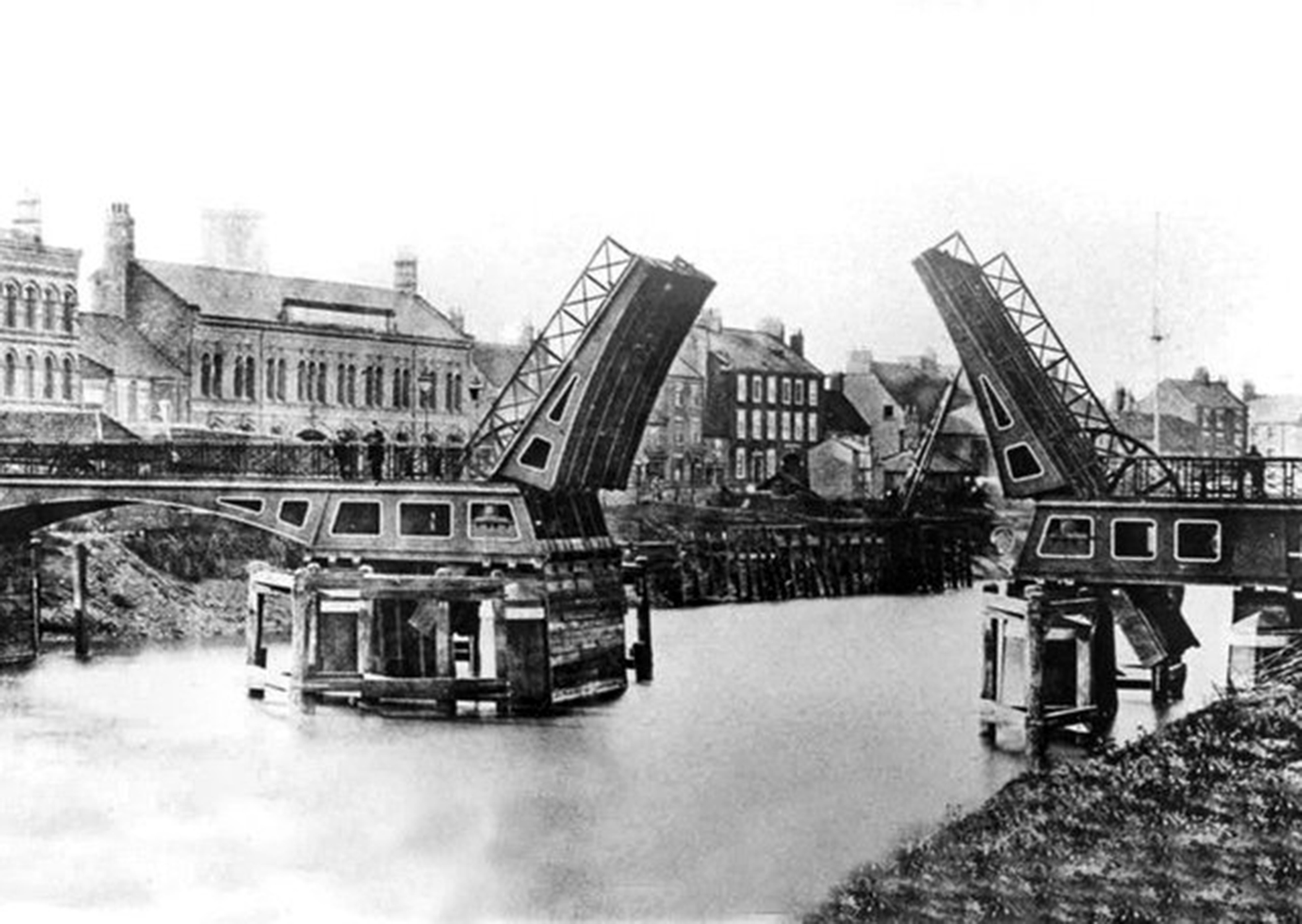 1 July 1840: The opening of the Hull and Selby Railway terminates the threat to Hull’s port from Goole, Scarborough and Bridlington
 14 October 1854: During the Crimean War, Queen Victoria visits the docks at Hull, and comparisons are made with the capital of our Turkish ally
Comment
Comment
Smeaton’s scheme did not prosper. John Timperley:
Various schemes had been suggested for cleansing the dock of the mud brought in by the tide; one was by making reservoirs in the fortifications or old town ditches, with the requisite sluices, by means of which the mud was to be scoured out at low water; another by cutting a canal to the Humber, from the west end of the dock, where sluices had been provided, and put down for the purpose, when it was proposed to divert the ebb tide from the river Hull along the dock, and through the sluices and canal into the Humber, and so produce a current sufficient, with a little manual assistance, to carry away the mud. Both of these schemes were however abandoned, and the plan of a horse dredging machine adopted; this work began about four years after the Old dock was completed, and continued until after the opening of the Junction dock. The machine was contained in a square and flat bottomed vessel 61 feet 6 inches long, 22 feet 6 inches wide, and drawing 4 feet water: it at first had only eleven buckets, calculated to work in 14 feet water, in which state it remained till 1814, when two buckets were added so as to work in 17 feet water, and in 1827 a further addition of four buckets was made, giving seventeen altogether, which enabled it to work in the highest spring tides. The machine was attended by three men, and worked by two horses, which did it at first with ease, but since the addition of the last four buckets, the work has been exceedingly hard.
There were generally six mud boats employed in this dock before the Humber dock was made; since which there have been only four, containing, when fully laden, about 180 tons, and usually filled in about six or seven hours; they are then taken down the old harbour and discharged in the Humber at about a hundred fathoms beyond low water mark, after which they are brought back into the dock, sometimes in three or four hours, but generally more. The mud engine has been usually employed seven or eight months in the year, commencing work in April or May.
The quantity of mud raised prior to the opening of the Junction dock, varied from 12,000 to 29,000 tons, and averaged 19,000 tons per annum; except for a few years before the rebuilding of the Old lock, when, from the bad and leaky state of the gates, a greater supply of water was required for the dock, and the average yearly quantity was about 25,000 tons. As the Junction dock, and in part also the Humber dock, are now supplied from this source, a greater quantity of water flows through the Old dock, and the mud removed has of late been about 23,000 tons a year.
It may be observed, that the greatest quantity of mud is brought into the dock during spring tides, and particularly in dry seasons, when there is not much fresh water in the Hull; in neap tides, and during freshes in the river, very little mud comes in (Timperley 1842).
Something to say? Get in touch
Search
Subscribe/buy
Donate
Music & books
Place-People-Play: Childcare (and the Kazookestra) on the Headingley/Weetwood borders next to Meanwood Park.
Music from and about Yorkshire by Leeds's Singing Organ-Grinder.
 RSS feed
 Bluesky
 Extwitter