19 August 1826: The Leeds Mercury responds to requests from readers for cricket reports
Leeds Mercury. 1826/08/19. To Correspondents. Leeds. Get it:
.Unedited excerpt
If an excerpt is used in the book, it will be shorter, edited and, where applicable, translated.
To Correspondents
We really cannot find room for any long details on the subject of Cricket Matches, which, however interesting to the parties engaged, are not of any very high importance to the public.


Comment
Comment
Via Paul Smith, who quotes from the Rev. Holmes (Holmes 1904):
the newspaper of that period (1737-1806) was a small sheet of four pages, issued once a week at the cost of sixpence. Consequently as it had to chronicle political, court and other news of national importance, along with all important communications from the Continent, and … advertisements … cricket had to be put into a very modest corner.
Also:
In a long and careful search through old Yorkshire newspapers dating from 1737 to 1806 … only a few items of interest have cropped up. Cricket is seldom mentioned, and for a very sufficient reason. It was not then nearly as popular as boxing, cockfighting, and pedestrianism (Smith 2013).
Also via Paul Smith, Joseph Lawson on cricket in Pudsey, perhaps at around the time of the Leeds Mercury‘s take:
We remember the time when cricketing was unknown in Pudsey, except as played mostly in the lanes or small openings in the village – with a tub leg for a bat, made smaller at one end for a handle, a wall cape, or some large stone, set on end for a stump (called a “hob “), and a pot taw or some hard substance covered with listing and sometimes sewed on the top with twine or band. They were all one-ball overs if double wicket was played; no umpires, and often those who cheated the hardest won. But see now to what perfection that game has attained! It was some time before the new style of cricket was played with the order and decorum we see today. When it first came into vogue village clanship was rather rife. Money was mostly played for, and frequent uproar, confusion, and even fighting took place, though the strict rules helped to curb all this very much, otherwise cricket between the different local clubs would have been impossible. Playing for money was ultimately given up, and looked upon as being low and degrading to the game. The winning club mostly got a new ball, and the various towns and villages continued to contend against each other for the mastery. As years have passed on, the behaviour of both players and spectators (especially the former) has become comparatively orderly. It is not uncommon now for the people of Pudsey to be seen applauding their opponents by clapping hands and by other marks of approval, when a good point is made in the shape of either hitting, bowling, fielding, or wicket-keeping. All this is as it should be, though very different to what one saw even thirty years ago. Cricketing has had a most wonderful influence for good on the young men of Pudsey – not only on the players, but on the spectators as well. By cricket, players are taught patience, endurance, precision, and courage. They are taught self-respect and gentlemanly conduct in bowing to the decision of the umpires, and derive physical benefit as well. The discipline taught by the game cricket is great and invaluable, and we wish it every success (Lawson 1887).
Something to say? Get in touch
Tags
Tags are assigned inclusively on the basis of an entry’s original text and any comment. You may find this confusing if you only read an entry excerpt.
- Cricket (10) W/G ·
- Leeds Mercury (18), leading Whig newspaper founded by John Hirst in 1718, bought by Nonconformist-Liberal Edward Baines in 1801 and used to advocate some types of social and political reform, remained in the family for two more generations W/G ·
- Letter to the editor (1) W/G ·
- Newspaper (28) W/G ·
- 📌Pudsey (12) W/G ·
- Yeadon (2) W/G ·
Comment
Comment
Via Paul Smith, who quotes from the Rev. Holmes (Holmes 1904):
the newspaper of that period (1737-1806) was a small sheet of four pages, issued once a week at the cost of sixpence. Consequently as it had to chronicle political, court and other news of national importance, along with all important communications from the Continent, and … advertisements … cricket had to be put into a very modest corner.
Also:
In a long and careful search through old Yorkshire newspapers dating from 1737 to 1806 … only a few items of interest have cropped up. Cricket is seldom mentioned, and for a very sufficient reason. It was not then nearly as popular as boxing, cockfighting, and pedestrianism (Smith 2013).
Also via Paul Smith, Joseph Lawson on cricket in Pudsey, perhaps at around the time of the Leeds Mercury‘s take:
We remember the time when cricketing was unknown in Pudsey, except as played mostly in the lanes or small openings in the village – with a tub leg for a bat, made smaller at one end for a handle, a wall cape, or some large stone, set on end for a stump (called a “hob “), and a pot taw or some hard substance covered with listing and sometimes sewed on the top with twine or band. They were all one-ball overs if double wicket was played; no umpires, and often those who cheated the hardest won. But see now to what perfection that game has attained! It was some time before the new style of cricket was played with the order and decorum we see today. When it first came into vogue village clanship was rather rife. Money was mostly played for, and frequent uproar, confusion, and even fighting took place, though the strict rules helped to curb all this very much, otherwise cricket between the different local clubs would have been impossible. Playing for money was ultimately given up, and looked upon as being low and degrading to the game. The winning club mostly got a new ball, and the various towns and villages continued to contend against each other for the mastery. As years have passed on, the behaviour of both players and spectators (especially the former) has become comparatively orderly. It is not uncommon now for the people of Pudsey to be seen applauding their opponents by clapping hands and by other marks of approval, when a good point is made in the shape of either hitting, bowling, fielding, or wicket-keeping. All this is as it should be, though very different to what one saw even thirty years ago. Cricketing has had a most wonderful influence for good on the young men of Pudsey – not only on the players, but on the spectators as well. By cricket, players are taught patience, endurance, precision, and courage. They are taught self-respect and gentlemanly conduct in bowing to the decision of the umpires, and derive physical benefit as well. The discipline taught by the game cricket is great and invaluable, and we wish it every success (Lawson 1887).
Something to say? Get in touch
Similar
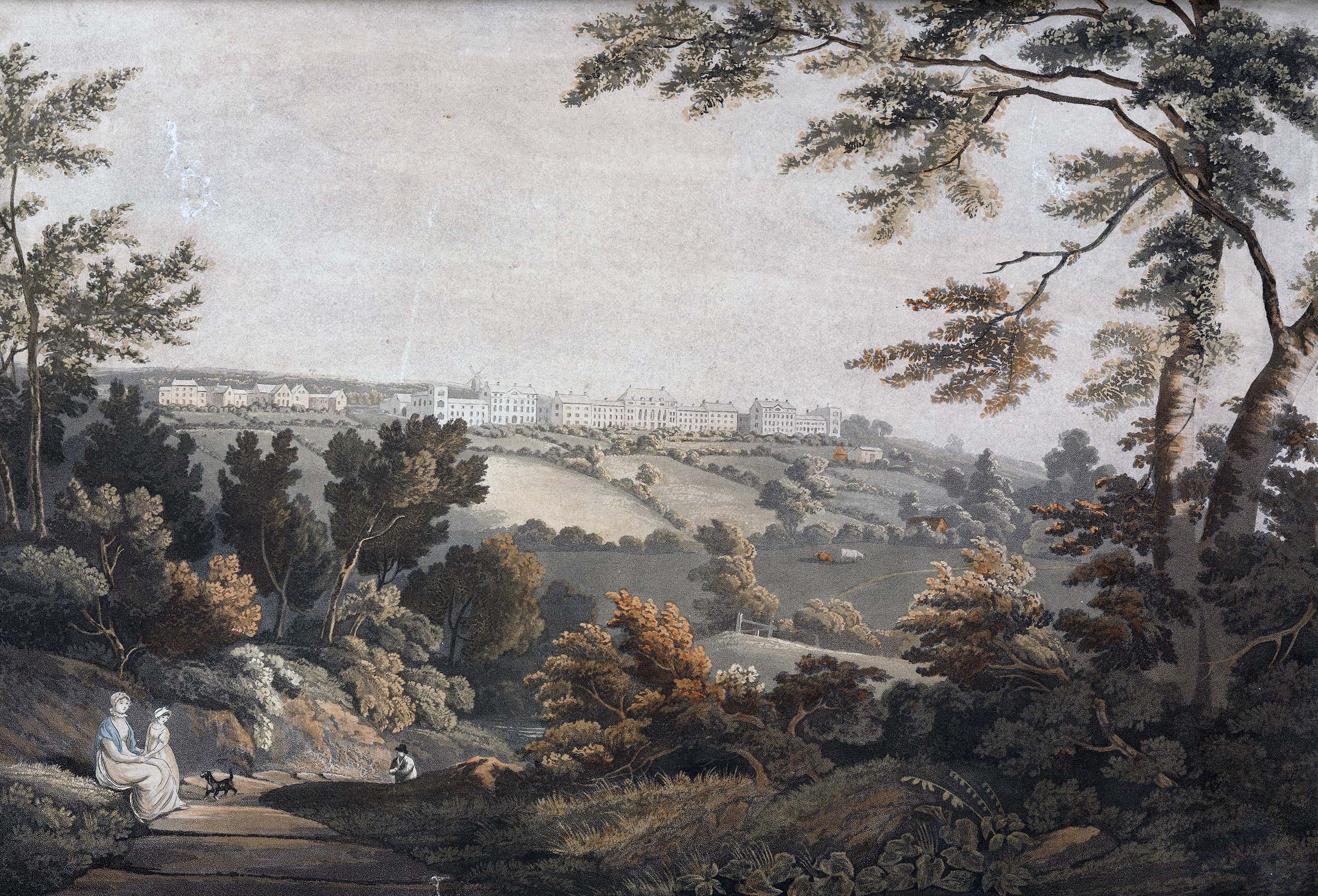 6 August 1861: Future prime minister H.H. Asquith (8) writes to his mother condemning Fulneck (Pudsey) and its Moravian school
 25 September 1880: Thomas Harper reveals to the Leeds Mercury’s young readers a mnemonic song of monarchs (except Oliver) used in the village school at Weldrake (York) in the 1770s
Comment
Comment
What of checks and balances? An amusing detail in the commissioners’ report on Leeds (via Frédéric Moret (Moret 2015)):
The close constitution of the corporation is obvious; all vacancies in each branch of it being filled by the Select Body, gives to that body absolute and uncontrolled self-election.
Family influence is predominant. Fathers and sons and sons-in-law, brothers and brothers-in-law, succeed to the offices of the corporation, like matters of family settlement.
The great respectability of the present members of the corporation and their impartial conduct as justices, were universally acknowledged; but the restricted system and want of a more popular method of election were loudly complained of; and it was said that it would be satisfactory to a great majority of the town, that there should be such more open course, as the Legislature in its wisdom, should think best.
The ill effects of the present exclusive system are rendered strikingly apparent from one circumstance in this borough. In cases where the election is popular, as in the choice of Commissioners under the Local Acts, the persons selected are all of one political party, professing the opposite opinions to those entertained by the majority of the corporation; which is accounted for by the necessity of balancing the influence of the corporation, at the same time that it is said to show the inclination of the majority of the town. This choice of commissioners exclusively from one party is admitted to be undesirable, but is justified as being resorted to in self-defence.
The mayor didn’t get paid out of the corporation’s annual income of £220 (£23K in July 2024; Liverpool’s income was £90K – £9,600K in 2024 (Moret 2015)), so there may not be any good corruption stories out there.
The main conclusions of the first report (more):
- The corporations were exclusive bodies with no community of interest with the town after which they were named.
- The electorate of some corporations was kept as small as possible.
- Some corporations merely existed as “political engines” for maintaining the ascendancy of a particular party.
- Members of corporations usually served for life and the corporate body was a self-perpetuating entity. Roman Catholics and Dissenters, although no longer disabled from being members, were systematically excluded.
- Vacancies rarely occurred and were not filled by well-qualified persons.
- Some close corporations operated in almost complete secrecy, sometimes secured by oath. Local residents could not obtain information on the operation of the corporation without initiating expensive legal actions.
- The duties of the mayor were, in some places, completely neglected.
- Magistrates were appointed by the corporations on party lines. They were often incompetent and did not have the respect of the inhabitants.
- Juries in many boroughs were exclusively composed of freemen. As the gift of freedom lay with the corporation, they were political appointees and often dispensed justice on a partisan basis.
- Policing in the boroughs was often not the responsibility of the corporation but of one or more bodies of commissioners. An extreme example was the City of Bath, which had four districts under different authorities, while part of the city had no police whatever.
- Borough funds were “frequently expended in feasting, and in paying the salaries of unimportant officers” rather than on the good government of the borough. In some places funds had been expended on public works without adequate supervision, and large avoidable debts had accrued. This often arose from contracts being given to members of the corporation or their friends or relations. Municipal property was also treated as if it were only for the use of the corporation and not the general population.
The commission concluded its report by stating that:
…the existing Municipal Corporations of England and Wales neither possess nor deserve the confidence or respect of Your Majesty’s subjects, and that a thorough reform must be elected, before they can become, what we humbly submit to Your Majesty they ought to be, useful and efficient instruments of local government.
Possible errors & omissions in tagging. What tool would one use to draw this network?
Something to say? Get in touch
Search
Subscribe/buy
Donate
Music & books
Place-People-Play: Childcare (and the Kazookestra) on the Headingley/Weetwood borders next to Meanwood Park.
Music from and about Yorkshire by Leeds's Singing Organ-Grinder.
 RSS feed
 Bluesky
 Extwitter