3 November 1826: “Nimrod” of London gets to know a coachman during a journey from Leeds to York
Charles James Apperley (“Nimrod”). 1827. Nimrod’s Yorkshire Tour [1]. Sporting Magazine, Vol. 20 (New Series). London: Pittman. Get it:
.Unedited excerpt
If an excerpt is used in the book, it will be shorter, edited and, where applicable, translated.
On the third of November I took coach at Leeds, and arrived at York at twelve o’clock. It is natural to conclude that, in a strange country, every thing relating to my favorite pursuits should attract my notice, and coaching in the North was certain to be one. I had long been of opinion that – speaking generally – coach work in perfection is not to be met with a hundred miles from the Metropolis – seldom so far; and my journey to Yorkshire most fully confirmed it. The build of the coaches, the manufacture of the harness, and the stamp and condition of the horses, are greatly inferior in these northern countries; and as for the coach-men, I saw but four at all deserving that appellation. The man who drove us on the day I am speaking of reminded me more of a Welch drover than anything else. He had neither gloves, boots, nor gaiters, although the day was cold, which at first excited my surprise; but when I found that he only drove one ten-mile stage, I ceased to wonder, as a glass of gin on leaving the town, one on the road, and towelling his wheel horses, kept his blood on the move for the short time he was at work. As I sate by the side of of him, he was kind enough to amuse me with some hair-breadth escapes he experienced when on one of those galloping opposition coaches, which more than once went from Leeds to London, one hundred and ninety-six miles, in sixteen hours; but I soon lamented having introduced the subject. I accidentally told him he must be a proficient on the bench, or he would not have been put on so fast a coach, and this was near being our death warrant. To give me a specimen of his art, he sprang his horses into a gallop on some falling ground, and in a clumsy attempt to pull them up by the leg, he got his reins clubbed, and I thought nothing could have saved us. I shammed sick, and got into the coach; but the novelty of the scene did not end here. When we came to Tadcaster – only ten miles from York – the door of the coach was opened, and “please to remember the coachman,” tingled in the ears of the passengers. “What now!” said I; “are you going no farther?”-“No, Sir; but ah’s goes back at night,” was the Yorkshireman’s answer. “Then you follow some trade here, of course?” continued I.-“No, Sir,” said a by-stander”-he has got his horses to clean.”-“Oh, that’s the way your Yorkshire coaching is done, is it?” said I to my communicative friend on the pavement. I then saw my fellow passengers pull out six-pence each, and give it to John, who was not only satisfied, but thankful. What am I to do? said I to myself – I never gave a coachman six-pence yet, and I shall not begin that game to-day; so chucked him a bob, which brought his hat down to the box of the fore wheel.
With a fresh team, and a fresh driver, (it will not do to use the word “coachman” upon all occasions,) we proceeded for York, fourteen miles farther. About half way, the coach stopped at a public house, in the old style; the coachman got down; the gin bottle was produced. Looking out of the window, I espied my friend John, whom I thought we had left behind us at Tadcaster, hard at work with the wisp. “What,” said I, “are you here?” “Why, yes,” answered John; “’tis market at York, and ah’s wants to buy a goose or two.” “Ah,” observed I, “I thought you were a little in the huckstering line.”

Comment
Comment
Something to say? Get in touch
Tags
Tags are assigned inclusively on the basis of an entry’s original text and any comment. You may find this confusing if you only read an entry excerpt.
- Alcoholism (12) W/G ·
- Charles James Apperley (3) W/G ·
- Gin (5) W/G ·
- Goose (3) W/G ·
- 📌Leeds (249) W/G ·
- London (84) W/G ·
- Marketplace (8) W/G ·
- Pub (19) W/G ·
- Road transport (14) W/G ·
- Stagecoach (8) W/G ·
- Tadcaster (10) W/G ·
- Wales (8) W/G ·
- 📌York (165) W/G ·
Comment
Comment
Something to say? Get in touch
Similar
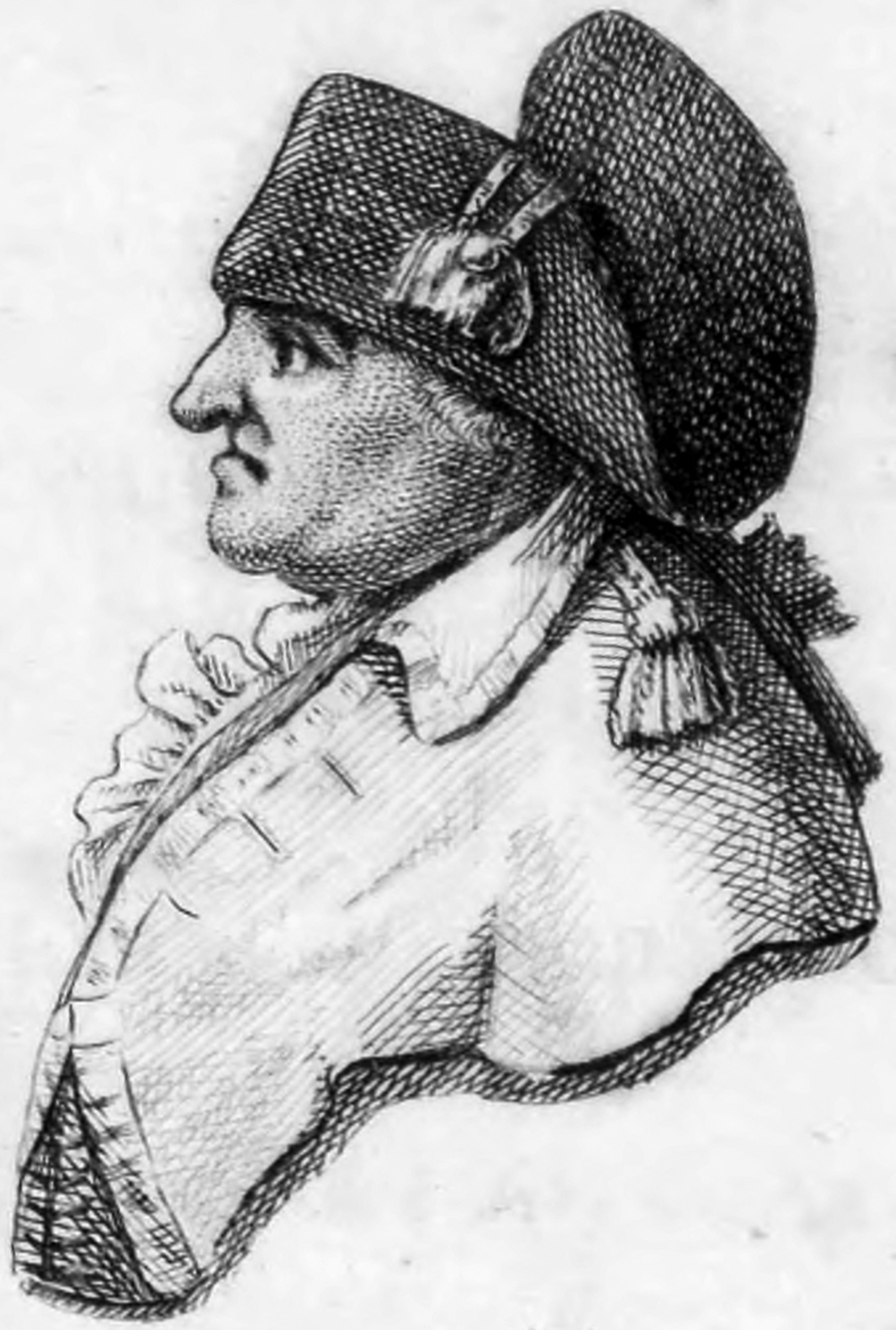 2 October 1800: Part of an obituary to Harry Rowe, Punch and Judy man, trumpeter at the Battle of Culloden and the York assizes, who died today, old and ill, in the York poorhouse
Comment
Comment
Comparison with the piece from The Spectator on the same day suggests to me that their critic is referred to above:
The Leeds Musical Festival terminated with The Messiah on the morning of Saturday last. In the performance of the solo parts there was nothing remarkable, the principal singers being the usual metropolitan celebrities, Madame Clara Novello, Miss Dolby, Mr. Sims Reeves, and Mr. Weiss; but the choruses were sung in a manner which the metropolis certainly has never been able to equal. We have already had occasion to notice the superiority of the choristers of Birmingham to those of Exeter Hall, notwithstanding their inferiority in numerical strength: at Leeds the same observation held good in a still more remarkable degree. At Exeter Hall the choral and instrumental band numbers above 700; at Birmingham it numbered about 500; at Leeds under 350: while the real power of these tuneful hosts was in the inverse ratio of their numbers. The Birmingham 500 excelled the London 700, while the Leeds 350 excelled both the one and the other. The Yorkshire choristers are the best in England, if not the best in the world; and all the Leeds choristers were Yorkshire people belonging to the working classes, drawn from the towns and villages of that musical land. Among them there was not one useless individual: they all had sound, mellow, English voices; they all thoroughly knew their parts, and consequently sang without hesitation or wavering, and their united voices formed a volume of pure musical sound which we have never heard equalled elsewhere by twice their number. Of all the districts of England the great county of York is the best able to furnish the materials for a great music-meeting; and in former times it was in the city of York that the greatest of the English Festivals was held, though it has been long since crushed by the interference of clerical bigotry. We are glad that a new Yorkshire Festival has been established. Like that of Birmingham, it is independent of the abused power of ecclesiastical dignitaries: and as the people of Leeds have emulated those of Birmingham in spirit and energy, their Festival has a fair prospect of rivalling the other in durability and magnitude. And this prospect is all the greater for the design, (which we understand, is contemplated) of rendering the Leeds Festival, like that of Birmingham, a permanent establishment, with triennial meetings for one charitable object, the benefit of the General Infirmary, a charity of great and extensive usefulness.
The financial result of this first Music Meeting at Leeds has been highly favorable. The audiences at the seven morning and evening performances amounted on an average to 2000 persons at each; the whole amount received has been about 75001, while the expenditure is estimated at 6000l: so that the charity will be benefited to the extent of about 1500l.
The appointment of Professor Sterndale Bennett (who, in addition to his high talents and reputation, is a Yorkshireman born) to the office of conductor, gave general satisfaction from the outset, and the vigour and ability with which he performed his duties, enhanced greatly the excellence of the performances and the success of the Festival.
(Spectator 1858/09/18)
George Bernard Shaw, however:
Down to 1877 the majority of the committee never got beyond the primitive notion that a great musical event was one at which Tietjens sang and Costa conducted. It was not until she died and he repudiated the committee that Leeds at last found out that familiarity with The Messiah, Elijah and the overture to William Tell, was not the climax of nineteenth-century musical culture.
Can someone point me to something about the York festival?
Something to say? Get in touch
Search
Subscribe/buy
Donate
Music & books
Place-People-Play: Childcare (and the Kazookestra) on the Headingley/Weetwood borders next to Meanwood Park.
Music from and about Yorkshire by Leeds's Singing Organ-Grinder.
 RSS feed
 Bluesky
 Extwitter