26 September 1835: The (Whig) Leeds Mercury reports the attempt of its proprietor and editor, Edward Baines Jnr, to qualify for the electoral register on the basis of shares in accommodation for the dead
Leeds Mercury. 1835/09/26. West-Riding Revision. Leeds. Get it:
.Unedited excerpt
If an excerpt is used in the book, it will be shorter, edited and, where applicable, translated.
Edward Baines, objected to by Mr. Sangster. Qualification, freehold house, inserted in the list York-street-place. Mr. Baines stated to the Court that there was an error in the description; the proper description was, York-place, and not York-street-place. Mr. Sangster said that in this case Mr. Baines was to be considered as an humble individual, and one of themselves, and therefore he contended that the description on the list was, in fact, no description at all; for there happened to be a York-street as well as York-place, and a person wishing to make inquiry as the name stood on the list, might either go to York-place or he might go to York-street, a distance of half a mile.
The REVISING BARRISTER asked Mr. Baines when and how he made his claim, to which that gentleman replied that he made it at the first registration in 1832, and, to the best of his recollection, he described his qualification as being in York-place.
Mr. SANGSTER supposed Mr. Baines could not state positively whether he had described his qualification as being in York-place or not?
Mr. BAINES certainly could not state that positively. He lived in the house adjoining the one for which he claimed his qualification, and it was hardly likely that he should describe the situation as York-street-place, instead of York-place.
The REVISING BARRISTER inquired of Mr. Evers where the claims for 1832 were, to which the latter replied that he did not know, and that he had not seen them since the time they were made. The Learned Gentleman said that it was a very great omission on the part of Mr. Evers that the claims were not forthcoming, as the claim then made by Mr. Baines formed now the very title of his right to vote, and the loss of it might deprive him of his vote. The Learned Gentleman said it appeared that the claim was lost, and, under those circumstances, they must take the next best evidence, which was that of Mr. Baines himself, who stated, that, to the best of his recollection, he described his qualification York-place. Mr. Baines did not take upon himself to say positively whether that was so or not, and it was impossible, at that distance of time, that any conscientious man could say so. He believed that the description would have been York-place, and not York-street-place, and that the latter description was a mistake of the overseer. Under these circumstances he should disallow the objection.
Edward Baines, Jun.-Objected to by Mr. Sangster. – Qualification, ten freehold shares in buildings and land, called the Leeds Cemetery. Mr. Baines having stated the fact of his being a shareholder,-
The REVISING BARRISTER asked Mr. Eddison on what grounds he supported the vote?
Mr. EDDISON said that the company bought the land for the purpose of a general cemetery, in 1000 shares, of £10 each, and Mr. Baines claimed a right to vote on the ground of a freehold interest in that estate.
BARRISTER.This vote is so very specially stated that I should like to see the original trust deed.
Mr. EDDISON said there was a similar case in the Lakelock Railroad Company, where the only point was, whether the shares were freehold.
BARRISTER. How can I say from this evidence whether these shares are freehold? Did the title-deed assume that the land was conveyed to certain trustees in fee? If that was not the case, it was no use his taking it.
Mr. EDDISON replied in the affirmative. Mr. Baines had an equitable share in the property in 1833, and he claimed for ten freehold shares, as being entitled to an equitable share, by virtue of his subscription to £100 of the capital.
The BARRISTER called upon Mr. Eddison again to state the grounds on which he defended the right to vote.
Mr. EDDISON said that in the spring of 1833, a number of gentlemen subscribed for the purpose of making a general cemetery to inter the dead. The shares were divided into 1000 of £10 each. By the consent of the shareholders at large, a plot of land was purchased for £4000, on which they proposed to erect buildings, which they did erect, and which now, with the ornamental parts of the undertaking, cost them €11,400. Mr. Baines, as one of the shareholders, subscribed for ten shares, and having paid up his subscription at the latter end of 1833, now claimed to be entitled to vote for the county in respect of it. It being thought desirable that the whole of the building should be completed before the trust deed was made, the committee prepared that on the 1st of July last, and it had been signed by every one of the parties with the exception of one, and that was on account of the person’s illness. There were from time to time certain resolutions declaratory of the terms on which the under. taking was to be conducted, and those resolutions were entered in their committee book.
The BARRISTER. The title in law was not complete till the trust deed was executed.
Mr. EDDISON. We prove Mr. Baines’s right of equity by virtue of the payment of his money and the resolutions. Mr. Eddison read from the trust deed various extracts showing the conditions on which the undertaking was vested in the different shareholders. There had been no dividend declared because the cemetery had only just been opened.
Mr. SANGSTER said he was not prepared to argue the question, as he had never seen the deeds at all.
The BARRISTER.The entire case had better be postponed till to morrow morning. The claimant has a right to call upon me for my decision now, because he is prepared now to claim his right to vote.
Mr. EDDISON thought his friend would be quite as competent to argue the question then as he would be the day following.
Mr. SANGSTER said if the opposite party did not grant them that favour, which was nothing more than reasonable, he for one would have no more terms with them.
Mr. EDDISON said that was very hard talk, but he would leave it to the decision of the Court. It should be understood that one case should decide them all.
BARRISTER-Certainly: I will insist upon that.
Mr. SANGSTER.I am quite willing to agree to that. Of course if if any person is disqualified from any other cause, it will not prevent our going into it.
The BARRISTER thought the proposal of Mr. Sangster was a very reasonable one. The case was very important, and he supposed Mr. Eddison would not do injustice to his client. The learned gentleman then ordered the case to stand over til Thursday morning, and in the mean time he should peruse the deeds.


Comment
Comment
Cottingham’s ruling came the following day (Leeds Mercury 1835/09/26).
No time to include the rest of the article, but the Tory objection to Edward Baines Senior, included here is amusing. The addresses given by them in an 1837 borough poll book are on King Street and Park Place, with offices on Briggate (Perring 1837):


In 1838 the Leeds Mercury proposed a solution:
In the borough of Leeds, where there have never at any election been found at the poll more than about 4,000 voters, there are at the registration of the present year, no fewer than 3,400 objections! It is true that the number of objections made by each party is nearly equal; and no doubt both parties justify their conduct on the ground of self-defence; but if the bill of the last session had passed, by which it was provided that the grounds of objection should be stated in the notice, and that the persons making objections without any reasonable and probable cause, should be obliged, on the order of the Revising Barrister, to pay costs to the party objected against for the trouble and loss of time consequent upon attending to support his vote, it is highly probable that, instead of three or four thousand objection, the number would not have amounted to half that number.—Leeds Mercury.
Something to say? Get in touch
Tags
Tags are assigned inclusively on the basis of an entry’s original text and any comment. You may find this confusing if you only read an entry excerpt.
- Baines, Edward (1774–1848) (7), Nonconformist editor and proprietor of the Leeds Mercury, politician, author of historical and geographic reference works W/G ·
- Baines, Edward (1800–90) (3), nonconformist editor (1834-) and proprietor (1848-) of the Leeds Mercury, Liberal MP for Leeds (1859-74), advocate of child factory labour and opponent of state education W/G ·
- 📌Briggate (14), Leeds' old north-south bridge street and main street W/G ·
- Conservative Party (1834-) (25) W/G ·
- Eddison, Edwin (1805-67) (1), Worksop-born Leeds solicitor and Town Clerk, Quaker, farmer at Adel W/G ·
- Electoral roll (1) W/G ·
- Leeds General Cemetery (1833-1969) (2), also known as Woodhouse Cemetery, Woodhouse Lane Cemetery, St George's Fields; now within the campus of the University of Leeds W/G ·
- 📌Leeds (249) W/G ·
- Municipal Corporations Act 1835 (6) W/G ·
- Property qualification (1) W/G ·
- Reform Act 1832 (11) W/G ·
- West Riding of Yorkshire (150) W/G ·
- Whigs (1678-1859) (23), political faction and, later, party, supported parliamentarism, various forms of elite liberalism, manufacturing interests, opposed Catholic emancipation, succeeded by the Liberal Party W/G ·
Comment
Comment
Cottingham’s ruling came the following day (Leeds Mercury 1835/09/26).
No time to include the rest of the article, but the Tory objection to Edward Baines Senior, included here is amusing. The addresses given by them in an 1837 borough poll book are on King Street and Park Place, with offices on Briggate (Perring 1837):
In 1838 the Leeds Mercury proposed a solution:
In the borough of Leeds, where there have never at any election been found at the poll more than about 4,000 voters, there are at the registration of the present year, no fewer than 3,400 objections! It is true that the number of objections made by each party is nearly equal; and no doubt both parties justify their conduct on the ground of self-defence; but if the bill of the last session had passed, by which it was provided that the grounds of objection should be stated in the notice, and that the persons making objections without any reasonable and probable cause, should be obliged, on the order of the Revising Barrister, to pay costs to the party objected against for the trouble and loss of time consequent upon attending to support his vote, it is highly probable that, instead of three or four thousand objection, the number would not have amounted to half that number.—Leeds Mercury.
Something to say? Get in touch
Similar
 15 October 1838: Apologies from “imprisoned” Huddersfield workers are read to the great Chartist rally on Peep Green (Hartshead Moor), accusing middle-class radicals of betrayal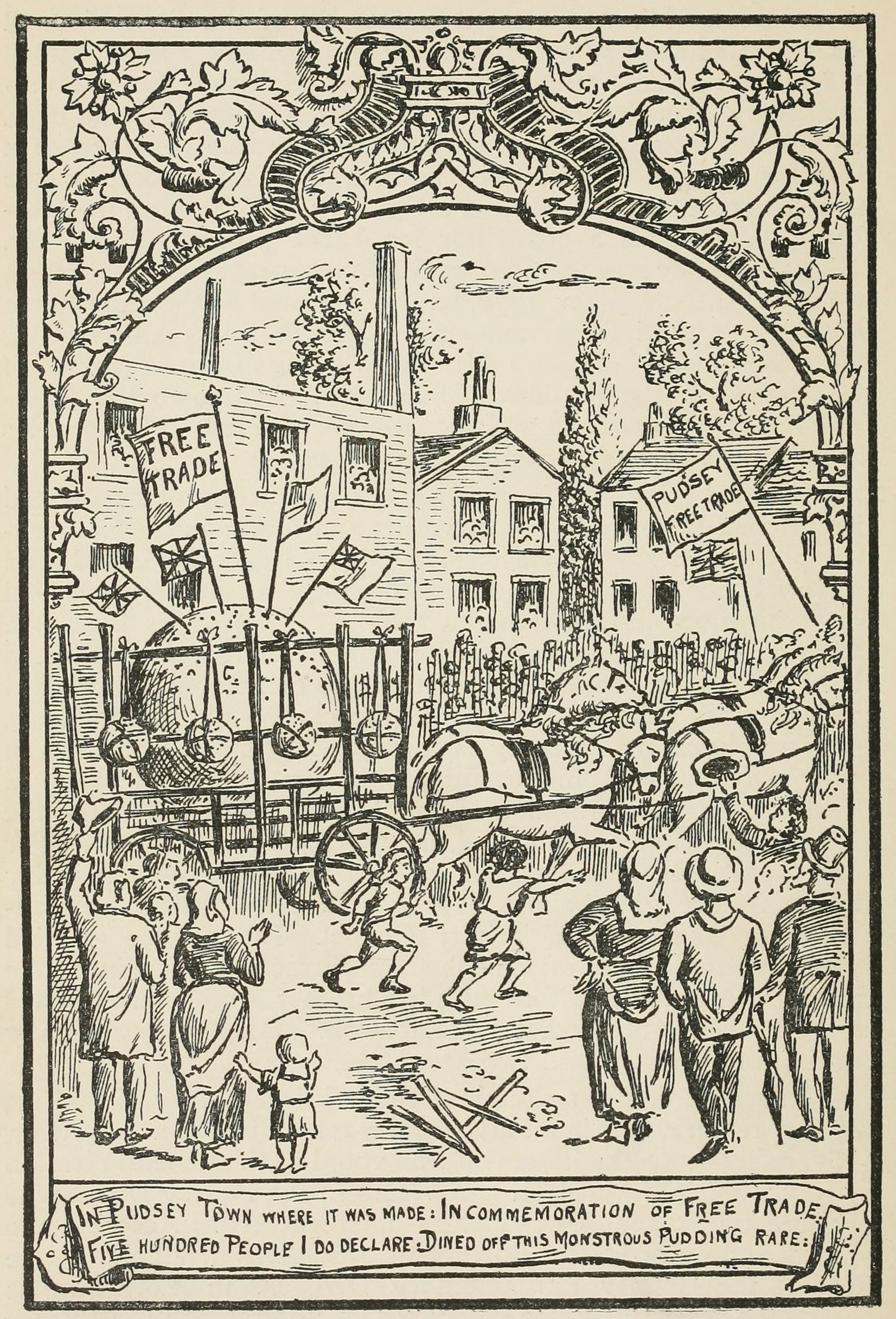
Comment
Comment
The full Mercury article:
The mill-owners and their operatives in the woollen district are becoming alive to the great importance of taking immediate measures, to obtain such an amendment of the Factory Act as will enable them to continue the working of their mills. After the first of March next, it will be unlawful to work any child under twelve years of age more than eight hours per day in any woollen, worsted, flax, or cotton mill. In many places it is already found difficult to obtain a sufficient number of children for the mills, owing to the restriction in the Act, preventing children under eleven years from working more than eight hours. The effect of this has every where been to prevent the employment of such children altogether, as it is found impossible to work with relays of children, or to provide for their education in the way prescribed by the Act. On the first of next month, that very numerous class of children between eleven and twelve years of age, amounting to many thousands, will have to be dismissed from their employment, if the Act is put into effect. consequence will be, that the children will be turned idle upon the streets to learn vagabond habits, that the families to whom they belong will lose a considerable part of their weekly income, that both parents and children will be pinched for food and clothing, and that the mill-owners must stop their mills, as in most places it will be quite impossible to obtain a sufficient number of children above twelve years of age.
We direct the attention of our readers to the resolutions passed at a numerous meeting of the mill owners of Pudsey, on Wednesday last, published in our advertising columns. These resolutions express the unanimous sense of the mill-owners in that whole district, and they point out very clearly the evils of the restrictions above mentioned. Nor is the alarm felt by the masters alone; the workmen and their families are equally alive to the mischief which is coming upon them, and are aware that if the Act is not amended, they will be deprived of the earnings of all their children under twelve years of age, and will have to support them in idleness. On Saturday last the operatives of Pudsey met, and passed resolutions entirely concurring with those of the masters, except that, instead of petitioning that children of nine years of age may be allowed to work eleven hours in the day, they ask that children of eight years may be allowed to work those hours. Their resolutions to this effect will be found in another column. We think the request of the masters is perfectly reasonable and consistent with humanity; but we should not like to see children below nine years employed for eleven hours per day in the mills. The operatives of Bramley, Farsley, and Calverley, met on Wednesday night, and came to a similar conclusion with their fellow-operatives of Pudsey. It is the intention of these parties to petition for an amendment of the Act, on the principles we have mentioned. The parents of the children are fully concurring with the work-people in this object. The mill-owners have already prepared their petition, and it will be sent up so as to be presented at the opening of Parliament.
It is evident that the emergency is such as to call upon all persons interested in mills, whether as masters or workmen, to bestir themselves immediately in order to obtain an alteration in the Act. That alteration cannot be procured by the first of March; but we hope, if the, mill-owners and their workmen generally should petition, the Factory Inspectors would think it consistent with their duty to abstain from rigorously enforcing the Act till a Bill can be passed for its amendment. Of this, however, we cannot be certain; and it is manifest that the Inspectors will not take upon themselves such a responsibility unless the movement among the mill-owners and operatives is very general, as nothing less than a general declaration of the impossibility of complying with the Act would justify them in suspending its operation. We have not the slightest hesitation in saying that an alteration of the Act is necessary, for the preservation of our trade, and for the interests of all classes connected with it.
It is now the almost universal opinion both of the mill-owners and the operatives in the woollen district, that an Eleven Hours Bill, i. e. a bill restricting the labour to eleven hours a day, and not allowing children under ten years to work those hours, would be most conducive to the interests and happiness of all parties, including the children themselves. This opinion was found to be the average of the opinions expressed by a great number of the operatives in the cotton mills of Manchester, at a meeting with Mr. RICKARDS, the Factory Inspector, last Saturday. The same conclusion was come to at a meeting of the overlookers in the worsted mills of Bradford, held on Wednesday evening-all the overlookers being favourable to eleven hours, except those of Mr. Jous WOOD, who preferred ten hours, and the age at which children were to be admissible being ten years. We must say, however, that the masters in the worsted and flax mills are favourable to eleven hours and a half, and in the cotton mills to twelve hours. Many of the operatives in this town have sent memorials to government in favour of an Eleven Hours Bill.
We understand that a circular was lately sent by Mr. BAKER, the Factory Superintendent, to the Medical men who grant certificates to Factory Children in the West Riding, inquiring if in their opinion children ten years of age might be allowed to work twelve hours a day without injury to their health. Out of 59 answers received, 40 replied in the affirmative; 14 in the negative; and 5 were dubious. We may therefore venture to assume that there could at least be no objection to children of that age working eleven hours a day, i. e. one hour less.
It is worthy of being known that the number of children in this town alone, who might be employed in the mills if children of ten years were admissible, but who would, be prevented from working if children were not admissible under twelve, is 960. Of course several hundred poor families. would be prevented from obtaining the earnings they might receive, if the present Act should be put in force on the 1st of March. And this is no advantage to the children themselves, but the reverse: it leaves them to idle habits, and renders it impossible for workmen to pay for the education even of those who are under ten years of age.
MR. RICKARDS, the active and humane Inspector, who is now making a circuit to ascertain the opinions of the work- people and the masters on the Factory Act, will be in Leeds next Wednesday; on Monday next he will be in Halifax; on Tuesday in Bradford; and after remaining four or five days in Leeds, he will go to Wakefield and Huddersfield. This week he has been in Bolton, Bury, Rochdale, and other Lancashire towns. We believe Mr. RICKARDS is exceedingly desirous to meet with deputations both from the masters and the workmen, especially the latter, that he may be the better prepared to recommend such an amendment of the Factory Act as may meet their interests and wishes.
Something to say? Get in touch
Search
Subscribe/buy
Donate
Music & books
Place-People-Play: Childcare (and the Kazookestra) on the Headingley/Weetwood borders next to Meanwood Park.
Music from and about Yorkshire by Leeds's Singing Organ-Grinder.
 RSS feed
 Bluesky
 Extwitter