18 January 1855: York Ecclesiastical Court tells Mrs Ackroyd of Knaresborough that any attempts by her husband to injure her are due to her divorce proceedings and failure to consort with him
Bradford Observer. 1855/01/25. York Ecclesiastical Court. Bradford. Get it:
.Unedited excerpt
If an excerpt is used in the book, it will be shorter, edited and, where applicable, translated.
[Chancellor Granville Harcourt-Vernon said in the divorce proceedings that] it was alleged that [Robert Stables] Ackroyd had committed several acts, or was expected to commit several acts prejudicial to the health of his wife, but these were set out in a very vague and indefinite manner. He did not know why Mr. Ackroyd had broken the windows of Miss Fothergill’s house, the probability was that he had done so on account of these proceedings at law, and it was not to be wondered at that from such provocation he should be led to do things which be otherwise would not have done. Mrs. Ackroyd must cultivate a very strange, singular, and depraved state of mind to be always supposing that her husband intended doing her some injury or to commit some personal violence, which personal violence, however, never took place. The question that would ultimately arise would be, whether the conduct of the defendant had been such as to constitute what the law holds to be cruelty upon which a separation may be founded, – whether the physical results of such conduct were so dangerous to the promovent’s health as to entitle her, under the form of a divorce in this court, to that relief which she could not otherwise procure. He, however, was not deciding the case now, and therefore would not enter into the law upon that point. No doubt in the case of unhappy conjugal alliances, the conduct of the husband, who may be provoked, may have a tendency to undermine the health of the wife, or vice versa; and such is a deplorable state of things; but it is another question whether such circumstances will afford strict legal ground for a divorce in this court. What would it lead to? She leaves her husband, and then comes and pleads a great number of acts done by him which are offensive to her and to her relatives, who are countenancing the wife’s voluntary withdrawal from her conjugal duties. Her primary duty is to consort with him, and to bear and forbear. She withdraws herself, and exasperates him against those who assist her in the course she has taken; and he held that she could not plead circumstances which arose in this way out of this new state of their relation to each other. If there was any unpleasantness between Mrs. Ackroyd and her husband, it was her duty to make the best and not the worst of it, in which case she should endeavour to mitigate and not aggravate the evil.


Comment
Comment
The allegations to which Harcourt-Vernon was responding on behalf of the Church of England:
[It was] alleged that about Christmas 1853, Mrs. Ackrovd had reason to believe that her husband was insane, and that she secreted his razors, and ordered the servants to be ready to come to her assistance st a moment’s notice, as she apprehended some violence on Mr. Ackroyd’s part towards her. That a few days after she left him he went to the house of Miss Fothergill, in Knaresborough, where she was staying, and there, outside the house, conducted himself in a manner which led to the belief that his mind was affected, and caused his wife further anxiety and apprehension as to her personal safety. That in April, by the advice of her medical attendant, she left Knaresborough, and proceeded to Leamington, partly to recruit her health, and partly to be out of the way of the defendant; she kept her address as secret as she could, and while at Leamington she took out of door exercise in secluded parts; nevertheless, from information she received, she became apprehensive that the defendant would find his way to her lodgings. That Mr. Ackroyd having afterwards ascertained when she was to return to Knaresborough, placed himself in some of the roads leading from the railway station, with the intention of intercepting and annoying his wife; but that not having the opportunity of doing so, he afterwards abused and insulted Miss Jane Powell, who had been with his wife part of the time at Leamington, and also annoyed and insulted Mr. Matthew Gill, his wife’s solicitor, by twice throwing up the window of a news-room where Mr. Gill was, and applying opprobious epithets to him. That on the 4th of August the defendant rode up to Miss Fothergill’s drawing-room window, on horseback, and broke it with the butt end of his whip, close by where a lady named Kirby was sitting. That in a short time he returned, and broke several panes of glass in the breakfast-room, and that an attempt was made to secure him, but he being on horseback, escaped. That defendant also went to the shop of Mr. John Fothergill, his wife’s father, and broke a square of glass, and was only prevented from doing further damage by several of the neighours, who, with sticks, brush shafts, etc., had kept him off. That defendant persisted in this outrageous conduct for four hours, on the 4th of August, and that being followed, as he rode up and down, by several hundred boys, he caused great fear to his wife, who was obliged to be removed to the back part of the house. That on the 9th of August he was bound over before a bench of magistrates to keep the peace for twelve months, himself for £100 and one surety of £100. That defendant repeatedly tried to annoy and alarm his wife, and her aunt, and father, by being near and about Miss Fothergill’s house after dark; that he had used some threats as against Mr. Fothergill; and had frequently insulted Mr. Gill, and endeavoured to provoke him to a breach of the peace.
Mrs. Ackroyd doesn’t have her own in the court reporting, but was Isabella Wright (dates unknown). She was married in 1830 in Bradford to Ackroyd, who was born in 1808 in Bradford and died eight years after these events, in 1863, probably also in Bradford.
Something to say? Get in touch
Tags
Tags are assigned inclusively on the basis of an entry’s original text and any comment. You may find this confusing if you only read an entry excerpt.
- Church of England (94) W/G ·
- Divorce (2) W/G ·
- Domestic violence (7) W/G ·
- Ecclesiastical court (2) W/G ·
- Goldsborough, Harrogate (1) W/G ·
- Granville Harcourt-Vernon (1792–1879) (1) W/G ·
- Leamington Spa (1) W/G ·
- Misogyny (9) W/G ·
- 📌York (165) W/G ·
Comment
Comment
The allegations to which Harcourt-Vernon was responding on behalf of the Church of England:
[It was] alleged that about Christmas 1853, Mrs. Ackrovd had reason to believe that her husband was insane, and that she secreted his razors, and ordered the servants to be ready to come to her assistance st a moment’s notice, as she apprehended some violence on Mr. Ackroyd’s part towards her. That a few days after she left him he went to the house of Miss Fothergill, in Knaresborough, where she was staying, and there, outside the house, conducted himself in a manner which led to the belief that his mind was affected, and caused his wife further anxiety and apprehension as to her personal safety. That in April, by the advice of her medical attendant, she left Knaresborough, and proceeded to Leamington, partly to recruit her health, and partly to be out of the way of the defendant; she kept her address as secret as she could, and while at Leamington she took out of door exercise in secluded parts; nevertheless, from information she received, she became apprehensive that the defendant would find his way to her lodgings. That Mr. Ackroyd having afterwards ascertained when she was to return to Knaresborough, placed himself in some of the roads leading from the railway station, with the intention of intercepting and annoying his wife; but that not having the opportunity of doing so, he afterwards abused and insulted Miss Jane Powell, who had been with his wife part of the time at Leamington, and also annoyed and insulted Mr. Matthew Gill, his wife’s solicitor, by twice throwing up the window of a news-room where Mr. Gill was, and applying opprobious epithets to him. That on the 4th of August the defendant rode up to Miss Fothergill’s drawing-room window, on horseback, and broke it with the butt end of his whip, close by where a lady named Kirby was sitting. That in a short time he returned, and broke several panes of glass in the breakfast-room, and that an attempt was made to secure him, but he being on horseback, escaped. That defendant also went to the shop of Mr. John Fothergill, his wife’s father, and broke a square of glass, and was only prevented from doing further damage by several of the neighours, who, with sticks, brush shafts, etc., had kept him off. That defendant persisted in this outrageous conduct for four hours, on the 4th of August, and that being followed, as he rode up and down, by several hundred boys, he caused great fear to his wife, who was obliged to be removed to the back part of the house. That on the 9th of August he was bound over before a bench of magistrates to keep the peace for twelve months, himself for £100 and one surety of £100. That defendant repeatedly tried to annoy and alarm his wife, and her aunt, and father, by being near and about Miss Fothergill’s house after dark; that he had used some threats as against Mr. Fothergill; and had frequently insulted Mr. Gill, and endeavoured to provoke him to a breach of the peace.
Mrs. Ackroyd doesn’t have her own in the court reporting, but was Isabella Wright (dates unknown). She was married in 1830 in Bradford to Ackroyd, who was born in 1808 in Bradford and died eight years after these events, in 1863, probably also in Bradford.
Something to say? Get in touch
Similar
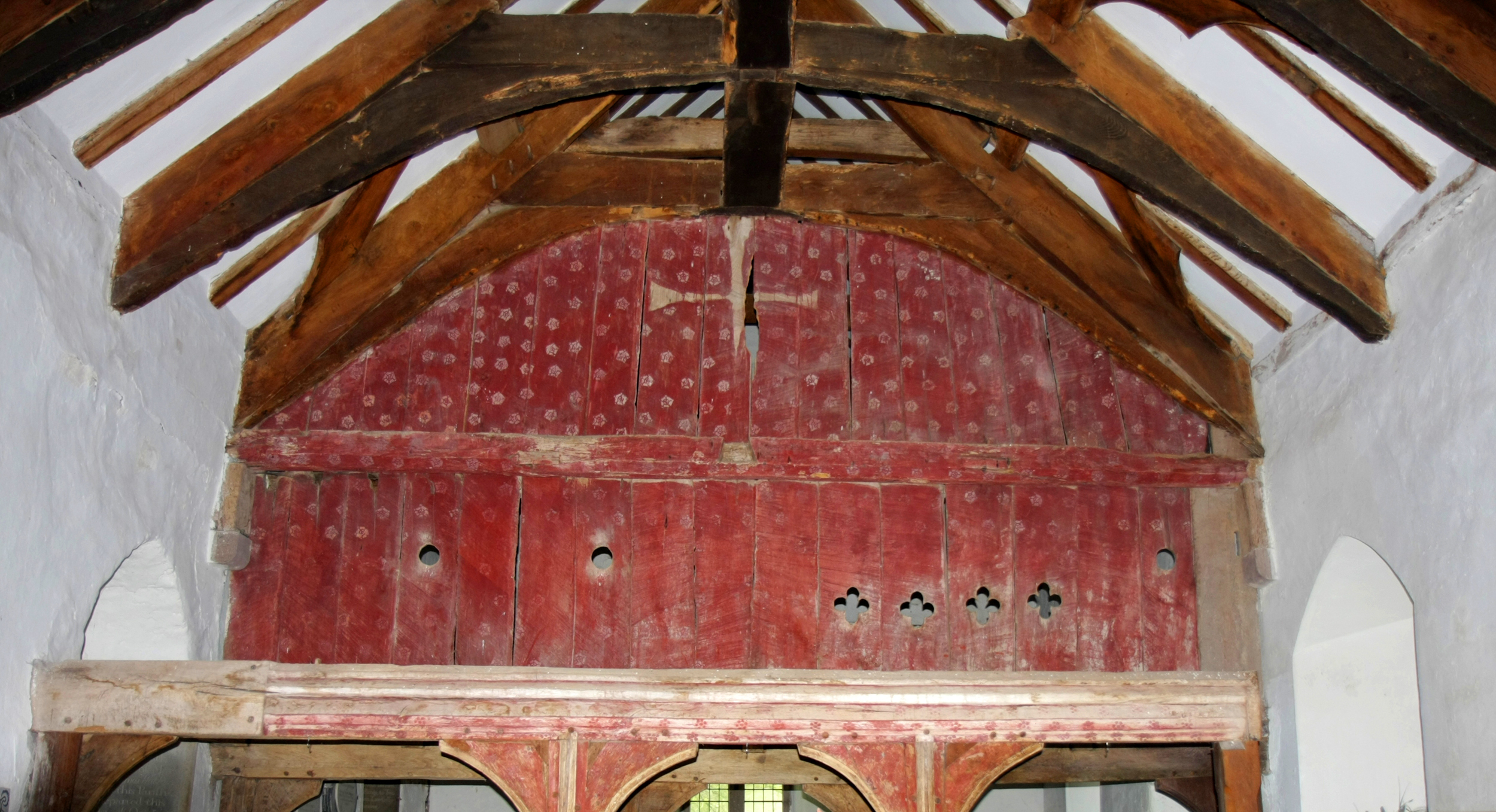 26 December 1570: Edmund Grindal, Puritan archbishop of York, orders the removal of rood-lofts (and their superstitious images), and the erection of pulpits
 20 September 1635: Angry villagers bear William Hodshon on a pole into Sunday service at Appleton Wiske (Northallerton), assisted by a bagpiper and a churchwarden
Comment
Comment
Comparison with the piece from The Spectator on the same day suggests to me that their critic is referred to above:
The Leeds Musical Festival terminated with The Messiah on the morning of Saturday last. In the performance of the solo parts there was nothing remarkable, the principal singers being the usual metropolitan celebrities, Madame Clara Novello, Miss Dolby, Mr. Sims Reeves, and Mr. Weiss; but the choruses were sung in a manner which the metropolis certainly has never been able to equal. We have already had occasion to notice the superiority of the choristers of Birmingham to those of Exeter Hall, notwithstanding their inferiority in numerical strength: at Leeds the same observation held good in a still more remarkable degree. At Exeter Hall the choral and instrumental band numbers above 700; at Birmingham it numbered about 500; at Leeds under 350: while the real power of these tuneful hosts was in the inverse ratio of their numbers. The Birmingham 500 excelled the London 700, while the Leeds 350 excelled both the one and the other. The Yorkshire choristers are the best in England, if not the best in the world; and all the Leeds choristers were Yorkshire people belonging to the working classes, drawn from the towns and villages of that musical land. Among them there was not one useless individual: they all had sound, mellow, English voices; they all thoroughly knew their parts, and consequently sang without hesitation or wavering, and their united voices formed a volume of pure musical sound which we have never heard equalled elsewhere by twice their number. Of all the districts of England the great county of York is the best able to furnish the materials for a great music-meeting; and in former times it was in the city of York that the greatest of the English Festivals was held, though it has been long since crushed by the interference of clerical bigotry. We are glad that a new Yorkshire Festival has been established. Like that of Birmingham, it is independent of the abused power of ecclesiastical dignitaries: and as the people of Leeds have emulated those of Birmingham in spirit and energy, their Festival has a fair prospect of rivalling the other in durability and magnitude. And this prospect is all the greater for the design, (which we understand, is contemplated) of rendering the Leeds Festival, like that of Birmingham, a permanent establishment, with triennial meetings for one charitable object, the benefit of the General Infirmary, a charity of great and extensive usefulness.
The financial result of this first Music Meeting at Leeds has been highly favorable. The audiences at the seven morning and evening performances amounted on an average to 2000 persons at each; the whole amount received has been about 75001, while the expenditure is estimated at 6000l: so that the charity will be benefited to the extent of about 1500l.
The appointment of Professor Sterndale Bennett (who, in addition to his high talents and reputation, is a Yorkshireman born) to the office of conductor, gave general satisfaction from the outset, and the vigour and ability with which he performed his duties, enhanced greatly the excellence of the performances and the success of the Festival.
(Spectator 1858/09/18)
George Bernard Shaw, however:
Down to 1877 the majority of the committee never got beyond the primitive notion that a great musical event was one at which Tietjens sang and Costa conducted. It was not until she died and he repudiated the committee that Leeds at last found out that familiarity with The Messiah, Elijah and the overture to William Tell, was not the climax of nineteenth-century musical culture.
Can someone point me to something about the York festival?
Something to say? Get in touch
Search
Subscribe/buy
Donate
Music & books
Place-People-Play: Childcare (and the Kazookestra) on the Headingley/Weetwood borders next to Meanwood Park.
Music from and about Yorkshire by Leeds's Singing Organ-Grinder.
 RSS feed
 Bluesky
 Extwitter