31 March 1856: William Allison, a 4-year-old port-drinker, hears what he believes to be Russian gunfire while building sandcastles on Redcar beach
William Allison. 1920. “My Kingdom for a Horse!”. New York: E.P. Dutton and Company. Get it:
.Unedited excerpt
If an excerpt is used in the book, it will be shorter, edited and, where applicable, translated.
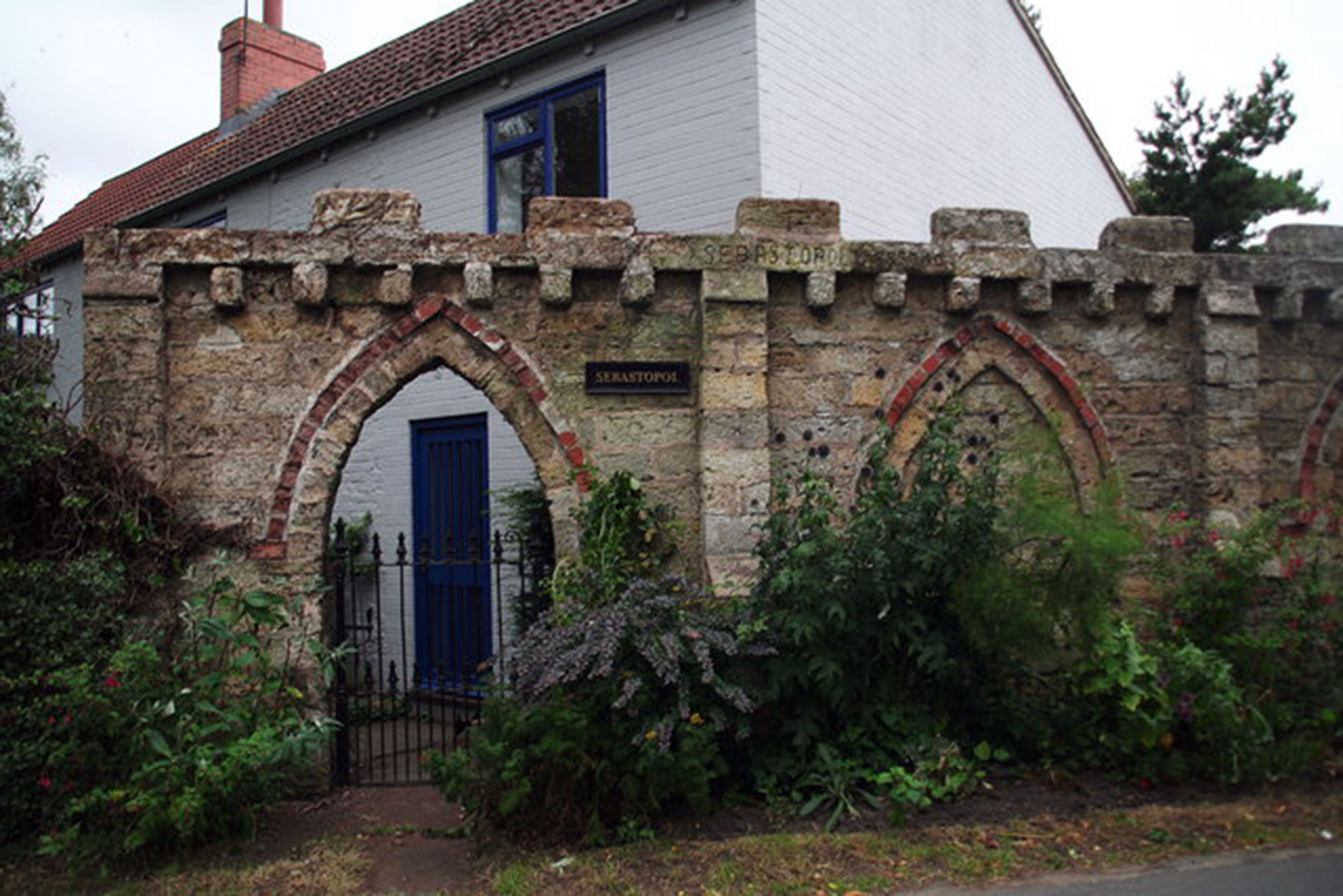
The Treaty of Paris, after the Crimean War, was signed on 30th March 1856. News did not travel quite so rapidly then as now, but whenever this news reached Yorkshire I and the late Sir Charles Dodsworth [Charles Smith-Dodsworth, 5th Baronet], both of about the same age, were digging in the sands at Redcar, and there was suddenly much gun-firing at Hartlepool, in celebration of the peace. We thought it was the Russians coming and fled to our respective nurses.
I was a horribly nervous, delicate wretch in those times, and probably owe much to this day to old Dr Ryott, of Thirsk, who was quite a marvel for the “grand manner” and much commonsense, though troubled with no superfluity of science. “Give the boy plenty of good malt liquor,” he used to say, “and a glass of good port in the middle of the morning.”
His advice was followed scrupulously, both at home and when I went to school.

Comment
Comment
There are contemporary press reports of celebrations in London on 30 March, but I believe that the Leeds Mercury only reported the news on 1 April, so (Monday) 31 March in Hartlepool is a guess. Electrical telegraphy could have reached Hartlepool on Sunday (30 March) afternoon, but did it?
Something to say? Get in touch
Tags
Tags are assigned inclusively on the basis of an entry’s original text and any comment. You may find this confusing if you only read an entry excerpt.
- Alcohol (drug) (62) W/G ·
- Allison, William (1851-1925) (12), Yorkshire-born sporting journalist W/G ·
- Beer (36) W/G ·
- Congress of Paris (1856) (1) W/G ·
- Crimean War (6) W/G ·
- Electrical telegraphy in the United Kingdom (1) W/G ·
- Hartlepool (3) W/G ·
- Malt liquor (3), used in our sources as a synonym for beer W/G ·
- Ottoman Empire (6) W/G ·
- Port wine (4) W/G ·
- Redcar (2) W/G ·
- Russia (8) W/G ·
- Russian Empire (5) W/G ·
- Second French Empire (2) W/G ·
- Treaty of Paris (1856) (2) W/G ·
- 📌West Hartlepool (2) W/G ·
Comment
Comment
There are contemporary press reports of celebrations in London on 30 March, but I believe that the Leeds Mercury only reported the news on 1 April, so (Monday) 31 March in Hartlepool is a guess. Electrical telegraphy could have reached Hartlepool on Sunday (30 March) afternoon, but did it?
Something to say? Get in touch
Similar
 28 April 1843: Thomas Hardwick announces the sale by auction at the Star and Garter of the Kirkstall Brewery, following the death in bankruptcy of Thomas Walker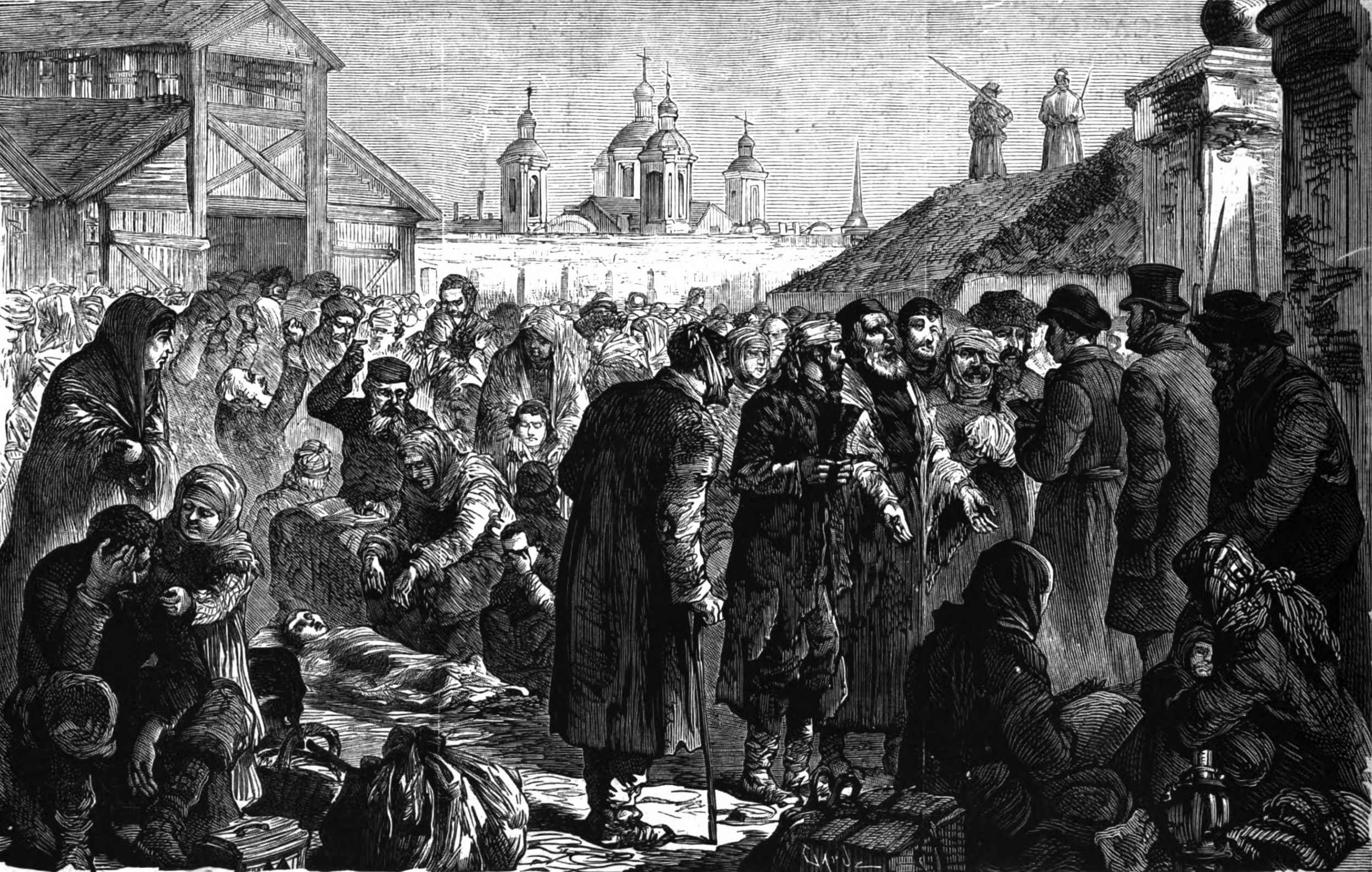
Comment
Comment
James Appell:
The wartime discord prompted some soul-searching within the community, which began questioning whether the economic and social bonds between Jew and non-Jew, forged in Leeds by the conditions of the tailoring trade, were really as strong as the trade unions and socialist movements might have portrayed. The Jewish Chronicle offered its own analysis just a few weeks after the Leeds riot concluded:
There has been a very large and sudden increase in the Jewish population of Leeds during the last few years, and that there has in consequence been considerable inconvenience in many directions to the indigenous inhabitants … Towns, like countries, can assimilate only a certain Jewish element in a certain time, and the Jewish addition to the population of Leeds has been too much and too fast.
The rapid entry of nearly 20,000 Jews into Leeds within the space of two generations clearly exerted pressures on the local population. In this respect Leeds may have differed from London and other provincial cities, where Jewish immigration from Eastern Europe was of a longer duration, where an Anglo-Jewish community already existed and where tensions were less marked than in Leeds. Poverty and mode of employment may have united the two groups, but ultimately religious difference divided them. In such circumstances, therefore, Leeds Jews’ identity as Yorkshiremen was only ever going to be fragile (Appell 2019).
Via Lola Fraser, who thinks the perception that Leeds’s (eastern European) Jews were evading military service would have been exacerbated by the Leeds socialist-pacifist convention on 3 June 1917 in support of revolutionary Russia’s withdrawal from World War I (Fraser N.d.).
Something to say? Get in touch
Search
Subscribe/buy
Donate
Music & books
Place-People-Play: Childcare (and the Kazookestra) on the Headingley/Weetwood borders next to Meanwood Park.
Music from and about Yorkshire by Leeds's Singing Organ-Grinder.
 RSS feed
 Bluesky
 Extwitter