13 June 1864: With the assizes leaving York for the West Riding, manufacturers suffer a surprise defeat by landowners in the Lords in the choice of the new county town
Spectator. 1864/06/18. County Capitals. London. Get it:
.Unedited excerpt
If an excerpt is used in the book, it will be shorter, edited and, where applicable, translated.
COUNTY CAPITALS.
WE do not suppose that many persons not Yorkshiremen read the odd little debate in the Lords on Monday which ended in the defeat of the Government, but it had an interest of its own. It was an episode in a curious social contest which has raged for some years in Yorkshire, and which is raging every day in half the counties of England. The conflict, seldom recorded, but always perceptible, arises from the struggle of the great employers of labour to assert their social equality with the great owners of land. Their political equality they have asserted, have in some places acquired even too great a superiority, the power of property being in reality with them rather than with their rivals. The man who pays thirty thousand a year in wages is not, of course, as rich as the proprietor with thirty thousand a year; but he has just as much of “property influence” over a rather greater number of people. On imperial questions the manufacturer holds his own, not to say more than his own, and naturally seeks to assert himself as successfully in all matters of social import. Naturally also under the English system his mode of self-assertion, of registering, as it were, his new position, is by a struggle for “county influence,” weight on the Bench, a consultative voice, if possible a governing voice, on all questions in which “the county” is or is supposed to be deeply interested, highway acts, prison management, selection of assize towns, payment of Catholic Chaplains, and in many places the severe or lenient working of the game laws. In most counties the manufacturer has as yet not been very successful in his efforts, in some he has utterly failed. Lord Palmerston could tell a good story about an attempt to raise a successful professional man to the Hampshire bench, which broke down chiefly because he was a professional man. Tradition is completely on the side of the landowner, the really great magnates support him by preference, the conservative class is more united than the invading one, and the new men are not always thoroughly trained to the work. When they are they are apt to win for themselves individually, rather than to break down the old barrier for friends less efficient or less lucky. As a rule, the lords of the soil, though frequently defeated in Parliament, are pretty completely masters in the counties, and in some places guard their power with an exclusive jealousy which excites no little ill-will, resisting every attempt at what they call “centralization,” i.e., the diminution of their authority in favour of that of the nation, with a bigoted pertinacity which is very seldom defeated.
In the West Riding, however, the influence of the landowners, though perhaps still in the ascendant, is by no means so great. So large and so numerous are the mills, so well educated is the class which creates them, so enormous and so visible is the deposit of wealth which trade has left and is leaving on the soil, that the “tradesmen,” as with true Yorkshire pride they are apt to call themselves – being about as much tradesmen as the Peers who deal in slate, iron, brickfields, and mines are tradesmen – have fought their way to a very fair degree of social equality. Backed by the populations of the towns, they are inclined to have that equality recognized, and years ago chose as their cheval de bataille, their test of strength, the selection of a new capital for the Riding. The first point was to secure the condemnation of York as the fitting assize town, but the first effort for this end, made forty years ago, failed. The respectable old city had very few arguments to produce in its own favour, being too distant from the centres of activity in the Riding, without any particular advantage in the way of buildings, with a comparatively small population, and few attractions beyond its Minster. The country gentlemen, however, who then filled the Bench almost exclusively were accustomed to go to York, they and their fathers bad always looked upon it as the “Northern capital,” they knew the people and the inns, and their way about, and they did not want any change. They reported in favour of York unconditionally. The agitation, however, continued, and though the majority of magistrates were still against any change the Government, pressed “by the manufacturing and mercantile classes,” at last resolved that the assizes should be extended to some point nearer the great seats of activity and therefore of crime. This settled, it remained to decide on the new capital, and on this the two “interests” openly split. The manufacturers were determined the assize should be held at Leeds, and the landowners that it should be held at Wakefield. The argument the latter brought forward in Parliament was that Wakefield was the “capital” of the West Riding, – a petitio principii – that the gaol was already there, and that any other selection would cost the county hundreds a year in the removal of prisoners; but their real ground of opinion as expressed at county meetings was a very different one. They did not want to be forced to go to a nasty black manufacturing town, where they met all kinds of people they did not want to meet, where manufacturers were completely in the ascendant, where Mr. Baines could make them ridiculous every day before thousands of Yorkshire readers, where they knew very few people, and where a great body of workmen might some day or other hoot them for an unpopular decision. So strong was in some quarters this distaste for Leeds, that the more bigoted landowners spoke as if they were Bedouins, actually afraid to enter a walled city, lest it should have some mystic charm to deprive them of their freedom. One thought justice would suffer greatly from the mental obfuscation produced by the thick canopy of smoke which is still allowed to hang over Leeds, and another said openly that if magistrates were deprived of their country-rides even for two days at a time the accused would be the victims. Government, however, pressed by the manufacturing and mercantile interests, according to Earl de Grey, or by the Leeds Mercury, according to Lord Faversham, or by considerations of sound general policy, as we are inclined to believe, expressed an opinion in favour of Leeds, a vote in the House of Commons supported that view, and Leeds was at last selected. Great was the gratulation among the townsmen, and considerable the satisfaction of the “tradesmen” of the Riding; but the “gentry” were not yet defeated. Beaten in the Privy Council and the Commons, they fell back on their natural allies the Peers, the social screw was put on every Yorkshireman with a title, the Peers, who are generally content with sending from five to fifteen representatives to perform their functions, voted to the number of 134, and an address praying Her Majesty to reconsider her Privy Council’s decision was carried by 80 to 54. Mr. Sotheron Estcourt, fortified by the victory, promises a similar motion in the Commons, and as the country gentry will support him there is every chance that Wakefield, despite its want of accommodation, may become the assize town after all, and the manufacturers have to register one more county defeat.
Apart from the social contest, the arguments openly used on both sides seem to us almost equally balanced. If Wakefield has no courts Leeds has no gaol, and if Wakefield has a smaller “mob,” it has also a much less active and vigorous public opinion. ‘England is not yet reduced to the condition of the Western States, where the capital is always in a village, lest the Legislature should be overawed. But there is one argument which has not been employed, and which seems to us to tell strongly in favour of the Privy Council’s decision. All over England, and more especially north of the Humber, new and great cities are gradually rising up, growing wealthy, drawing to themselves vast aggregations of people. As a rule they grow up of themselves, ill-built, ill-drained, ill-governed, with nothing great about them except their size, and nothing beautiful at all. The rich find life intolerable in them, and fly on the first day they can to the outskirts, while the poor swelter on amidst sights and sounds and stenches fatal to any progress in civilization. Life is possible in a square hovel with black walls opposite its windows, black gutters in front of the door, and a black canopy overhead; but civilization needs some aid from light, and form, and colour. Everything which tends in such places to increase municipal feeling, to give the citizens a pride in their town, to tempt them or shame them into good drainage, and open streets, and even pavement, into respect for the purity of their streams, and care for the colour of their gutters, into building as if architecture had an object other than protection from the weather, is a direct and positive good. The establishment of an episcopate, the transfer of the assizes, the erection of public buildings, all tend to transform places like Leeds, – which is better than most of them, having a certain dingy stateliness of its own, – from mere -collections of houses into cities, places with real municipal life, in which refinement can be cultivated as well as industry, in which the rich, in short, will consent to live as they do in the bright, many-coloured, civilized cities of Italy and France. If the assizes are transferred to Leeds the “gentry,” instead of studiously avoiding the centre of Yorkshire activity, must visit it, will before long catch the habit of visiting it, and will consciously or unconsciously stir up the ruling citizens to seek a somewhat higher ideal. It may be said that the occasional presence of fifty or sixty gentlemen of no municipal influence, even though two or three are judges and four or five are Peers, can have no such result, nor could it by itself. But status affects the tone of cities just as much as the tone of individuals, and the change registers the right of Leeds to a new and higher status. It is a patent of precedence, and the gift will, we believe, be followed, as in individuals, by an effort at a higher mode of living very beneficial to Leeds. The municipality will do more, individuals will do more, corporations will do more for the “capital of the West Riding” than for the same place as a manufacturing borough, and it is essential that more should be done. Nearly half our population now lives in great cities which, compared with the cities of the Continent, are styes, and everything which can develop their self-respect, increase their pride in their habitations, give them the sense of an aggregate political status which it is as incumbent on them to maintain as to maintain their personal position, inspire for their cities the feeling the gentry express for their counties, ought to be carefully encouraged. If social status is not a delusion Leeds is right in trying to be the assize town, Government right in acknowledging that she has earned her claim to official acknowledgment as the chief place of the West Riding.

Comment
Comment
Something to say? Get in touch
Tags
Tags are assigned inclusively on the basis of an entry’s original text and any comment. You may find this confusing if you only read an entry excerpt.
- Assizes (24) W/G ·
- Class conflict (11) W/G ·
- County town (1) W/G ·
- House of Commons of the United Kingdom (12) W/G ·
- House of Lords (4) W/G ·
- 📌Leeds (249) W/G ·
- T. H. S. Sotheron-Estcourt (1) W/G ·
- Textile manufacturing (60) W/G ·
- 📌Wakefield (37), cathedral city on the River Calder in the West Riding/West Yorkshire W/G ·
- West Riding of Yorkshire (150) W/G ·
- 📌York (165) W/G ·
Comment
Comment
Something to say? Get in touch
Similar
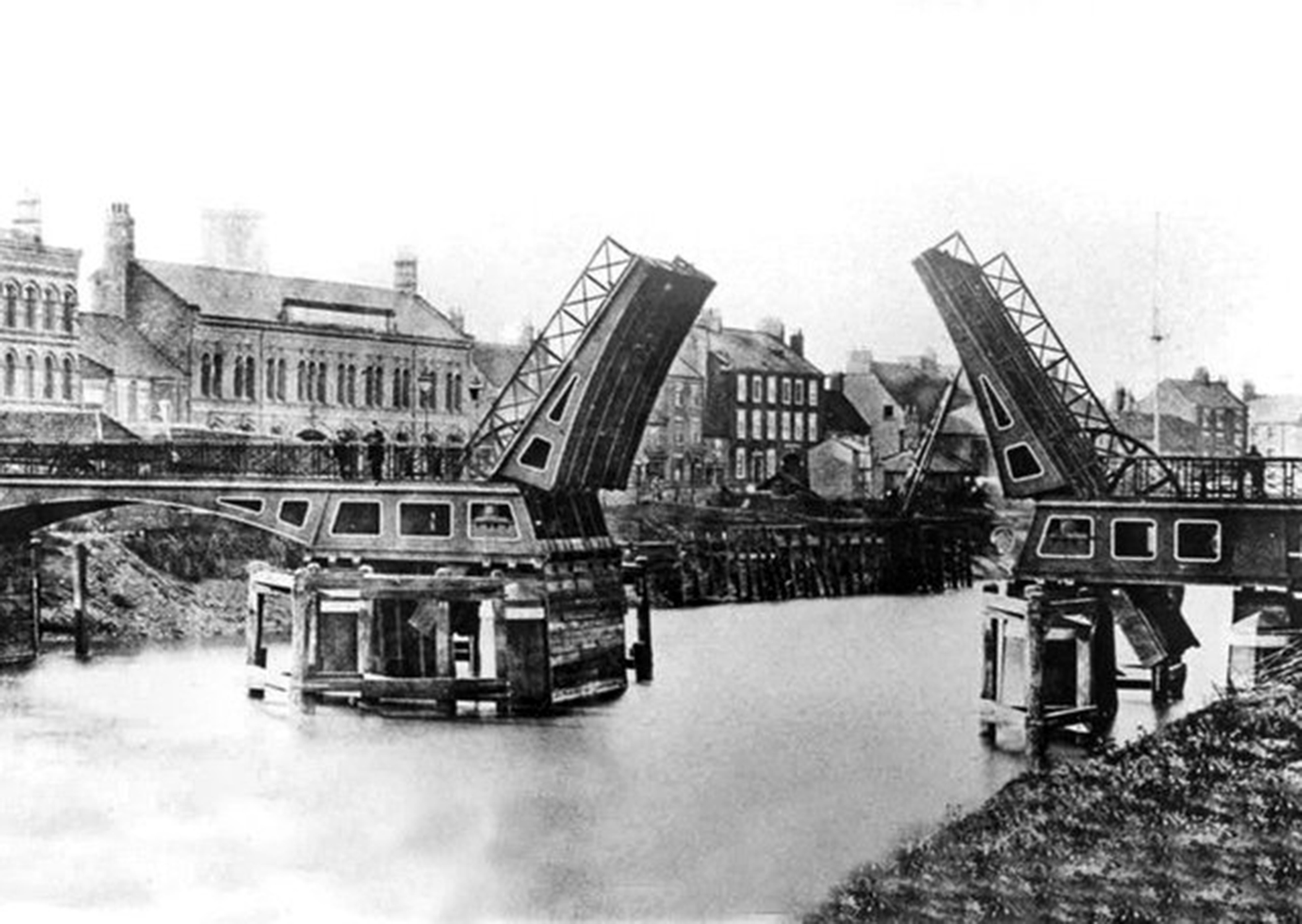 1 July 1840: The opening of the Hull and Selby Railway terminates the threat to Hull’s port from Goole, Scarborough and Bridlington
Comment
Comment
Edward Baines Senior, as well as a shameless plagiarist, was Cobbett’s “Great Liar of the North,” and I wonder how selective and/or inventive this excerpt is – for example, was there really no voice in favour of factory reform, to which Baines was vehemently opposed?
Sydney Smith to Edward Davenport, 3 January 1820:
My opinion is the same as yours upon the Peterloo business. I have no doubt everything would have ended at Manchester as it did at Leeds, had there been the same forbearance on the part of the magistrates. Either they lost (no great loss) their heads, or the devils of local spite and malice had entered into them, or the nostrils of the clerical magistrates smelt preferment and Court favour ; but let it have been what it will, the effects have been most deplorable (Holland 1855).
Something to say? Get in touch
Search
Subscribe/buy
Donate
Music & books
Place-People-Play: Childcare (and the Kazookestra) on the Headingley/Weetwood borders next to Meanwood Park.
Music from and about Yorkshire by Leeds's Singing Organ-Grinder.
 RSS feed
 Bluesky
 Extwitter