19 June 1984: On the day after the Battle of Orgreave, the Labour MP for Doncaster North contrasts police behaviour towards striking miners under the (Conservative) Heath and Thatcher governments
House of Commons. 1984/06/19. Coal Industry Dispute. Hansard, Vol. 62. London: UK Parliament. Licensed under Open Parliament Licence, without modification. Get it:
.Unedited excerpt
If an excerpt is used in the book, it will be shorter, edited and, where applicable, translated.
Mr. Michael Welsh (Doncaster, North)
At Orgreave yesterday, the chief constable of south Yorkshire must have ordered a tremendous number of policemen to carry out their duties there, but then he also brought in the cavalry. There were light troops on horseback hurting the lads on strike and wielding their batons unmercifully. We then saw the riot squad move in and do the same think to our lads—belting them across the head. The result was that 16 loads of coal left the depot for an undertaking that had no desire for it. In Saltley in 1972, the miners went to picket and the chief constable closed the depot down. Nobody was hurt. Which of those chief constables acted most rationally?
Mr. Brittan
If a highwayman holds one up, it is always possible to avoid violence by handing over to him what he wants. I do not commend that course to a society that believes in freedom.


Comment
Comment
Something to say? Get in touch
Tags
Tags are assigned inclusively on the basis of an entry’s original text and any comment. You may find this confusing if you only read an entry excerpt.
- 1972 United Kingdom miners’ strike (1) W/G ·
- 1984–1985 United Kingdom miners’ strike (1) W/G ·
- Battle of Orgreave (1) W/G ·
- Battle of Saltley Gate (1) W/G ·
- Birmingham (8) W/G ·
- British Steel (1967–1999) (1) W/G ·
- Coal mining (27) W/G ·
- Coke (fuel) (5) W/G ·
- Conservative Party (1834-) (25) W/G ·
- First Thatcher ministry (2) W/G ·
- Heath ministry (4) W/G ·
- Heath, Edward (4) W/G ·
- Industrial action (1) W/G ·
- Labour Party (UK) (18) W/G ·
- Metropolitan Police (1) W/G ·
- Michael Welsh (Labour politician) (1) W/G ·
- National Coal Board (2) W/G ·
- National Union of Mineworkers (Great Britain) (2) W/G ·
- Orgreave, South Yorkshire (1) W/G ·
- Picketing (2) W/G ·
- Rotherham (21) W/G ·
- Saltley (1) W/G ·
- South Yorkshire Police (3) W/G ·
- Thatcher, Margaret (4) W/G ·
- Yorkshire (8) W/G ·
Comment
Comment
Something to say? Get in touch
Similar
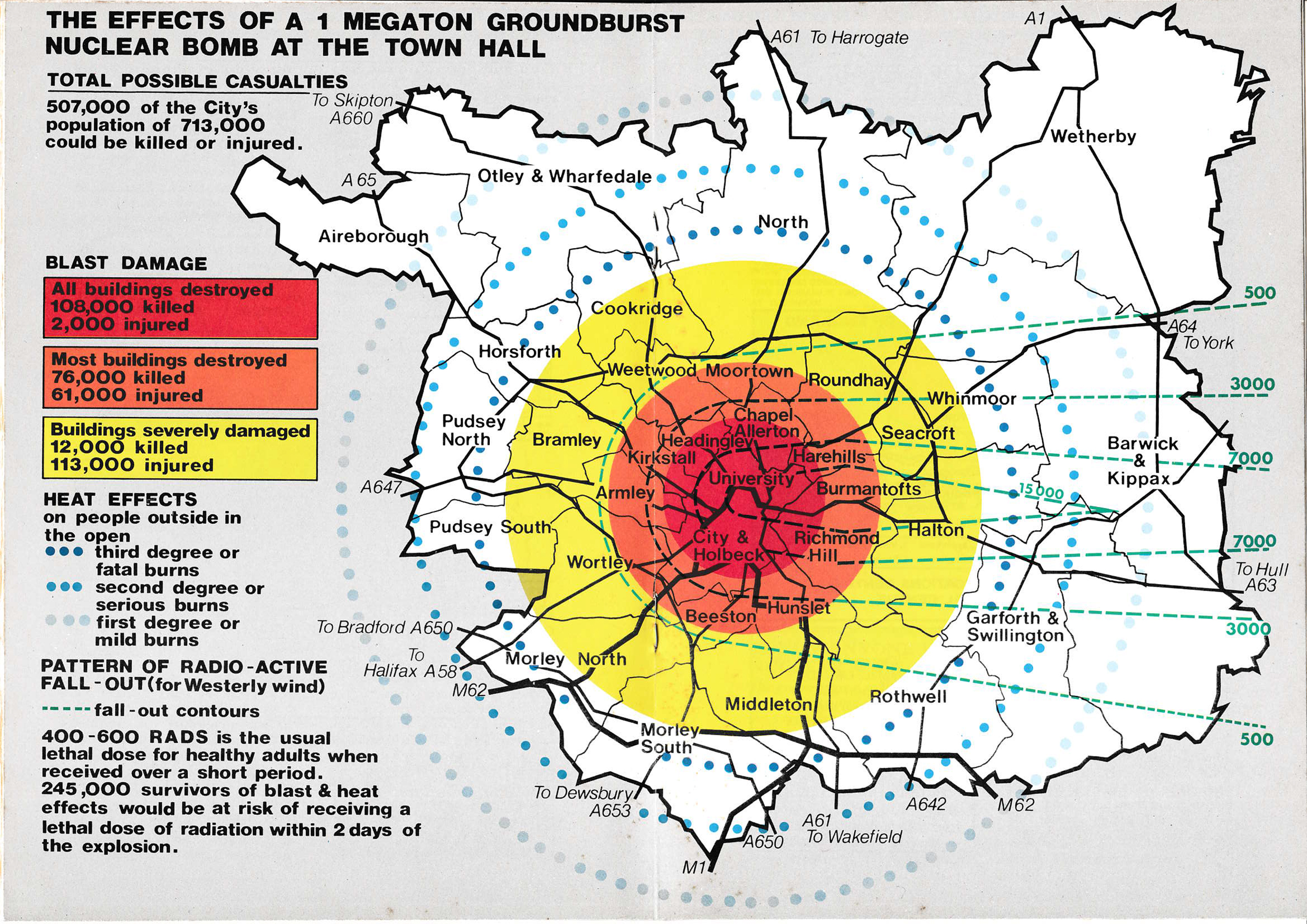 24 June 1981: Leeds City Council declares its opposition to nuclear weapons and resolves to inform the world thereof
 18 January 1966: Barbara Castle (Lab.) swings the Hull North by-election with a bridge over the Humber, convincing Harold Wilson that he has the momentum to win a general election
 8 April 1946: Yorkshire miners’ president Joe Hall threatens strike action if Labour starts opencast mining in Lord Fitzwilliam’s gardens at Wentworth Woodhouse (Rotherham)
 18 February 1934: Leeds Labour triggers the first rent strike against a council by announcing higher rents for well-off tenants and the prospect of free housing for ex-slum-dwellers
Comment
Comment
The date range of Saturday 9- Tuesday 12 October is given here (Meadowhall shopping centre location here), Jayne Senior says she was told on Monday that a bloodstained shoe had been found (Senior 2016), but I am told that Laura was almost certainly murdered on the Saturday evening. See other contemporary pieces in The Times for documentation of the suspected abuse of Laura and the hundreds of other victims, and of the action taken by council officials and South Yorkshire Police to conceal it.
Jayne Senior talks inter alia at length about Laura Wilson. For example:
We’d worked on and off with Laura for many years. As part of a tactic to threaten another girl, she’d been driven down the motorway by a group of men and watched as these men made the other girl drink something out of a bottle she believed was ‘spiked’. Laura was just ten years old at the time and the family became embroiled in a horrendous situation. As time went on, threats were made against the family and Laura stopped going to school. Her social worker and the school who referred her said she was giving favours to men in the backrooms of takeaways in return for alcohol and there was even an incident when a gun was pointed at her. In her mid teens she started to date an Asian boy a year older than her by the name of Ashtiaq Ashgar. He was on our database of people we believed to be involved in CSE in that he was befriending and grooming girls of his age who would then be passed up to older men, and we mentioned him in our meetings as having links to other abusers.
On the police investigation and prosecution:
My mouth dropped open. I couldn’t believe it. An ‘honour killing’? Like she’d somehow had a hand in her own murder? All the agencies were saying this child was being groomed for abuse from the age of ten and now here she was, dead, at just seventeen. There was no ‘honour’ in that. To my mind, this was the result of child sexual abuse, no question. Laura was a very needy and vulnerable girl who was taken advantage of and paid the price for her involvement with a group of abusers and their wide net of associates. Had she not been caught up with these people, she would have undoubtedly been alive today. The honour killing tag was completely inappropriate (Senior 2016).
Were there any indication of shame on the part of Asghar, Hussain, or any others of those implicated in her murder, then a modern Shakespeare would have material. But there is not.
Something to say? Get in touch
Search
Subscribe/buy
Donate
Music & books
Place-People-Play: Childcare (and the Kazookestra) on the Headingley/Weetwood borders next to Meanwood Park.
Music from and about Yorkshire by Leeds's Singing Organ-Grinder.
 RSS feed
 Bluesky
 Extwitter