14 January 1472: Shipments of wallpaper(?) from Schiedam (Holland) pass through Hull customs
Malcolm Haydn Jones. 1991. The Misericords of Beverley Minster. Plymouth: Polytechnic South West. Get it:
.Unedited excerpt
If an excerpt is used in the book, it will be shorter, edited and, where applicable, translated.
There is a most interesting record of a form of what is most probably early wallpaper, described by the customs official at Hull as “paynted pauper”, where “painted” might mean “painted with designs”, or, perhaps, merely “coloured”: on 14th January 1472, two ships, the “Roos” [i.e. “Rose”] and the “Cristofure”, both arrived in Hull from Scheydam, carrying paynted paupers. The “Rose” brought two pipes full, and the “Christopher” 10 dozen [sheets? rolls?].
Twenty-four quires of “papiro depict” were similarly imported into London along with 5 printed books for the merchant Peter Walkyn in 1479/80. On 24th April 1509 a ship entered the port of London with a cargo which included 12 gross [sheets? rolls?] of painted paper and another on 7th May with a dozen painted cloths and 10½ gross of painted paper.
Here we recall the statute promulgated by Richard III in 1483 intended to prevent unemployment in England through a ban on the import of cheap foreign manufactured goods; at the request of the various guilds it was ordained that
no merchant stranger … shall bring into the realm of England to be sold any manner of … painted glass, painted papers, painted images, painted cloths, etc.


Comment
Comment
It seems that the original text of both items is to be found on p.163 of Wendy Childs’ compendium of late 15th century Hull customs records (Childs 1986), of which Google Books has the following snippets:
Navis Johannis Baronson vocata Roos de Skytdam applicuit eodem die Idem Johannes , al ‘ 14 last’allecis albi 8 last cinerum 3 last picis 11/2 C waynscotts 6C modffysshe s seccis hoppe 2 pipis cum paynted paupers
M ferri Navis Deryk Clauson vocata Cristofure de Skyddam applicuit eodem die Idem Deryk , al last allecis albi 2 waynscottes 2 aught anguillarum Maynard Clauson , al ‘ I maunde cum 20 duss ‘ 20 petris lini hattes 1o duss ‘ paynted
The Leeds Library Service doesn’t have it, so I’m hoping someone will lend it to me for a couple of days.
Something to say? Get in touch
Tags
Tags are assigned inclusively on the basis of an entry’s original text and any comment. You may find this confusing if you only read an entry excerpt.
- County of Holland (2) W/G ·
- East Riding of Yorkshire (67) W/G ·
- Interior design (1) W/G ·
- 📌Kingston upon Hull (74) W/G ·
- London (84) W/G ·
- Netherlands (9) W/G ·
- Printing (1) W/G ·
- Protectionism (6) W/G ·
- Richard III of England (3) W/G ·
- Schiedam (1) W/G ·
- Wallpaper (1) W/G ·
Comment
Comment
It seems that the original text of both items is to be found on p.163 of Wendy Childs’ compendium of late 15th century Hull customs records (Childs 1986), of which Google Books has the following snippets:
Navis Johannis Baronson vocata Roos de Skytdam applicuit eodem die Idem Johannes , al ‘ 14 last’allecis albi 8 last cinerum 3 last picis 11/2 C waynscotts 6C modffysshe s seccis hoppe 2 pipis cum paynted paupers
M ferri Navis Deryk Clauson vocata Cristofure de Skyddam applicuit eodem die Idem Deryk , al last allecis albi 2 waynscottes 2 aught anguillarum Maynard Clauson , al ‘ I maunde cum 20 duss ‘ 20 petris lini hattes 1o duss ‘ paynted
The Leeds Library Service doesn’t have it, so I’m hoping someone will lend it to me for a couple of days.
Something to say? Get in touch
Similar
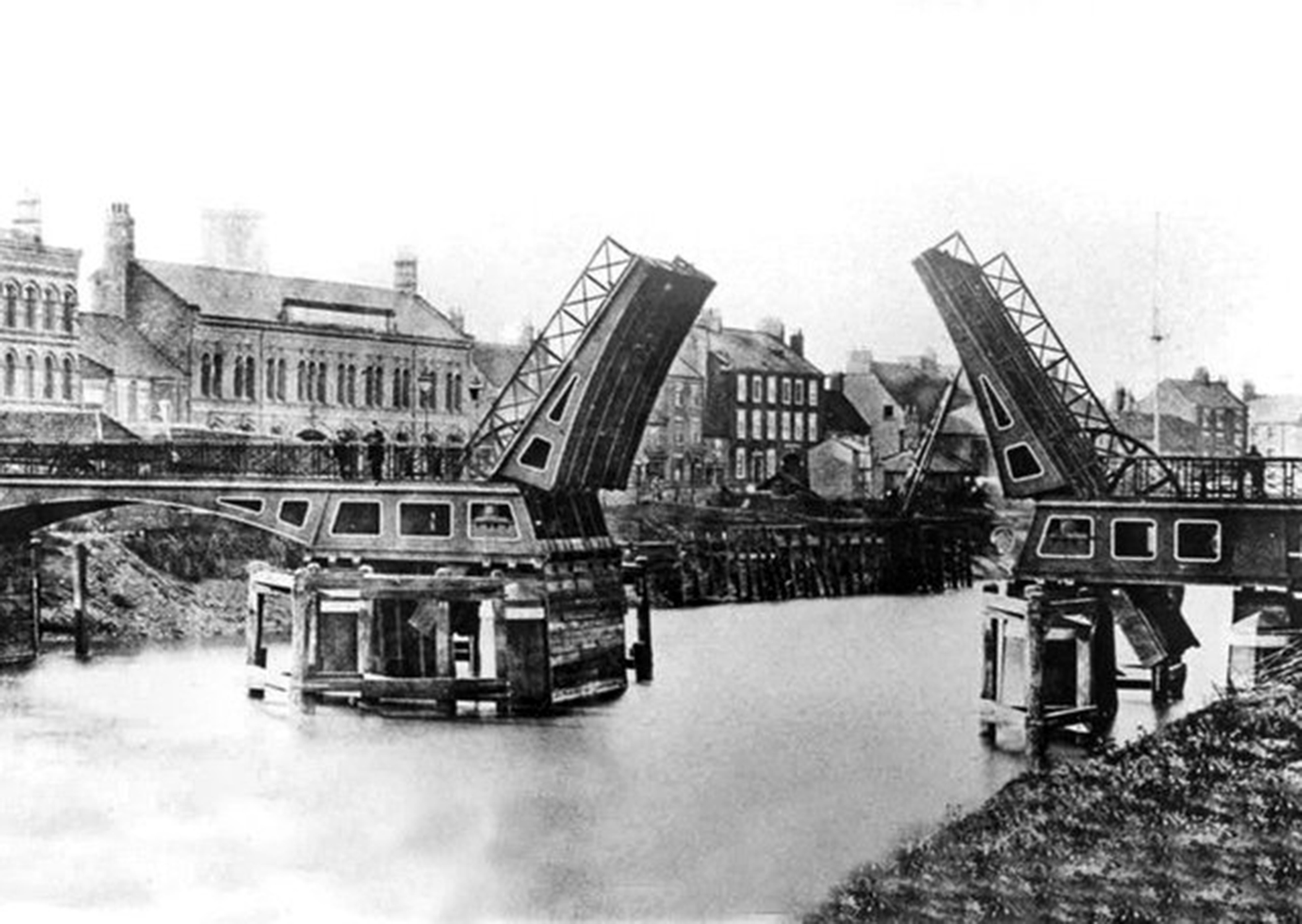 1 July 1840: The opening of the Hull and Selby Railway terminates the threat to Hull’s port from Goole, Scarborough and Bridlington
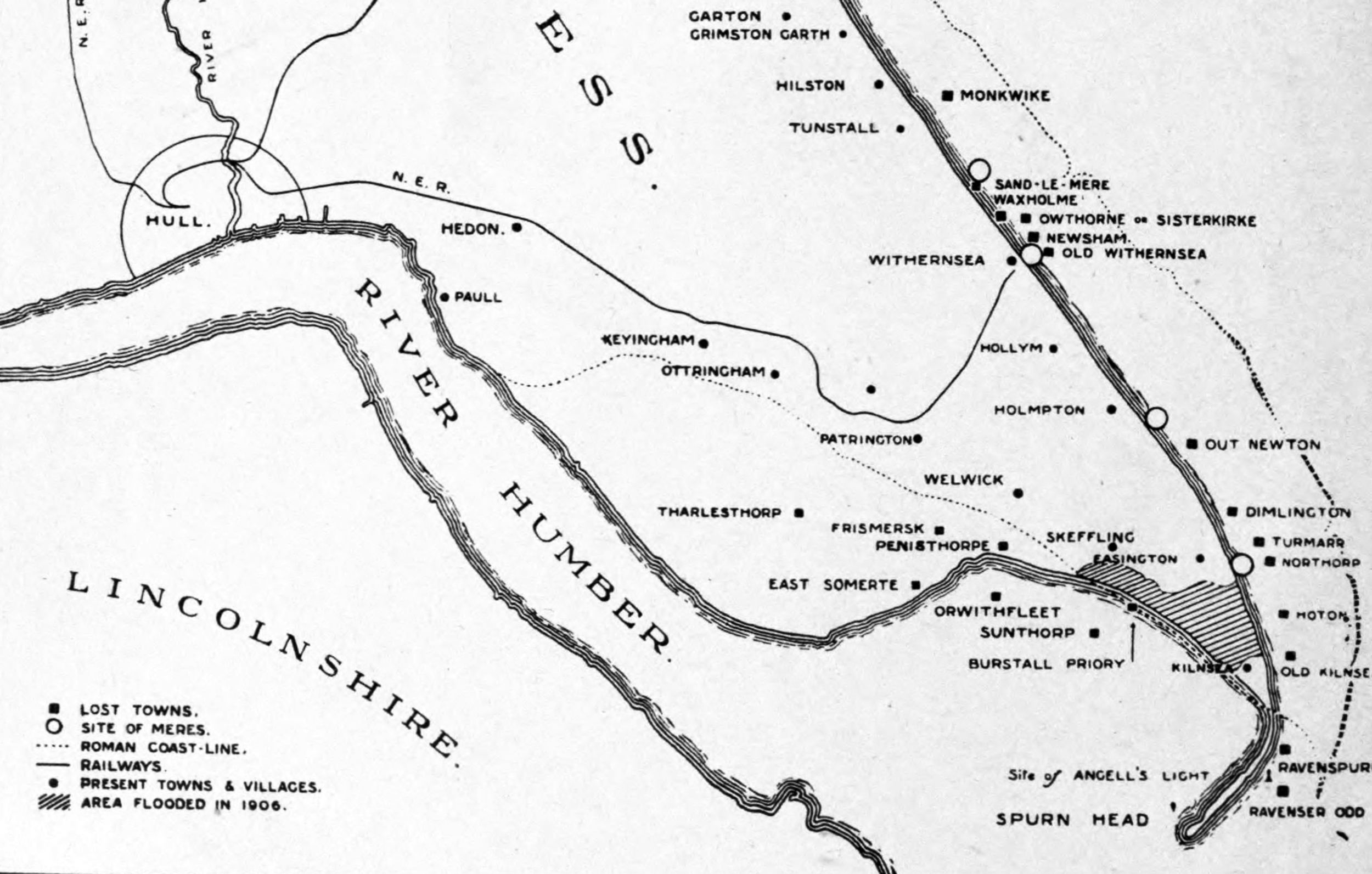 3 May 1343: Short of cash for his French wars, Edward III asks what the effect on his rental income will be of January storms and coastal erosion at Ravenser Odd (Holderness)
 27 July 1822: An inquest at York finds that John Furnel of the Queen’s Regiment of Foot died of flogging and resulting illness
 23 April 1642: Having promised parliament to safeguard for it Hull’s crucial arsenal, John Hotham tells it how today he shut the gates of Hull to Charles I
Comment
Comment
Smeaton’s scheme did not prosper. John Timperley:
Various schemes had been suggested for cleansing the dock of the mud brought in by the tide; one was by making reservoirs in the fortifications or old town ditches, with the requisite sluices, by means of which the mud was to be scoured out at low water; another by cutting a canal to the Humber, from the west end of the dock, where sluices had been provided, and put down for the purpose, when it was proposed to divert the ebb tide from the river Hull along the dock, and through the sluices and canal into the Humber, and so produce a current sufficient, with a little manual assistance, to carry away the mud. Both of these schemes were however abandoned, and the plan of a horse dredging machine adopted; this work began about four years after the Old dock was completed, and continued until after the opening of the Junction dock. The machine was contained in a square and flat bottomed vessel 61 feet 6 inches long, 22 feet 6 inches wide, and drawing 4 feet water: it at first had only eleven buckets, calculated to work in 14 feet water, in which state it remained till 1814, when two buckets were added so as to work in 17 feet water, and in 1827 a further addition of four buckets was made, giving seventeen altogether, which enabled it to work in the highest spring tides. The machine was attended by three men, and worked by two horses, which did it at first with ease, but since the addition of the last four buckets, the work has been exceedingly hard.
There were generally six mud boats employed in this dock before the Humber dock was made; since which there have been only four, containing, when fully laden, about 180 tons, and usually filled in about six or seven hours; they are then taken down the old harbour and discharged in the Humber at about a hundred fathoms beyond low water mark, after which they are brought back into the dock, sometimes in three or four hours, but generally more. The mud engine has been usually employed seven or eight months in the year, commencing work in April or May.
The quantity of mud raised prior to the opening of the Junction dock, varied from 12,000 to 29,000 tons, and averaged 19,000 tons per annum; except for a few years before the rebuilding of the Old lock, when, from the bad and leaky state of the gates, a greater supply of water was required for the dock, and the average yearly quantity was about 25,000 tons. As the Junction dock, and in part also the Humber dock, are now supplied from this source, a greater quantity of water flows through the Old dock, and the mud removed has of late been about 23,000 tons a year.
It may be observed, that the greatest quantity of mud is brought into the dock during spring tides, and particularly in dry seasons, when there is not much fresh water in the Hull; in neap tides, and during freshes in the river, very little mud comes in (Timperley 1842).
Something to say? Get in touch
Search
Subscribe/buy
Donate
Music & books
Place-People-Play: Childcare (and the Kazookestra) on the Headingley/Weetwood borders next to Meanwood Park.
Music from and about Yorkshire by Leeds's Singing Organ-Grinder.
 RSS feed
 Bluesky
 Extwitter