22 October 1674: Barbara Lee dies and – says her epitaph – is then buried upright under the fireplace of St James’ Church, Norton, Sheffield
Sidney Oldall Addy. 1888. A Glossary of Words Used in the Neighbourhood of Sheffield. London: English Dialect Society/Trübner and Co. Get it:
.Unedited excerpt
If an excerpt is used in the book, it will be shorter, edited and, where applicable, translated.
When Norton Church was ‘restored’ in the year 1882, I copied the following inscription from a stone which lay under the altar or communion table adjoining the east window:
In puncto perpendiculari hujusce superficei mortalis pars Barbaræ uxoris Iohannis Lee filiæque Iohannis Lees generosi de East Retford continetur quæ non tam ætate quam virtute clara hujusce mundi fruitionem deseruit vicesimo secundo die Octobris anno domini 1674 ætatis suæ 28.
Prima sui breviter gracilis pars defluit ævi,
Iuxta distillans, igne premente, liquor.
It appears from this remarkable epitaph that the body of this poor woman was buried in a perpendicular hole in the place where the high altar once stood, there being probably no room to lay the coffin in the usual position. The words of the couplet which concludes the epitaph are obscure, but I take them to mean that Mrs. Barbara Lee, who seems to have been the wife of the parish clerk,* was buried under or near to the fireplace, which was then built upon the site of the altar. There is something ghastly in the idea of the body melting or ‘swealing’ away from the heat of the fire above it. The epitaph, which is copied correctly, can have no other meaning. The body stands upright, with the fireplace over the head. The desire to be buried in the church long survived the Reformation, and the neighbourhood of the altar was the favourite resting-place. In old York wills the desire is sometimes expressed to be buried with the face turned towards the altar, or with the feet touching the feet of the priest who celebrated mass.


Comment
Comment
Having discovered this I may stop asking Quakers whether Mrs Taylor’s upright burial at Brighouse was theological.
Something to say? Get in touch
Tags
Tags are assigned inclusively on the basis of an entry’s original text and any comment. You may find this confusing if you only read an entry excerpt.
- Burial (12) W/G ·
- Catholic Church (57) W/G ·
- Church of England (94) W/G ·
- Death (18) W/G ·
- English Reformation (12) W/G ·
- Graves Park (ward) (2) W/G ·
- Nottinghamshire (10) W/G ·
- Protestantism (25) W/G ·
- Retford (2) W/G ·
- 📌Sheffield (80) W/G ·
- St James, Norton (1) W/G ·
- West Riding of Yorkshire (150) W/G ·
Comment
Comment
Having discovered this I may stop asking Quakers whether Mrs Taylor’s upright burial at Brighouse was theological.
Something to say? Get in touch
Similar
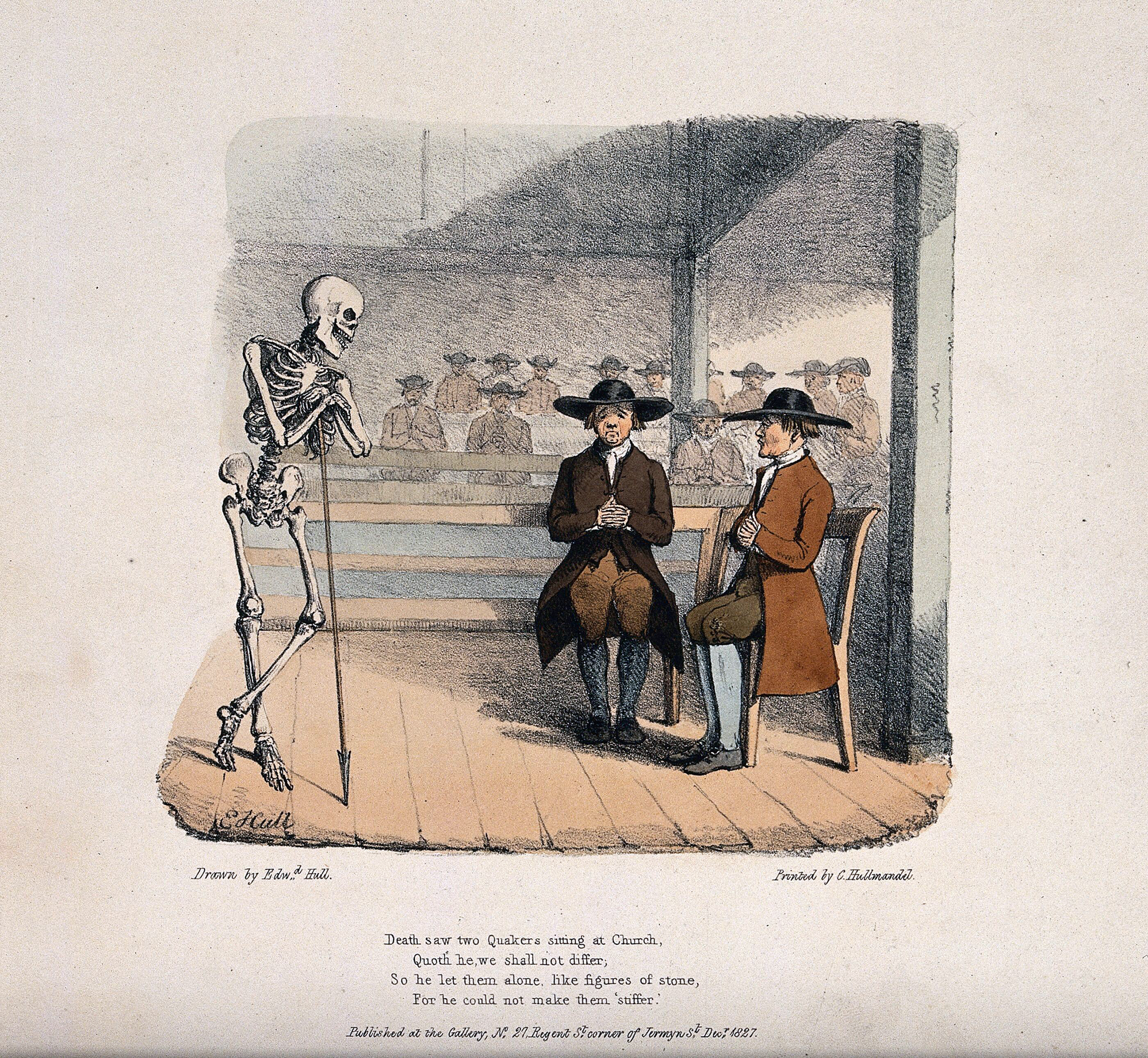 31 October 1684: Mrs Taylor of Brighouse, a Quaker, is buried upright next to her husband and daughter in their garden
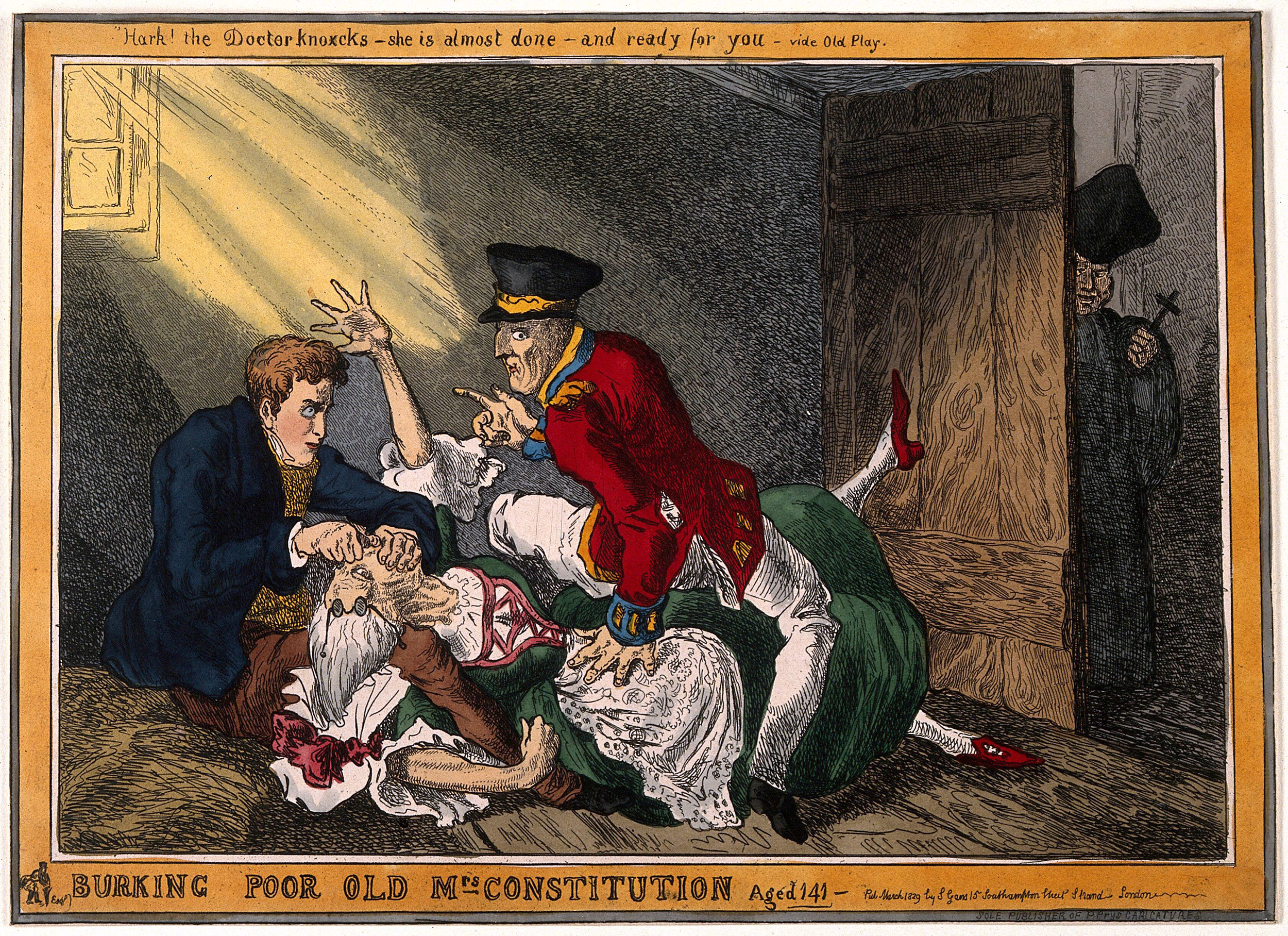 5 March 1829: Henry Burton of Hotham tells a rowdy public meeting at Beverley to petition parliament against Catholic emancipation and preserve “the Protestant constitution”
Comment
Comment
This is a Jesuit hagiography, and I don’t know to what extent the source reflects the substance of Dolben’s remarks. Wikipedia takes a more benevolent view of him:
In the aftermath of the Popish Plot, Dolben tried many of the accused, including Sir Thomas Gascoigne, 2nd Baronet and Sir Miles Stapleton; due to his impartial trait of pointing out inconsistencies in the prosecution’s evidence, both were acquitted.[4] At the trial of Mary Pressicks, who was accused of saying that “We shall never be at peace until we are all of the Roman Catholic religion”, Dolben saved her life by ruling that the words, even if she did speak them, could not amount to treason.[5] As a result of this and his opposition to Charles II’s removal of the City Corporation’s writs, he was “according to the vicious practise of the time” dismissed on 18 April 1683. Again working as a barrister, Dolben prosecuted Algernon Sidney in November 1683 before being reinstated as a Justice of the King’s Bench on 18 March 1689. Records from 29 April show him “inveighing mightily against the corruption of juries [during the Glorious Revolution]”,[1] and he continued sitting as a Justice until his death from an apoplectic fit on 25 January 1694,[6] and was buried in Temple Church.
Vulgar almanacs glory in death sentences and executions, but I suppose one (1) is called for.
Something to say? Get in touch
Search
Subscribe/buy
Donate
Music & books
Place-People-Play: Childcare (and the Kazookestra) on the Headingley/Weetwood borders next to Meanwood Park.
Music from and about Yorkshire by Leeds's Singing Organ-Grinder.
 RSS feed
 Bluesky
 Extwitter