9 February 1719: Cartographer John Warburton of Bedale (North Riding) sets out with his measuring wheel to continue his survey of Yorkshire and of potential subscribers
John Warburton. 1900. Journal in 1718-19 of John Warburton, F.R.S., F.S.A., Somerset Herald. Yorkshire Archaeological Journal, Vol. 15. Leeds: John Whitehead for the Yorkshire Archaeological Society. Get it:
.Unedited excerpt
If an excerpt is used in the book, it will be shorter, edited and, where applicable, translated.
Feb. 9th. Left Bedale and came in the evening to Aldbrough, the seat of Sr Rogr Beckwith, Bart, where I continued untill ye 10, m. 10 (and having left my sister B. there) proceed(ed) through Massham, a small market towm on the west bank of the river Ure, a good church spire steeple in it. At ½ a mile beyond wch I crossed over a rivulet called Bowrne by a stone bridge of one arch, not long since errected, and at ½ a mile further west came to Swinton, the seat of Sr Abstrupus Danby, a fine regular, new built edifice, of a square figure, and situated on an assent, beautifyd wth good garden, walks, po…, and out houses. Thence I turned to the south (378b) and passed through a village called Grewelthorp, near to wch is a fortified moat called the Castle Hill (belonging to Sr Henry Goodrick, Bart), wch I am inclind to believe a work of the Romans, and that the Roman Cawsway wch came from Cataractonium in Kilgram Bridge, is continued to it. Att 2 miles further I passd by a large hall-like house called [Sleningford?] wch belongs to Beckwith, esq., of Thurcroft. And at one mile further came to Hington, a small village, in wch is a commodious house, the seat of Mat. Wray, gent. From thence I turnd again to the west, and at 1½ mile, having passd through open ground (379) full of wood, came to Assenby, the seat of Dawson, esq., whose house hath nothing about it worthy of remark. Afterwards I went to Rippon, a large corporation burr[ough] town, etc.
(Feb.) 11. Having taken in the subscriptions for Rippon, visited one Mr. Ridsdale, regest[rar] for the Archbishop of York…

Comment
Comment
What equipment did Warburton for measuring distances? Thoresby says that he used his tours in 1718-19 to survey, but, though he records some distances here, he appears to be on horseback. Is he towing an odometer?
Here‘s his approximate route on the 10th. Where is Hington?
Another favourite search for subscribers, unfortunately undated, is John “Poet” Close’s into Swaledale (Close 1833).
Something to say? Get in touch
Tags
Tags are assigned inclusively on the basis of an entry’s original text and any comment. You may find this confusing if you only read an entry excerpt.
- Abstrupus Danby (1) W/G ·
- Aldbrough St John (1) W/G ·
- Azerley (1) W/G ·
- Bedale (3) W/G ·
- Cartography (1) W/G ·
- Cataractonium (2) W/G ·
- Church grim (1), guardian spirit that oversees the welfare of a church and protects the churchyard from those who would profane and commit sacrilege against it, often appearing as a black dog W/G ·
- Close, John (1816-91) (1), enterprising and prolific working class doggerelist to the Lake District tourist trade, born Gunnerside (NR/NY), died Kirkby Stephen (Westmorland) W/G ·
- 📌Grewelthorpe (1) W/G ·
- John Warburton (officer of arms) (1) W/G ·
- Kilgram Bridge (1) W/G ·
- Length measurement (1) W/G ·
- Masham (1) W/G ·
- North Riding of Yorkshire (51) W/G ·
- Richmondshire (5) W/G ·
- 📌Ripon (17) W/G ·
- River Burn, North Yorkshire (1) W/G ·
- River Ure (7) W/G ·
- Roadometer (odometer) (1) W/G ·
- Roman Britain (occupation AD 43-410) (8) W/G ·
- Subscription (finance) (1) W/G ·
- Surveyor’s wheel (1) W/G ·
- Swinton Estate (1) W/G ·
- Swinton, Harrogate (1) W/G ·
- Thurcroft (1) W/G ·
- Walking (19) W/G ·
Comment
Comment
What equipment did Warburton for measuring distances? Thoresby says that he used his tours in 1718-19 to survey, but, though he records some distances here, he appears to be on horseback. Is he towing an odometer?
Here‘s his approximate route on the 10th. Where is Hington?
Another favourite search for subscribers, unfortunately undated, is John “Poet” Close’s into Swaledale (Close 1833).
Something to say? Get in touch
Similar
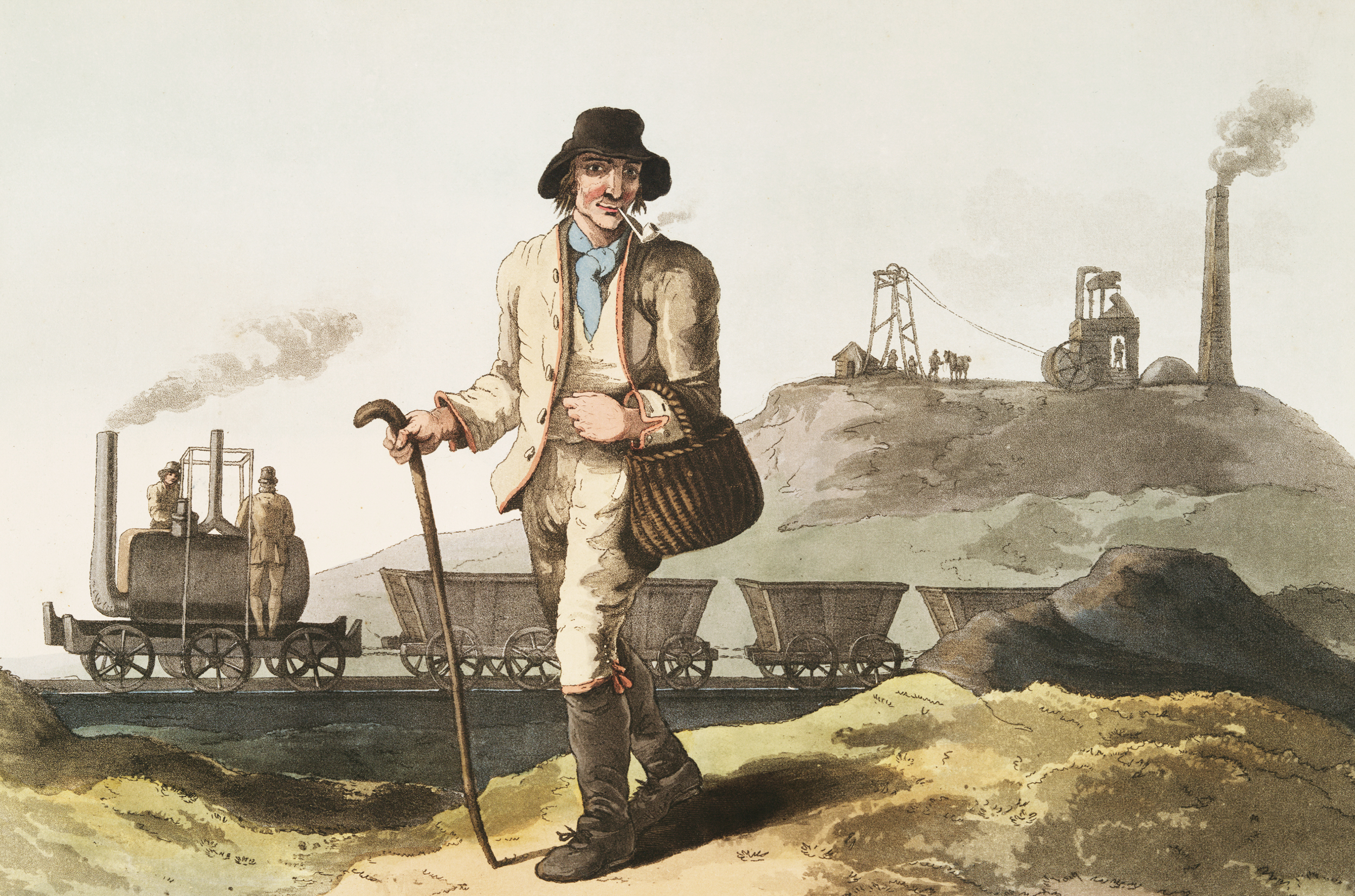 9 June 1758: Entry into law of the first dedicated railway enabling act, for Richard Humble and Charles Brandling’s wagonway from Middleton Colliery to the Aire at Leeds
Comment
Comment
A summary of the industrial history of the navigation:
In 1767, an act of parliament was obtained for making the river Ure navigable to Ripon; this was effected by means of short cuts, dams, and locks. The locks are six in number, the dams two, one of which crosses the river a little above the bridge, from which a fine view of the broad and dashing waterfall is gained, but this existed long before the canal, for the use of the mill on the south side. A mill existed here as early as the time of Edward II. Vessels, drawing four feet and a half of water, and carrying seventy tons, can now ascend from Hull to Ripon. The celebrated Smeaton, builder of the Eddystone Lighthouse, was the engineer. [Author FN: A second act of parliament was obtained, by which the proprietors were incorporated under the title of “The Company of Proprietors of the River Ure Navigation to Ripon.” The former commissioners having either become insolvent, or ceased to exist, and the navigation being in danger of becoming useless from shoals and impediments. The last company disposed of the navigation, and all the buildings and works belonging thereto, to the Leeds and Thirsk Railway Company, in 1847.]
From this period the town of Boroughridge may be said to have enjoyed a high state of prosperity. The commerce of the country began to be developed – stage-coaches were established – immense numbers of post-horses had to be maintained for the accommodation of the great northern families and Scottish members of parliament, travelling up to London – of the benefits of which, this place obtained a full share – two of the inns here, keeping at that time more than one hundred horses, for posting alone. Those were palmy days for “mine host,” indeed, compared with the present degenerate age…
Enormous droves of cattle were driven from Scotland, and other places in the north, to fatten in the pastures of the south, and nearly all passed along this road; no one knew a better. Stage-waggons, with their high-piled loads, almost like moving mountains, slowly lumbering along, with their four, and often six, heavy horses each. The consumption of oats and hay, and other provisions, would necessarily, be very great. All must either stay a night, or, at least, bait; and the rejoicing landlords might truly exclaim―
“O what a glorious thing’s a turnpike road!
The traffic on the river for coals, timber, flax, and other articles was active and extensive; for Knaresborough was then one of the greatest linen manufacturing towns in England, and Boroughbridge was its port. Boat-building was carried on, and seagoing vessels sometimes constructed here. This prosperous state of things continued until the passing of the Reform Bill, in 1832, and the extension of the railway system, in 1840.
Something to say? Get in touch
Search
Subscribe/buy
Donate
Music & books
Place-People-Play: Childcare (and the Kazookestra) on the Headingley/Weetwood borders next to Meanwood Park.
Music from and about Yorkshire by Leeds's Singing Organ-Grinder.
 RSS feed
 Bluesky
 Extwitter