15 October 1951: On the eve of the general election, a Times leader summarises the latest Rowntree report, which details startling reductions in absolute poverty in York under the welfare state
Times. 1951/10/15. Poverty To-day. London. Get it:
.Unedited excerpt
If an excerpt is used in the book, it will be shorter, edited and, where applicable, translated.
Poverty To-day
In 1936 nearly two persons in every eleven in the city of York, but in 1950 only two in every 118, were found to be in poverty. That is the outstanding conclusion of Poverty and the Welfare State, just issued by Longmans, a book in which MR. SEEBOHM ROWNTREE and MR. G. R. LAVERS report the findings of the third survey of York (a city probably still representative of urban Britain as a whole). When MR. ROWNTREE compared the results of his second survey in 1936 with those of his first in 1899, the improvement recorded was encouraging, but the amount of hardship remaining left no room for complacency. The further improvement from 1936 to 1950 can only be described as startling. The economic and social changes of fourteen years (of which a third were occupied by a major war) have reduced the volume of poverty by at least 90 per cent.-a rate of progress about four times greater than was achieved during the thirty-seven years up to 1936. (It should be emphasized that these calculations are concerned only with stark poverty and say nothing about the relative ups and downs in the standard of life of the great majority.)
MR. ROWNTREE’s definition of poverty is, of course, stringent, The standard he uses allows no more than life on a “fodder basis,” even if every penny is most carefully spent. At the prices of 1950, for example, he would not consider a married couple with three children as poor unless, after paying rent and taxes, their income (including the value of school meals, subsidized milk, home-grown vegetables, and other receipts in kind) fell below £5 a week. It is immaterial, however, whether his standard is or is not too severe; what matters is the fact that he applied the same yardstick (allowing for price changes) in 1936 and in 1950, so that the changes between those years can be accurately assessed.
The book is too brief and selective for a full account of the ways in which this remarkable improvement-no less than the virtual abolition of the sheerest want – has been brought about. In 1936 economic causes accounted for seven-tenths of all poverty – over four-tenths being attributable to the inadequacy of earnings in various trades and occupations, and nearly three-tenths more to unemployment. Social causes, such as sickness, old age, or widowhood, accounted for only three-tenths of the poverty. MR. ROWNTREE estimates how much of the improvement in 1950 can be attributed to the reduction of unemployment, and how much to food subsidies and various welfare schemes; but he does not attempt to assess the influence of improvements in earnings, especially among the unskilled, outstripping the rise in living costs, although the inadequacy of such earnings was the biggest single cause of poverty in 1936. The transformation in the nature of what poverty remains is, however, unmistakable. Among the tiny minority still in want last year was to be found none of the few unemployed persons in York, though they might have been included had they not possessed resources other than unemployment benefit. Only one per cent. of the poor were in want through inadequate earnings. Nearly seven in ten were poor on account of old age (some 1,200 persons) and more than two in ten on account of sickness (some 370 persons, including dependents). Social factors-the insufficience of pensions, sickness benefit, family allowances, or assistance-accounted for the overwhelming portion of the residue of real poverty.
The welfare measures studied in this book are confined to food subsidies, the milk schemes, school meals, family allowances, and social insurance benefits. What part of the reduction in poverty since 1936 can be attributed to rent restriction, housing subsidies, the health service, and improvements in assistance cannot be gauged at all from the statistics. Of the part attributable to other factors, it looks as if the reduction of unemployment and improvements in real earnings together account for about a third, and the specified welfare measures for two-thirds. MR. ROWNTREE is somewhat more precise in assessing the importance of these welfare measures. Rather more than half the poverty they have prevented has been prevented by food subsidies-though he does not indicate whether these include or exclude school meals and the milk schemes -and rather less than half by all the social security schemes, including family allowances. Some 6,900 additional people. or 6.6 per cent. of York’s population, would have been thrown into poverty had food subsidies been abolished in 1950 – more than would have been affected either by the withdrawal of all the improvements in social security or by the return of unemployment at the 1936 rate.
This is at first sight strong support for the view that Britain could not, on social grounds, afford to reduce food subsidies. The facts are not, however, so simple. There were actually some 1,750 persons below the poverty line in York last year, and there would have been 6,900 more but for the food subsidies. This means that there were over 96,000 other people, all also enjoying the subsidies, who would have remained above the poverty line even without food subsidies. A welfare measure which saves sixty-six persons in a thousand from poverty only by paying equal benefits to 917 other persons more comfortably placed clearly invites scrutiny in times of national stringency. On the other hand, any policy of reducing food subsides must evidently make some sure alternative provision for preventing hardship where it would arise; and it is a pity that this study gives no account of the kind of families that compose the small minority to whom the subsidies are literally a defence against hardship.


Comment
Comment
Report itself (Rowntree 1951). Labour politician Tony Crosland a few years later:
But was this more rapid progress due to specifically Labour policies, or to quite extraneous factors? Unfortunately, the first interpretation is often supported by an untenable argument. Many Labour spokesmen adopt Mr. Rowntree’s approach of first calculating how much additional poverty would be caused by the withdrawal of a particular welfare measure, and then attributing a corresponding degree of credit to that measure for its part in reducing poverty. It is said, for instance, that if food subsidies had not existed in 1950 a further 11% of the working-class population would have been below the poverty line, from which it is deduced that food subsidies deserve the entire credit for the rescue of that 11%.
But this is to assume that when food subsidies are raised or lowered, nothing else changes, and working-class incomes are affected by this one change alone. In fact, of course, things proceed differently, since the working class also pays large sums in taxation; and changes in subsidies will often be accompanied by changes in taxation. Admittedly if a cut in the subsidies were balanced by tax reductions accruing entirely to the middle and upper classes, the above calculation might be justified. But this is unlikely, in view of the fact that the working class now pays in taxation a sum larger than it receives in social benefits. It is therefore probable that some reduction in working-class taxation would occur; and the consequent increase in disposable money income would have to be set against the effect of lower subsidies in calculating the net result of the change.
The link between Labour policies and the reduction in poverty can, however, be more securely established. First, it can be shown that per capita personal consumption scarcely rose between 1938 and 1950, the large increase in output having been impounded for other and more urgent purposes (higher exports, investment, etc.). Yet average working-class consumption rose, owing to a significant vertical redistribution of income which was certainly connected, as the next section will show, with post-war economic policies; and this general rise in working-class standards helped greatly to reduce the incidence of poverty.
Secondly, although the working class as a whole paid for all the additional social services through higher taxation, it by no means paid in equal amounts. The additional taxation and social services, taken together, represented a large transfer of income within the working class; and the net beneficiaries were mainly those groups (the old, the sick, and large families) which have always been the most susceptible to poverty.
It is sometimes claimed by Conservatives that these changes would have occurred whatever government had been in power. No doubt some new social services would have been provided. But in the light of the high and, to Conservatives, repugnant levels of taxation involved, and their reiterated pledges to make drastic cuts in government expenditure, it is hard to believe that a Conservative Government would not have used the balance-of-payments difficulties as an excuse for contracting out of the more ambitious of these reforms.
(Crosland 1957)
Something to say? Get in touch
Tags
Tags are assigned inclusively on the basis of an entry’s original text and any comment. You may find this confusing if you only read an entry excerpt.
- 1945 general election (1), 5 July, turnout 72.8%: Lab 393 (47.7%), Con 197 (36.2%), Lib 12 (9.0%), Nat Lib 11 (2.9%) W/G ·
- 1950 general election (1), 23 February, turnout 83.9%: Lab 315 (46.1%), Con 298 (43.4%), Lib 9 (9.1%) W/G ·
- 1951 general election (1), 25 October, turnout 82.6%: Con 321 (48.0%), Lab 295 (48.8%), Lib 6 (2.5%) W/G ·
- Anthony Crosland (3) W/G ·
- Attlee ministry (3) W/G ·
- Attlee, Clement (1883-1967) (2), Prime Minister of the United Kingdom 1945-51, Leader of the Labour Party 1935-55 (longest-serving Labour leader), Deputy Prime Minister during the wartime coalition government under Winston Churchill, Leader of the Opposition 1935-40, briefly in 1945, 1951-55 W/G ·
- Beveridge Report (1) W/G ·
- Conservative Party (1834-) (25) W/G ·
- Cycle of poverty (1) W/G ·
- Disability benefits (1) W/G ·
- Full employment (1) W/G ·
- George VI (1) W/G ·
- Income tax (1) W/G ·
- Labour Party (UK) (17) W/G ·
- National Assistance Act 1948 (1) W/G ·
- National Insurance Act 1911 (1) W/G ·
- National Insurance Act 1946 (1) W/G ·
- National Insurance (1) W/G ·
- Old Age Pensions Act 1908 (1) W/G ·
- Pension (2) W/G ·
- Pensions in the United Kingdom (1) W/G ·
- Poverty, A Study of Town Life (1) W/G ·
- Poverty (16) W/G ·
- Sampling (statistics) (1) W/G ·
- Seebohm Rowntree (1) W/G ·
- Sociology (1) W/G ·
- The Times (5) W/G ·
- Welfare state in the United Kingdom (1) W/G ·
- Welfare state (1) W/G ·
- Winston Churchill (3) W/G ·
- Working class (7) W/G ·
- World War II (4) W/G ·
- 📌York (165) W/G ·
Comment
Comment
Report itself (Rowntree 1951). Labour politician Tony Crosland a few years later:
But was this more rapid progress due to specifically Labour policies, or to quite extraneous factors? Unfortunately, the first interpretation is often supported by an untenable argument. Many Labour spokesmen adopt Mr. Rowntree’s approach of first calculating how much additional poverty would be caused by the withdrawal of a particular welfare measure, and then attributing a corresponding degree of credit to that measure for its part in reducing poverty. It is said, for instance, that if food subsidies had not existed in 1950 a further 11% of the working-class population would have been below the poverty line, from which it is deduced that food subsidies deserve the entire credit for the rescue of that 11%.
But this is to assume that when food subsidies are raised or lowered, nothing else changes, and working-class incomes are affected by this one change alone. In fact, of course, things proceed differently, since the working class also pays large sums in taxation; and changes in subsidies will often be accompanied by changes in taxation. Admittedly if a cut in the subsidies were balanced by tax reductions accruing entirely to the middle and upper classes, the above calculation might be justified. But this is unlikely, in view of the fact that the working class now pays in taxation a sum larger than it receives in social benefits. It is therefore probable that some reduction in working-class taxation would occur; and the consequent increase in disposable money income would have to be set against the effect of lower subsidies in calculating the net result of the change.
The link between Labour policies and the reduction in poverty can, however, be more securely established. First, it can be shown that per capita personal consumption scarcely rose between 1938 and 1950, the large increase in output having been impounded for other and more urgent purposes (higher exports, investment, etc.). Yet average working-class consumption rose, owing to a significant vertical redistribution of income which was certainly connected, as the next section will show, with post-war economic policies; and this general rise in working-class standards helped greatly to reduce the incidence of poverty.
Secondly, although the working class as a whole paid for all the additional social services through higher taxation, it by no means paid in equal amounts. The additional taxation and social services, taken together, represented a large transfer of income within the working class; and the net beneficiaries were mainly those groups (the old, the sick, and large families) which have always been the most susceptible to poverty.
It is sometimes claimed by Conservatives that these changes would have occurred whatever government had been in power. No doubt some new social services would have been provided. But in the light of the high and, to Conservatives, repugnant levels of taxation involved, and their reiterated pledges to make drastic cuts in government expenditure, it is hard to believe that a Conservative Government would not have used the balance-of-payments difficulties as an excuse for contracting out of the more ambitious of these reforms.
(Crosland 1957)
Something to say? Get in touch
Similar
 18 January 1966: Barbara Castle (Lab.) swings the Hull North by-election with a bridge over the Humber, convincing Harold Wilson that he has the momentum to win a general election
 8 April 1946: Yorkshire miners’ president Joe Hall threatens strike action if Labour starts opencast mining in Lord Fitzwilliam’s gardens at Wentworth Woodhouse (Rotherham)
 15 November 1972: During the public inquiry into York Council’s plans for a motorway through the city centre, a college lecturer calls for the new religion to be made tangible
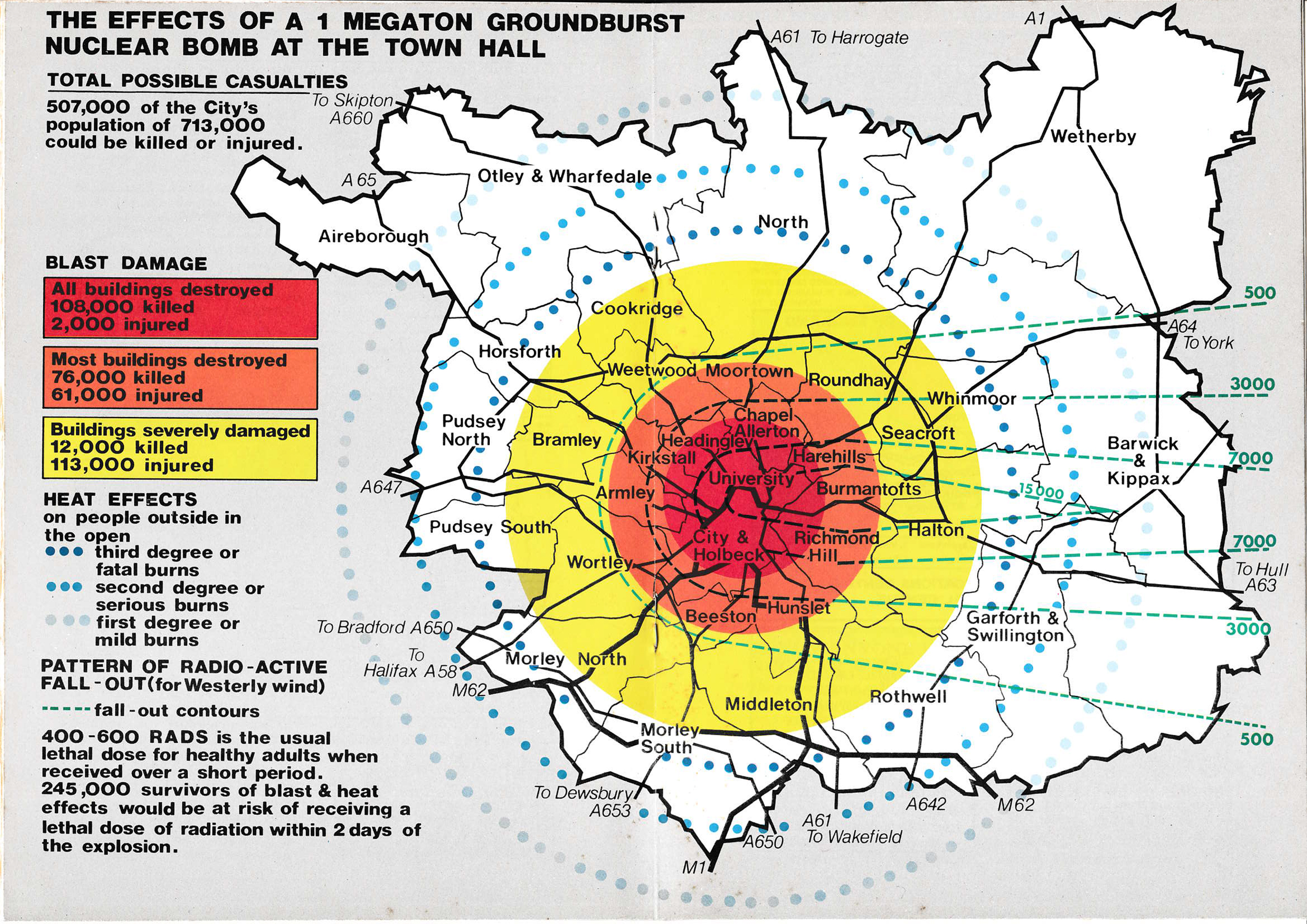 24 June 1981: Leeds City Council declares its opposition to nuclear weapons and resolves to inform the world thereof
 10 March 1665: Blizzards and Dutch attacks prolong Restoration-induced shortages of fodder and coal at Northowram (Halifax)
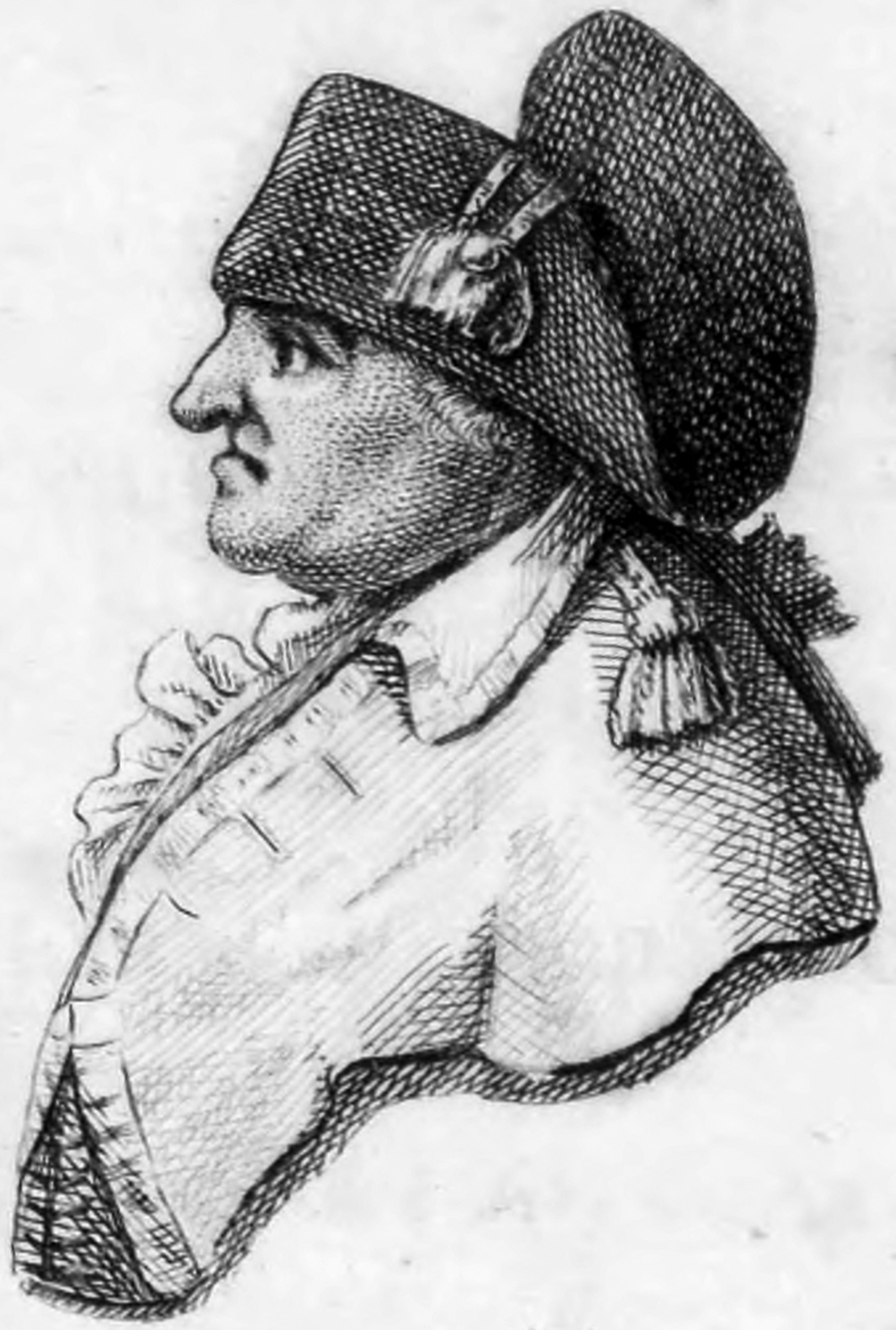 2 October 1800: Part of an obituary to Harry Rowe, Punch and Judy man, trumpeter at the Battle of Culloden and the York assizes, who died today, old and ill, in the York poorhouse
Comment
Comment
Re this wave of unofficial strikes:
Major-General Sir Noel Holmes, chairman of the north-eastern division of the National Coal Board, in a statement yesterday on the strike at Grimethorpe Colliery, said that 140 coal-face workers, out of 2,682 employed at the pit, were not doing a fair day’s work. A committee representing management and workmen had decided that the stint for the 140 workers should be increased by 2ft., but they refused to accept its findings and came out on strike. The other coal-face workers came out in sympathy. “As much as I dislike mentioning this fact,” said Sir Noel Holmes, “it is only right to recall that at Grimethorpe since January 1, 1947, and before the present strike, there have been 26 sectional unofficial stoppages, which have lost 33,000 tons of coal to the nation. The present stoppage up to date represents a further loss of more than 40,000 tons.” (Times 1947/08/27)
Holmes’s Wikipedia article curiously doesn’t mention this phase of his career.
I’m guessing that the Welsh ex-Puritan authoritarian Communist Arthur Horner is the voice of the NUM in the above – see e.g. the Times for 9 September.
Interesting comments on the wartime coal boards by T.S. Charlton, colliery manager at Cortonwood:
The management of the collieries is in the hands of men trained primarily in management of mines and miners. They have a working knowledge of all the machinery available and how best it can be used, but the details of this side are left to the mechanical and electrical engineer. Labour costs are two-thirds of production costs, and therefore the handling and the best use of men are of the greatest importance to managers. Why it should have been decided that labour leaders should be good labour directors is, apart from the political issue, difficult to understand, unless it is on the old adage of “poacher turned gamekeeper.” Unless and until the production director has control of his labour side, I can see little hope of his schemes proving effective.
The miners have put forward suggestions to improve output, but they appear to do no more than improve the position of the miner. Can it be said that any suggestion already put forward by the men has put up the output figure? Why should it be assumed the men’s side of the pit production committees should be able to improve output in any way? Their training, inclinations, and very job depend upon their obtaining the best for their electors rather than for production.
(Charlton 1943/12/01)
Charlton was clearly a clever and capable man – it would be good to know more about him.
Something to say? Get in touch
Search
Subscribe/buy
Donate
Music & books
Place-People-Play: Childcare (and the Kazookestra) on the Headingley/Weetwood borders next to Meanwood Park.
Music from and about Yorkshire by Leeds's Singing Organ-Grinder.
 RSS feed
 Bluesky
 Extwitter