1 August 1833: At Kelfield (East Riding), Hannah Beedham fails to fulfil her prophecy of her own death
Times. 1833/08/08. Religious Enthusiasm. London. Get it:
.Unedited excerpt
If an excerpt is used in the book, it will be shorter, edited and, where applicable, translated.
A religious enthusiast, named Hannah Beedham, who pretends the had a trance when in our county hospital two years ago, and whilst in that trance was informed she would die the 1st of August, 1833, has this week been the cause of much folly and idleness. She formerly belonged to the Wesleyan Methodists, but was some time ago discarded by them. Having announced that she would retire to Kelfield to die, she proceeded there some weeks ago, and during the last nine days has kept her bed, under pretence of illness. She, however, has been visited by many hundreds of people from York, and all the neighbouring villages. She sang hymns and prayed – she spoke comfortably to her friends of her visions unseen – she held converse with spiritual beings about her death; but when the time came for her departure she could not quit this lower world – no, nor even the village of Kelfield. A second Johanna Southcote, she now appeared that which she had always been – the creature of ignorance and enthusiasm. York Herald.

Comment
Comment
Many provided themselves with new mourning to attend the funeral, which was to have taken place at the church of the Holy Trinity, Goodramgate, York, on the Sunday following; but even some in York had done the like (Mayhall 1860).
Pen Hemingway has researched the background, including her relative, James Sturdy, the farmer with whom Beedham stayed at Kelfield (Hemingway 2022/03/12).
Something to say? Get in touch
Tags
Tags are assigned inclusively on the basis of an entry’s original text and any comment. You may find this confusing if you only read an entry excerpt.
- East Riding of Yorkshire (67) W/G ·
- False prophet (1) W/G ·
- Fraud (22) W/G ·
- Funeral (25) W/G ·
- Goodramgate (2) W/G ·
- Holy Trinity Church, Goodramgate, York (2) W/G ·
- Kelfield, North Yorkshire (1) W/G ·
- Methodism (38) W/G ·
- Prophecy (6) W/G ·
- Prophet (1) W/G ·
- River Ouse, Yorkshire (19) W/G ·
- Southcott, Joanna (1750-1814) (3), Devon prophetess and founder of the Southcottian movement W/G ·
- 📌York (165) W/G ·
Comment
Comment
Many provided themselves with new mourning to attend the funeral, which was to have taken place at the church of the Holy Trinity, Goodramgate, York, on the Sunday following; but even some in York had done the like (Mayhall 1860).
Pen Hemingway has researched the background, including her relative, James Sturdy, the farmer with whom Beedham stayed at Kelfield (Hemingway 2022/03/12).
Something to say? Get in touch
Similar
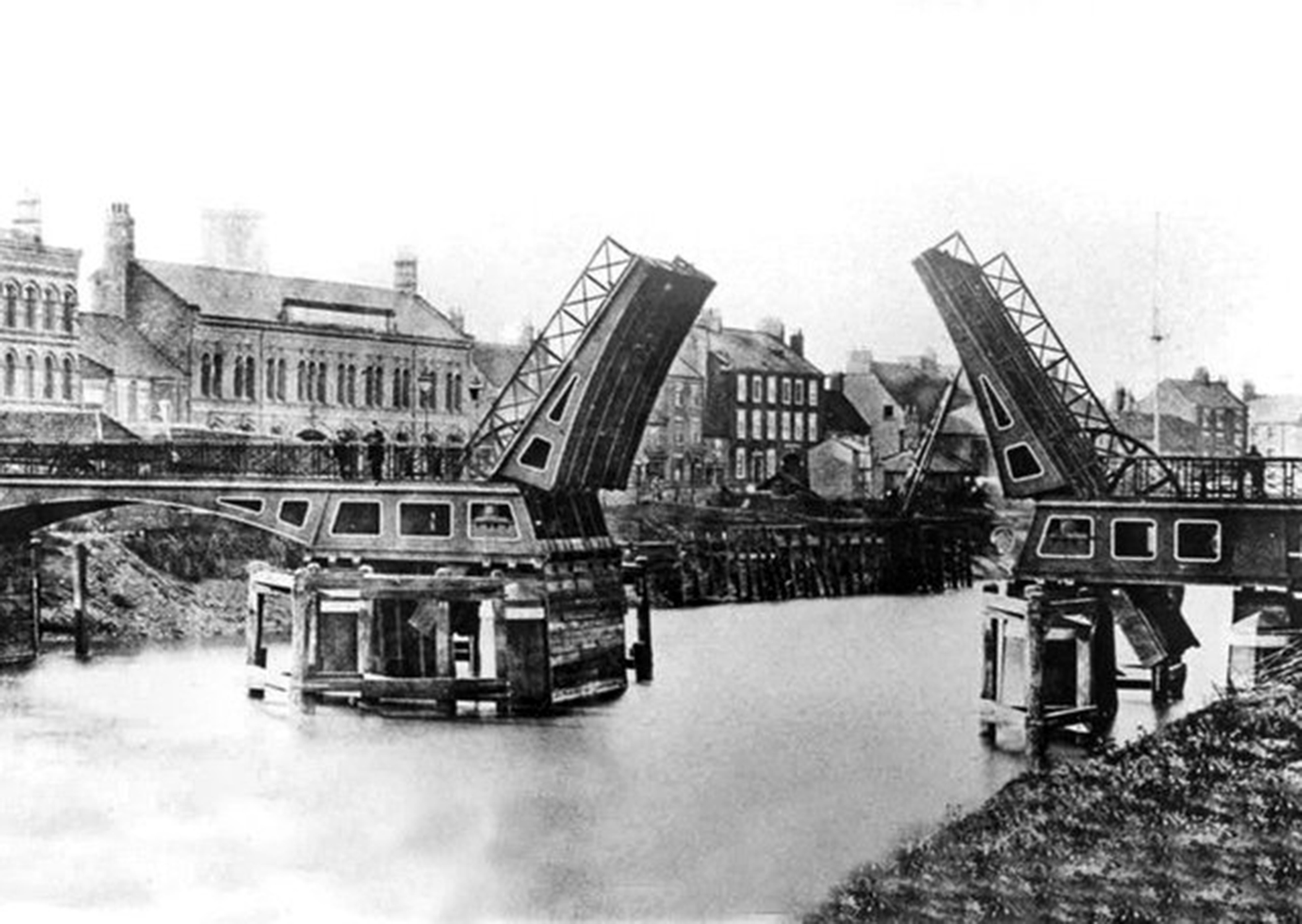 1 July 1840: The opening of the Hull and Selby Railway terminates the threat to Hull’s port from Goole, Scarborough and Bridlington
 25 September 1066: The Stamford Bridge massacre by Harold Godwinson’s army of Harald Hardrada and Tostig Godwinson’s force – symbol of the end of the Viking Age
Comment
Comment
This remarkable testimony is from the drawn-out bankruptcy process, but Pearson had resigned as mayor at the beginning of October 1862, and his reputational ruin was achieved a week before, when on 24 September 1862 he filed for bankruptcy (Sheffield Independent 1862/10/02). (Some secondary sources give 23 September. Why?)
The shipowner Stefanos Xenos believed that Pearson was lured into the clutches of the City of London, not because of any possible benefit to either Xenos’ Greek & Oriental Steam Navigation Company or for Pearson’s business, but simply to generate revenues for the bankers involved:
Mr. Zachariah Pearson had, at that time, no steamers mortgaged to Messrs. Overend, Gurney, and Co. except the Chersonese, which was already paid off. Knowing that his credit was good at Hull, with Smith Brothers, his bankers, the great capitalists sent for and asked him to buy a portion of my fleet.
“I cannot,” said Mr. Pearson.
“You will not be asked to pay any cash,” said Edwards; “you need only give your acceptances.”
“I am already overworked,” said Pearson.
“It will be a good thing for you, Pearson,” said the official assignee.Mr. Pearson still hesitated; in fact, he did not like to enter into the transaction at all. They, however, talked him over, and he at last agreed to meet Edwards at the office of Messrs. Crowder and Maynard, the solicitors, in order to complete the transaction at once, as Messrs. Overend, Gurney, and Co. were most anxious to have the bills that day. On the way to Coleman Street, Mr. Pearson began to change his mind, so that when he had arrived at the solicitors’ office, he told Edwards that he was not at all inclined to carry out the transaction. On hearing this Edwards looked terribly disappointed, and after a short silence said, “Pearson, come and speak with Mr. Gurney.” On their arrival at Lombard Street, Pearson went into the little room facing Birchin Lane, whilst the adviser went direct to Mr. H.E. Gurney to give him counsel in the matter.
After the lapse of a short time both the capitalist and the disposer of the capital entered the room where Pearson was.
“Now, friend Pearson, what is the matter again?” said Mr. Gurney. A further debate on the subject ensued, and after a short time they brought Pearson round again, and then Mr. Gurney said to him: “Friend Pearson, I will give you, on the spot, a cheque for £500, if you will sign the acceptances and complete the business to-day. Bois, draw a cheque for £500 for Mr. Pearson.”
The cheque was handed to Mr. Zachariah Pearson. The official assignee gave him his word of honour that he had nothing to fear on account of this noble transaction. Mr. Henry John Barker, the favourite, secundus, of Mr. David Ward Chapman, was also regaled with a cheque, in compensation for his trouble in drawing the bills of exchange. Edwards and Pearson returned at once to the lawyers’, where he signed the mortgages and accepted the bills. Edwards then took the acceptances, and, like a Don Cossack, started with them for the “Corner House,” where arrangements had been previously made to discount them with some melting-house.
“This is my death-warrant,” sighed poor Pearson.
“Not at all. It’s all right,” said Edwards, his smooth face irradiated with a smile.
Oh, glorious English “All right!” How multitudinous are your meanings – how complex your significations!
Scarcely had Pearson left the lawyers’ when Edwards hastened after him.
“Hallo! I say, Pearson,” cried out the smoothfaced worthy, “what are you going to give me for this capital job I’ve done for you?”
“Capital job!” said Pearson; “I call it my ruin. I have no trade to employ all these steamers. It will be my ruin, I say.”
“Not at all, not at all. All right, I tell you. You have to thank me for putting you in the hands of Overend, Gurney, and Co. They will make you one of the greatest men in England.”
This modern Rhadamanthus called into play all his eloquence and logic to prove to Zachariah Pearson that his share of the transaction was worth £1,000.
Poor Zachariah Pearson! I have it from his own lips that the same day he gave Edwards a cheque for £1,000, double the bonus he had himself received. Verily, verily, Mr. Edwards knew how to trim his sails so as to catch the wind from whatever point it blew.
The intrigues of that “Corner House” were more than fiction would dare to fancy. As a sequel to the above transaction, I shall here mention that Mr. Edwards pressed, and even worried, Mr. Pearson to take a brother of his (Edwards’s) into partnership. Entangled as Pearson was in the Lombard Street meshes, he resolutely declined this honour, exhibiting in his refusal more determination than I had shown on a somewhat similar occasion.
Whatever commissions the above-named two gentiluomini, Barker and Edwards, were paid for the job, were added, of course, to the price of the steamers.
It is said that Bishop Roquette was the original of Molière’s Tartuffe. Can any one tell me, in this Lombard Street comedy, amongst so many, which is the real Tartuffe?
“What does all this mean?” I said to my bookkeeper, Ross, when, having returned to my office in despair, I told him of the breaking up of our line.
“It means,” he said, looking up from his desk, and speaking in a low voice – “it means, perhaps, that they want money themselves.”
I asked whether he had any grounds to think they did want money.
“Yes,” he said; “it’s the opinion of Mr. March, Edwards’s confidential clerk. In making up the books this year, and going through the accounts, he came to the conclusion that the firm is in want of means – they are not right. But, pray, do not speak of it; do not mention my name.”
(Xenos 1869)
The fraud perpetrated by Docherty on Pearson with the connivance of Barker is a precursor of the Nigerian Article 419 scam, which you will know from your inbox. Do read the entire chapter on Zachariah Pearson and the “evil hour” in which he came under the influence of Henry Barker. For context for Pearson, Xenos et al, read W.T.C. King’s excellent history of the London discount market (King 1972).
The Pease family (as in Messrs. Pease (and Hoare?)) were implicated in the failure of Overend, Gurney and Company, which led directly to the great financial panic of 1866 and indirectly to the Reform Act 1867. OGC was the last UK bank to fail until Northern Rock in 2007, one of whose directors was Nicola Pease:
What [the statement announcing the appointment of Nicola Pease as the FTSE 250 company’s chairwoman] omitted to mention was Ms Pease’s role as a non-executive director at Northern Rock from 1999 right up to the effective collapse of the bank in September 2007. Northern Rock, of course, became a byword for financial mismanagement. Footage of anxious savers queueing round the block in the first run on a British bank since Victorian times were beamed around the world. Shareholders were wiped out; 2,500 people lost their jobs; taxpayers had to foot the bill for a nationalisation that the National Audit Office would say later could cost as much as £2 billion. MPs on the Treasury select committee found Northern Rock’s directors to be “the principal authors” of the debacle, pursuing “a reckless business model which was excessively reliant on wholesale funding” (Hosking 2019/11/12).
Plus ça change?
Which proclamation by Abraham Lincoln? I’ve read somewhere that Pearson was prepared to offend Hull’s traditional abolitionism in order to get its cotton mills going again.
Something to say? Get in touch
Search
Subscribe/buy
Donate
Music & books
Place-People-Play: Childcare (and the Kazookestra) on the Headingley/Weetwood borders next to Meanwood Park.
Music from and about Yorkshire by Leeds's Singing Organ-Grinder.
 RSS feed
 Bluesky
 Extwitter