10 December 1710: A Whitby puppeteer tries to take revenge on a delinquent spectator
Lionel Charlton. 1779. The History of Whitby, and of Whitby Abbey. York: A. Ward. Get it:
.Unedited excerpt
If an excerpt is used in the book, it will be shorter, edited and, where applicable, translated.
On December 10, 1710, a puppet-how being exhibited at the Tolbooth in Whitby, an affray was raised there by one William Smith, who insisted on coming in without paying anything; whereupon the master of the show drew his sword, and therewith stabbed to death an innocent man called William Pickering; for which murder he was afterwards apprehended and sent to York Castle, where, being tried and convicted at the following assizes, he was executed.

Comment
Comment
The Tolbooth is the civil hall previous to the early 19th century Old Town Hall and was located in the market on the west side of the River Esk at the west end of the bridge.
This intrusion of the frequently bloody drama of Punch/Polichinelle/Pulcinella into real life recalls the ambivalence of the fourth tableau of the great Stravinsky/Fokine/Benois ballet, Petrushka, set at the 1830 Petersburg Shrovetide Fair, where the jealous Moorish puppet pursues and kills Petrushka, and the public believes a real crime has been committed (from 21:44):
Can anyone tell me the name of the puppet master?
Something to say? Get in touch
Tags
Tags are assigned inclusively on the basis of an entry’s original text and any comment. You may find this confusing if you only read an entry excerpt.
- Assizes (24) W/G ·
- Hanging (25) W/G ·
- Igor Stravinsky (1) W/G ·
- Old Town Hall, Whitby (1) W/G ·
- Petrushka (ballet) (1) W/G ·
- Pulcinella (1) W/G ·
- Punch and Judy (4) W/G ·
- Puppet (1) W/G ·
- Russia (8) W/G ·
- Saint Petersburg (2) W/G ·
- 📌Whitby (22), town, port and parish on the east coast of North Yorkshire/the North Riding at the mouth of the River Esk W/G ·
- 📌York (165) W/G ·
Comment
Comment
The Tolbooth is the civil hall previous to the early 19th century Old Town Hall and was located in the market on the west side of the River Esk at the west end of the bridge.
This intrusion of the frequently bloody drama of Punch/Polichinelle/Pulcinella into real life recalls the ambivalence of the fourth tableau of the great Stravinsky/Fokine/Benois ballet, Petrushka, set at the 1830 Petersburg Shrovetide Fair, where the jealous Moorish puppet pursues and kills Petrushka, and the public believes a real crime has been committed (from 21:44):
Can anyone tell me the name of the puppet master?
Something to say? Get in touch
Similar
 8 February 1745: Pioneering but pennyless philologist Eugene Aram murders a wealthy Knaresborough wastrel
 27 July 1612: Jennet Preston, the only Yorkshirewoman among the Pendle witches, is found guilty at York of the murder of Thomas Lister of Westby Hall, Gisburn (Ribble Valley)
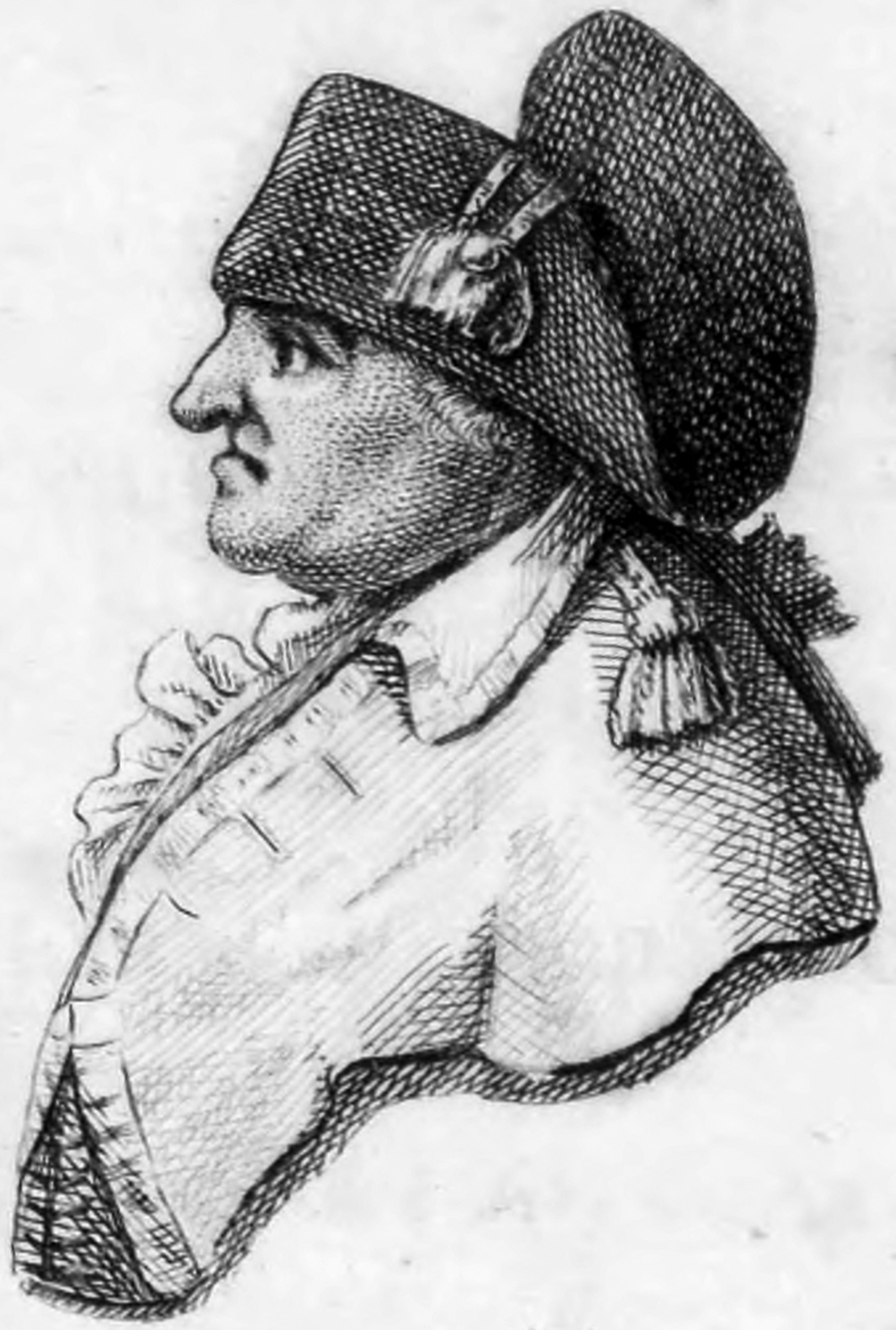 2 October 1800: Part of an obituary to Harry Rowe, Punch and Judy man, trumpeter at the Battle of Culloden and the York assizes, who died today, old and ill, in the York poorhouse
Comment
Comment
Some background to the novel:
D. F. E. Sykes, a Huddersfield solicitor married to the daughter of an Anglican clergyman, focused in Ben o’ Bills, The Luddite, which the author claimed to be based on oral testimony and ‘mostly true’, on a fictional family, the Bamforths, connected with the Particular Baptists at Powle Moor, near Slaithwaite, where the minister, Abraham Webster, was so decidedly against the new machines that old Mrs Bamforth ‘died in the belief that the curse of Scripture was upon them’. George Mellor, a cousin of the Bamforths in the novel, enters the story on Christmas Eve, 1811, intoning the first verse of ‘Christians Awake’. He goes along with the rest of the family to Christmas morning service at Slaithwaite Church, where ‘near all Slaithwaite’ had gathered ‘Methodies and Baptists and all; and even folk that went nowhere, Owenites they called them’, who ‘made a point of going to church that one morning of the year’. Mellor, who occasionally speaks in moderate tones, but elsewhere gives vent to Painite anti-clerical and republican sentiments, is portrayed presiding at a Luddite oath-taking ceremony with a Bible to hand. He refers to Benjamin Walker, the accomplice who betrayed him, whose family Sykes also links with the Baptists at Powle Moor, as a ‘Judas’, He is visited twice in his York prison cell by Abraham Webster, who prays with him on the eve of his execution. According to Sykes, this final pastoral visit inspired Mellor to offer words of forgiveness for his enemies from the scaffold, though Sykes was clearly using dramatic licence in allowing Webster to lead the singing of a Methodist hymn at Mellor’s execution, since all the contemporary accounts record this as a feature of the execution of another group of Luddites. At the end of the novel, Soldier Jack, a former militia-man-turned-Luddite, reflecting on Mellor’s fate, philosophizes: ‘”Yo’re dissenters at th’ Powle … an’ … if there’d been no dissenters there’d been no Luds, ‘an George Mellor ‘d noan ha’ danced out 0′ th’ world on nowt”‘.
Much of the background to Sykes’s novel is authentic, as are several of the key characters, including Abraham Webster, the Baptist minister at Powle Moor, the Reverend Charles Chew, the curate at Slaithwaite and the Luddites George Mellor and Benjamin Walker. A succession of popular evangelical Calvinistic Anglican curates in the Venn tradition at Slaithwaite and the reluctance of the earls of Dartmouth to release land on their estates for the building of Nonconformist places of worship had delayed the local development of both Wesleyanism and Dissent, a factor of which Sykes was clearly aware in his reconstruction of popular religion in the Colne Valley. In fact, no Wesleyan chapel was built at Slaithwaite until 1839, though a chapel had been opened in 1810 at Linthwaite, the first to be built in the Colne Valley, and cottage meetings were begun at Marsden in the same year. The Baptist secession had occurred as recently as 1787 and the Powle Moor Chapel was built· three years later on moorland waste in the neighbouring township of Scammonden, having been denied building land on the Dartmouth estates in the Colne Valley. The most recent historians of the chapel have, however, found no evidence in the chapel records to corroborate the links between Sykes’s characters and the chapel and dismissed Sykes’s account as purely fictional.
(Hargreaves 1990)
See also the official record of the trial (Howell 1823).
Something to say? Get in touch
Search
Subscribe/buy
Donate
Music & books
Place-People-Play: Childcare (and the Kazookestra) on the Headingley/Weetwood borders next to Meanwood Park.
Music from and about Yorkshire by Leeds's Singing Organ-Grinder.
 RSS feed
 Bluesky
 Extwitter