24 June 1809: Exiled from London to York, the Rev. Sydney Smith promises Lady Holland not to smite the partridge
Saba Holland and Sydney Smith. 1855. A Memoir of the Reverend Sydney Smith, Vol. 2. Ed. Sarah Austin. London: Longman, Brown, Green, and Longmans. Get it:
.Unedited excerpt
If an excerpt is used in the book, it will be shorter, edited and, where applicable, translated.
June 24th, 1809.
My dear Lady Holland,
This is the third day since I arrived at the village of Heslington, two hundred miles from London. I missed the hackney-coaches for the first three or four days in York, but after that, prepared myself for the change from the aurelia to the grub state, and dare say I shall become fat, torpid, and motionless with a very good grace.
I have laid down two rules for the country: first, not to smite the partridge; for if I fed the poor, and comforted the sick, and instructed the ignorant, yet I should be nothing worth, if I smote the partridge. If anything ever endangers the Church, it will be the strong propensity to shooting for which the clergy are remarkable. Ten thousand good shots dispersed over the country do more harm to the cause of religion than the arguments of Voltaire and Rousseau. The squire never reads, but is it possible he can believe that religion to be genuine whose ministers destroy his game?
I mean to come to town once a year, though of that, I suppose, I shall soon be weary, finding my mind growing weaker and weaker, and my acquaintance gradually falling off. I shall by that time have taken myself again to shy tricks, pull about my watch-chain, and become (as I was before) your abomination.
[…]
Mrs. Sydney is all rural bustle, impatient for the parturition of hens and pigs; I wait patiently, knowing all will come in due season!
SYDNEY SMITH.

Comment
Comment
Smith also claimed in November 1809 to have preached against horse-racing and coursing before the Archbishop and “the sporting clergy” at Malton, of all places.
See Wikipedia for his acquisition of the living at Foston and his attempts to avoid living there. When his fate had become more or less clear, he wrote from York of York, also to Lady Holland:
You can conceive nothing like the tumult of this city; it was as riotous as London in the middle of the night. I have seen two drunken people and one battle. The clergy and ladies are leaving the town. I am most happy to tell you that Lord Milton will, in all probability, get his election. I came here last night, and voted today.
I think I have tagged the correct Fitzwilliam – the 5th rather than the 4th earl – and assume that this was the 20 May 1807 election and that this undated letter has been mischronologized.
It is hard to stop quoting the man. Here he is several weeks after the June 1809 letter:
My life for the summer is thus disposed of:- I walk up and down my garden, and dine at home, till August; then come my large brother and my little sister; then I go to Manchester, to stay with Philosopher Philips, in September; Horner and Murray come to see me in October; then I shall go and see the Earl Grey; then walk up and down my garden till March.
hear you laugh at me for being happy in the country, and upon this I have a few words to say. In the first place, whether one lives or dies, I hold, and have always held, to be of infinitely less moment than is generally supposed; but if life is to be, then it is common sense to amuse yourself with the best you can find where you happen to be placed. I am not leading precisely the life I should choose, but that which (all things considered, as well as I could consider them) appeared to me to be the most eligible. I am resolved, therefore, to like it, and to reconcile myself to it; which is more manly than to feign myself above it, and to send up complaints by the post, of being thrown away, and being desolate, and such like trash. I am prepared, therefore, either way. If the chances of life ever enable me to emerge, I will show you that I have not been wholly occupied by small and sordid pursuits. If (as the greater probability is) I am come to the end of my career, I give myself quietly up to horticulture, etc. In short, if it be my lot to crawl, I will crawl contentedly; if to fly, I will fly with alacrity; but, as long as I can possibly avoid it, I will never be unhappy. If, with a pleasant wife, three children, a good house and farm, many books, and many friends, who wish me well, I cannot be happy, I am a very silly, foolish fellow, and what becomes of me is of very little consequence.
Something to say? Get in touch
Tags
Tags are assigned inclusively on the basis of an entry’s original text and any comment. You may find this confusing if you only read an entry excerpt.
- Anti-clericalism (7) W/G ·
- Charles Wentworth-Fitzwilliam, 5th Earl Fitzwilliam (2) W/G ·
- Church of England (94) W/G ·
- Curates Residence Bill 1808 (1) W/G ·
- Elizabeth Fox, Baroness Holland (1) W/G ·
- 📌Foston, North Yorkshire (5) W/G ·
- Grey partridge (1) W/G ·
- Hackney carriage (2) W/G ·
- Heslington (4) W/G ·
- Hunting (10) W/G ·
- Jean-Jacques Rousseau (1) W/G ·
- London (84) W/G ·
- 📌Malton, North Yorkshire (11) W/G ·
- Partridge (3) W/G ·
- Smith, Sydney (1771-1845) (7), wit, writer, Anglican cleric W/G ·
- Voltaire (3) W/G ·
- Whigs (1678-1859) (23), political faction and, later, party, supported parliamentarism, various forms of elite liberalism, manufacturing interests, opposed Catholic emancipation, succeeded by the Liberal Party W/G ·
- 📌York (165) W/G ·
Comment
Comment
Smith also claimed in November 1809 to have preached against horse-racing and coursing before the Archbishop and “the sporting clergy” at Malton, of all places.
See Wikipedia for his acquisition of the living at Foston and his attempts to avoid living there. When his fate had become more or less clear, he wrote from York of York, also to Lady Holland:
You can conceive nothing like the tumult of this city; it was as riotous as London in the middle of the night. I have seen two drunken people and one battle. The clergy and ladies are leaving the town. I am most happy to tell you that Lord Milton will, in all probability, get his election. I came here last night, and voted today.
I think I have tagged the correct Fitzwilliam – the 5th rather than the 4th earl – and assume that this was the 20 May 1807 election and that this undated letter has been mischronologized.
It is hard to stop quoting the man. Here he is several weeks after the June 1809 letter:
My life for the summer is thus disposed of:- I walk up and down my garden, and dine at home, till August; then come my large brother and my little sister; then I go to Manchester, to stay with Philosopher Philips, in September; Horner and Murray come to see me in October; then I shall go and see the Earl Grey; then walk up and down my garden till March.
hear you laugh at me for being happy in the country, and upon this I have a few words to say. In the first place, whether one lives or dies, I hold, and have always held, to be of infinitely less moment than is generally supposed; but if life is to be, then it is common sense to amuse yourself with the best you can find where you happen to be placed. I am not leading precisely the life I should choose, but that which (all things considered, as well as I could consider them) appeared to me to be the most eligible. I am resolved, therefore, to like it, and to reconcile myself to it; which is more manly than to feign myself above it, and to send up complaints by the post, of being thrown away, and being desolate, and such like trash. I am prepared, therefore, either way. If the chances of life ever enable me to emerge, I will show you that I have not been wholly occupied by small and sordid pursuits. If (as the greater probability is) I am come to the end of my career, I give myself quietly up to horticulture, etc. In short, if it be my lot to crawl, I will crawl contentedly; if to fly, I will fly with alacrity; but, as long as I can possibly avoid it, I will never be unhappy. If, with a pleasant wife, three children, a good house and farm, many books, and many friends, who wish me well, I cannot be happy, I am a very silly, foolish fellow, and what becomes of me is of very little consequence.
Something to say? Get in touch
Similar
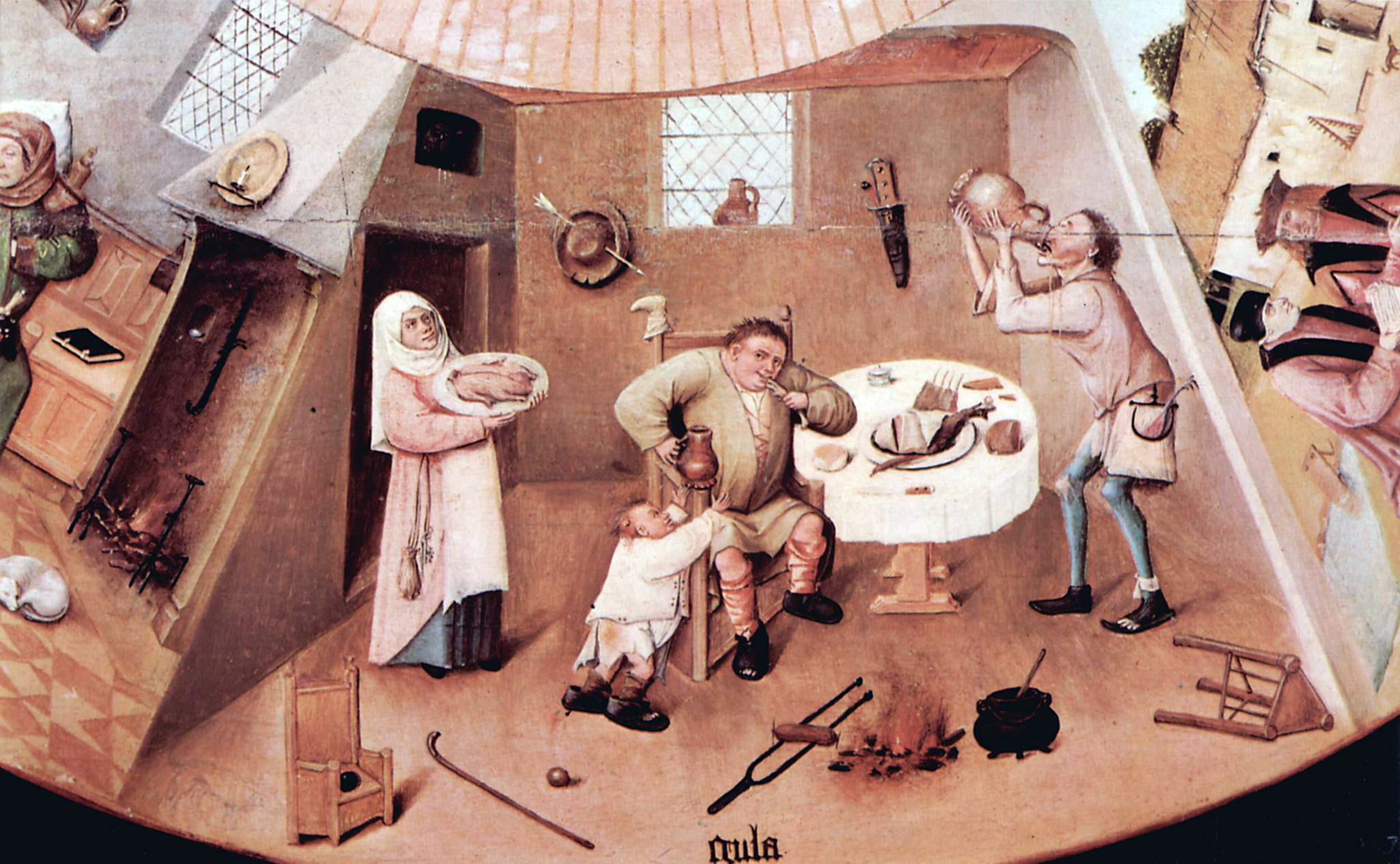 22 September 1465: A menu for the enthronement at Cawood Castle of George Neville as Archbishop of York
Comment
Comment
Comparison with the piece from The Spectator on the same day suggests to me that their critic is referred to above:
The Leeds Musical Festival terminated with The Messiah on the morning of Saturday last. In the performance of the solo parts there was nothing remarkable, the principal singers being the usual metropolitan celebrities, Madame Clara Novello, Miss Dolby, Mr. Sims Reeves, and Mr. Weiss; but the choruses were sung in a manner which the metropolis certainly has never been able to equal. We have already had occasion to notice the superiority of the choristers of Birmingham to those of Exeter Hall, notwithstanding their inferiority in numerical strength: at Leeds the same observation held good in a still more remarkable degree. At Exeter Hall the choral and instrumental band numbers above 700; at Birmingham it numbered about 500; at Leeds under 350: while the real power of these tuneful hosts was in the inverse ratio of their numbers. The Birmingham 500 excelled the London 700, while the Leeds 350 excelled both the one and the other. The Yorkshire choristers are the best in England, if not the best in the world; and all the Leeds choristers were Yorkshire people belonging to the working classes, drawn from the towns and villages of that musical land. Among them there was not one useless individual: they all had sound, mellow, English voices; they all thoroughly knew their parts, and consequently sang without hesitation or wavering, and their united voices formed a volume of pure musical sound which we have never heard equalled elsewhere by twice their number. Of all the districts of England the great county of York is the best able to furnish the materials for a great music-meeting; and in former times it was in the city of York that the greatest of the English Festivals was held, though it has been long since crushed by the interference of clerical bigotry. We are glad that a new Yorkshire Festival has been established. Like that of Birmingham, it is independent of the abused power of ecclesiastical dignitaries: and as the people of Leeds have emulated those of Birmingham in spirit and energy, their Festival has a fair prospect of rivalling the other in durability and magnitude. And this prospect is all the greater for the design, (which we understand, is contemplated) of rendering the Leeds Festival, like that of Birmingham, a permanent establishment, with triennial meetings for one charitable object, the benefit of the General Infirmary, a charity of great and extensive usefulness.
The financial result of this first Music Meeting at Leeds has been highly favorable. The audiences at the seven morning and evening performances amounted on an average to 2000 persons at each; the whole amount received has been about 75001, while the expenditure is estimated at 6000l: so that the charity will be benefited to the extent of about 1500l.
The appointment of Professor Sterndale Bennett (who, in addition to his high talents and reputation, is a Yorkshireman born) to the office of conductor, gave general satisfaction from the outset, and the vigour and ability with which he performed his duties, enhanced greatly the excellence of the performances and the success of the Festival.
(Spectator 1858/09/18)
George Bernard Shaw, however:
Down to 1877 the majority of the committee never got beyond the primitive notion that a great musical event was one at which Tietjens sang and Costa conducted. It was not until she died and he repudiated the committee that Leeds at last found out that familiarity with The Messiah, Elijah and the overture to William Tell, was not the climax of nineteenth-century musical culture.
Can someone point me to something about the York festival?
Something to say? Get in touch
Search
Subscribe/buy
Donate
Music & books
Place-People-Play: Childcare (and the Kazookestra) on the Headingley/Weetwood borders next to Meanwood Park.
Music from and about Yorkshire by Leeds's Singing Organ-Grinder.
 RSS feed
 Bluesky
 Extwitter