7 April 1812: Sheffield cemetery builders and metal-workers riot on market day against potato price inflation
Leeds Mercury. 1812/04/18. Riots. Leeds. Get it:
.Unedited excerpt
If an excerpt is used in the book, it will be shorter, edited and, where applicable, translated.
SHEFFIELD-There was a formidable riot in this place last market day, (Tuesday) though nothing of the kind was previously apprehended. About noon a number of poor men, (who being out of regular work, are employed in forming a new burying ground on the west side of the town,) came in a body into the corn-market. Their appearance had almost an instantaneous effect upon the multitude of workmen from the manufactories, collected there at the hour of dinner, who immediately proceeded to acts of violence, Their rage was principally directed against the potatoe dealers on account of a considerable advance in the price of that article. The stock of these they seized and scattered about the streets, or carried away in great quantities whereever they found it, in carts, in cellars or storehouses. Two or three sacks of corn were also emptied upon the pavement and wasted or purloined. Some butter was taken from the market women, and a barrel of red herrings broken, and the fish thrown amongst the spectators. After about two hours of disorder, the Magistrates and peace officers seemed to have prevailed upon the greatest part of the rioters to disperse, but unfortunately among one division of them, the cry was suddenly set up of “All in a mind for the Volunteer arms!” and away they hastened to the military depositary of the Local Militia, on the outside of the town, which was in an unprotected building. Into this depot they presently forced an entrance, when finding no ammunition, they begun to break to pieces the fire-locks, destroy the drums, tearing and carrying off the clothes and other accoutrements; but before they could accomplish all their intended mischief, the Magistrates with a troop of Hussars from the barracks came upon them and dispersed them in a few minutes. Here the destructive tumult ceased, and the peace of the town has been well preserved ever since, by the prudent and vigorous measures which have been adopted. No personal injury has been sustained either by the rioters, the military, or the orderly Inhabitants, beyond the bruises from potatoes, pieces of wood, &c. flying about during the tumultuous depredations of the mob. The magistrates deserve the highest praise for their forbearance and attention to the difficult duties of their office at such a time of danger and exasperation. Seven persons, (six men and boys and one woman) have been committed to York Castle, charged with being actors and accessories in the disturbance.


Comment
Comment
Which “new burying ground to the west of the town” are some of the rioters working on? Doesn’t appear to be any listed in a later piece on Sheffield’s churchyards (Sheffield Independent 1850/03/30).
Something to say? Get in touch
Tags
Tags are assigned inclusively on the basis of an entry’s original text and any comment. You may find this confusing if you only read an entry excerpt.
- Cemetery (2) W/G ·
- Fish (10) W/G ·
- Food (2) W/G ·
- Herring (2) W/G ·
- Inflation (5) W/G ·
- Iron (9) W/G ·
- Marketplace (8) W/G ·
- Metalworking (2) W/G ·
- Militia (5) W/G ·
- Napoleonic Wars (1803-15) (23), a series of conflicts fought between the First French Empire under Napoleon (1804-15) and a fluctuating array of European coalitions, which originated in political forces arising from the French Revolution (1789-99) and from the French Revolutionary Wars (1792-1802), and produced a period of French domination over Continental Europe W/G ·
- Potato (2) W/G ·
- Riot (22) W/G ·
- 📌Sheffield (80) W/G ·
- Steel (12) W/G ·
- Wheat (14) W/G ·
- 📌York Castle (37) W/G ·
- 📌York (165) W/G ·
Comment
Comment
Which “new burying ground to the west of the town” are some of the rioters working on? Doesn’t appear to be any listed in a later piece on Sheffield’s churchyards (Sheffield Independent 1850/03/30).
Something to say? Get in touch
Similar
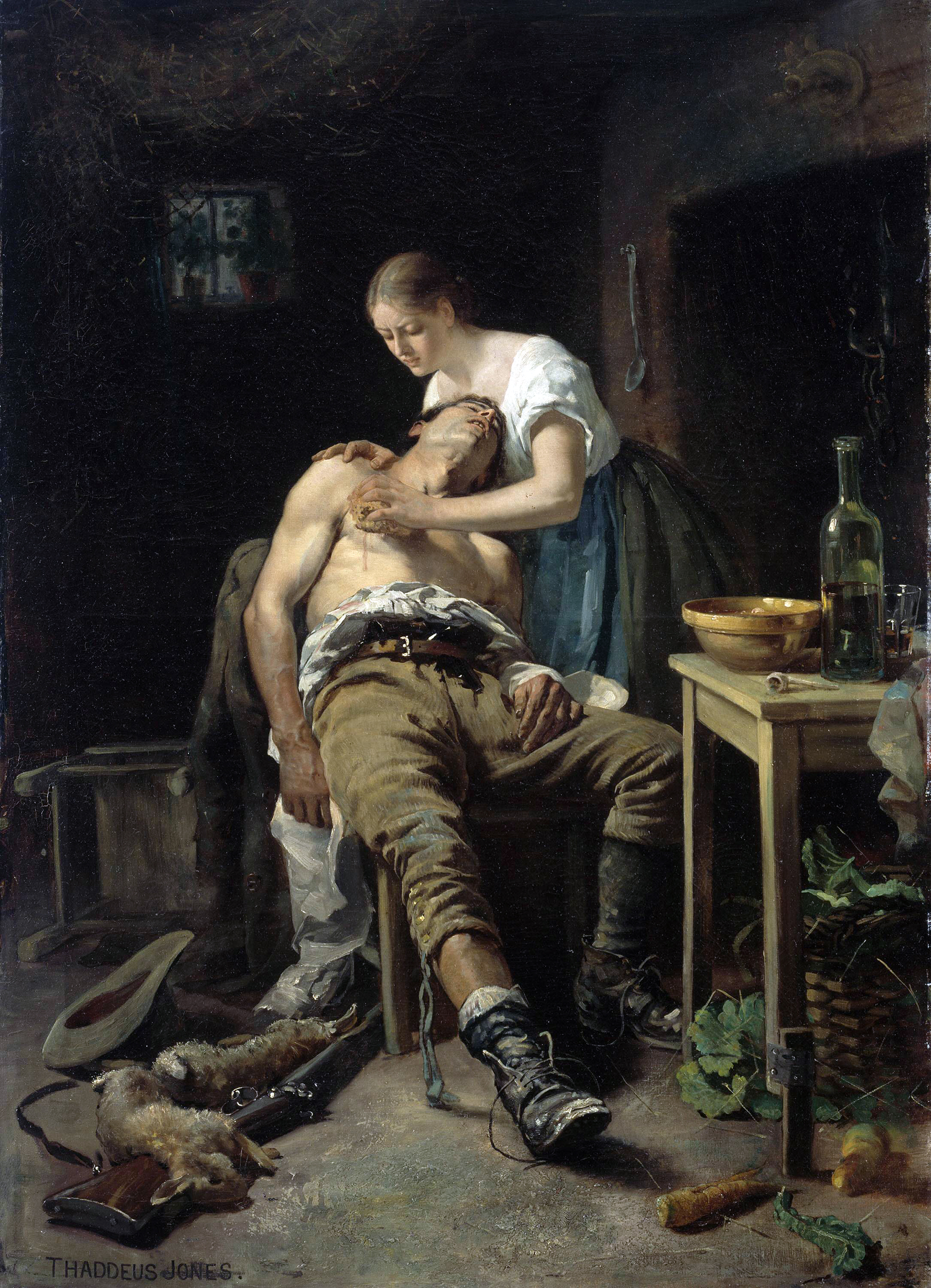 10 December 1769: Part of the northern ballad about Bill Brown, a Brightside (Sheffield) steelworker and hare-poacher killed by gamekeepers today near Rotherham
Comment
Comment
Some background to the novel:
D. F. E. Sykes, a Huddersfield solicitor married to the daughter of an Anglican clergyman, focused in Ben o’ Bills, The Luddite, which the author claimed to be based on oral testimony and ‘mostly true’, on a fictional family, the Bamforths, connected with the Particular Baptists at Powle Moor, near Slaithwaite, where the minister, Abraham Webster, was so decidedly against the new machines that old Mrs Bamforth ‘died in the belief that the curse of Scripture was upon them’. George Mellor, a cousin of the Bamforths in the novel, enters the story on Christmas Eve, 1811, intoning the first verse of ‘Christians Awake’. He goes along with the rest of the family to Christmas morning service at Slaithwaite Church, where ‘near all Slaithwaite’ had gathered ‘Methodies and Baptists and all; and even folk that went nowhere, Owenites they called them’, who ‘made a point of going to church that one morning of the year’. Mellor, who occasionally speaks in moderate tones, but elsewhere gives vent to Painite anti-clerical and republican sentiments, is portrayed presiding at a Luddite oath-taking ceremony with a Bible to hand. He refers to Benjamin Walker, the accomplice who betrayed him, whose family Sykes also links with the Baptists at Powle Moor, as a ‘Judas’, He is visited twice in his York prison cell by Abraham Webster, who prays with him on the eve of his execution. According to Sykes, this final pastoral visit inspired Mellor to offer words of forgiveness for his enemies from the scaffold, though Sykes was clearly using dramatic licence in allowing Webster to lead the singing of a Methodist hymn at Mellor’s execution, since all the contemporary accounts record this as a feature of the execution of another group of Luddites. At the end of the novel, Soldier Jack, a former militia-man-turned-Luddite, reflecting on Mellor’s fate, philosophizes: ‘”Yo’re dissenters at th’ Powle … an’ … if there’d been no dissenters there’d been no Luds, ‘an George Mellor ‘d noan ha’ danced out 0′ th’ world on nowt”‘.
Much of the background to Sykes’s novel is authentic, as are several of the key characters, including Abraham Webster, the Baptist minister at Powle Moor, the Reverend Charles Chew, the curate at Slaithwaite and the Luddites George Mellor and Benjamin Walker. A succession of popular evangelical Calvinistic Anglican curates in the Venn tradition at Slaithwaite and the reluctance of the earls of Dartmouth to release land on their estates for the building of Nonconformist places of worship had delayed the local development of both Wesleyanism and Dissent, a factor of which Sykes was clearly aware in his reconstruction of popular religion in the Colne Valley. In fact, no Wesleyan chapel was built at Slaithwaite until 1839, though a chapel had been opened in 1810 at Linthwaite, the first to be built in the Colne Valley, and cottage meetings were begun at Marsden in the same year. The Baptist secession had occurred as recently as 1787 and the Powle Moor Chapel was built· three years later on moorland waste in the neighbouring township of Scammonden, having been denied building land on the Dartmouth estates in the Colne Valley. The most recent historians of the chapel have, however, found no evidence in the chapel records to corroborate the links between Sykes’s characters and the chapel and dismissed Sykes’s account as purely fictional.
(Hargreaves 1990)
See also the official record of the trial (Howell 1823).
Something to say? Get in touch
Search
Subscribe/buy
Donate
Music & books
Place-People-Play: Childcare (and the Kazookestra) on the Headingley/Weetwood borders next to Meanwood Park.
Music from and about Yorkshire by Leeds's Singing Organ-Grinder.
 RSS feed
 Bluesky
 Extwitter