20 March 1840: A judge finds that Charles Brown (52) feigned deafness to try to evade the gallows for sexually assaulting young Frederick Haselm at Hull
York Herald. 1840/03/21. Sentences of Death. York: York Herald. Get it:
.Unedited excerpt
If an excerpt is used in the book, it will be shorter, edited and, where applicable, translated.
Charles Brown (52), was charged with having on the 5th of August last, at Hull, committed an unnatural crime on Frederick Haselm, ten years of age. Mr. Baines and Mr. Bain were for the prosecution. The prisoner was undefended. There was great difficulty in getting him to plead, he saying that he was as deaf as a post. A piece of paper desiring him to plead was handed to the prisoner, and he pleaded Not Guilty. The prosecutor, his father and mother, and the prisoner, lodged in a Mr. Wilson’s public house, when the offence was committed. The prisoner, in a long rambling speech in defence, vehemently declared his innocence. The jury retired and after an absence of ten minutes, they found the prisoner guilty, but recommended him to mercy.
On being asked if he had anything to say, why judgment of death should not be passed upon him, he said that he would throw himself on the mercy of the Court. He never was charged with anything in his life, and he was as innocent as a lamb in this concern. The usual proclamation was then made, and the judge [Mr. Justice Erskine] put on the black cap.
His Lordship said: “Prisoner at the bar, you have declared yourself to be unable to hear what has been addressed to you: and therefore I fear what I may say may not altogether be understood by you. But I have observed that you are not so deaf as you pretended to be, because I saw that when an answer was given from a witness in a much lower tone than that in which you had been previously addressed, you understood what was uttered, and you made a reply to it. Nay more, you yourself most unconsciously in your defence showed that you were only pretending that you were deaf to the extent you now maintain, by stating that when you were before the magistrates the boy made use of one term to the magistrate, instead of writing down that word which you heard he wrote down another; and therefore for that you have been attempting to practice deception on the court, in order to avoid the consequences of that crime of which you have been convicted. The jury have found you guilty upon evidence which can leave no doubt – the only circumstance upon which the slightest question could rise was the consequence of your own wickedness, in having led that unhappy youth, who stood at the bar, to be a willing accomplice in your detestable offence, and to attempt to conceal it from his mother, because you had tempted him by money to consent to submit his body to your brutal lust. The offence of which you have been guilty is one equally denounced by the laws of God and man, and by the laws of your country your life has become forfeited, for although the legislature has relaxed the penalty of death in many other crimes, it has still left that fearful consequence as a punishment for offences like yours, and I grieve to say that I for one see no circumstances in your case that would justify me in recommending a relaxation of that punishment on this occasion. My duty is to award the punishment which the law attaches to your crime, unless I could see in the facts of the case something which mitigated your offence. I have been able to see nothing, for you have not only defiled your own body by your brutal assault – you have not only defiled the body of that child – but you have polluted his mind, and his eternal death hereafter may be the consequence of the corruption of which you have been guilty. And therefore as you have set this wicked example to him, it is due to him that he should see what the fatal consequences are of an offence like this which you have committed – that as you have corrupted his mind by your temptation, so he should be warned from following your example by your untimely end, and as this fact should also become known to the public – the public should also be warned by the consequences attached to such a crime, and to see what must be the consequence when men are led astray by lust as unnatural and brutal as that which has placed you in that situation which has led you from hence to the scaffold, to expiate the crime of which you have been guilty by a violent and untimely death. But this is not all; you will still have to stand before the law of of God – before a God of purity and holiness, who cannot bear the slightest taing of sin, and who has threatened that he will by no means spare the guilty. But I have reason to be thankful that a time is yet given you to prepare for that awful day, and that even for such as you, mercy is still offered, through the sacrifice of that Saviour, who has shed his blood in order that he might redeem even the worst of sinners from the heinousness of their crimes. But he tenders this mercy only to the penitent. He offers no mercy to the hardened man who swears by God Almighty that he is innocent of a crime, which his conscience tells him he has been guilty of. He will extend his mercy only to those who confess their guilt – who feel their guilt – and who cry for mercy in the name of that Saviour who has died for them, and who has taught the sinner to look at his own sin in the way in which God himself looks at it with abhorrence. Although he looks at no creature he has made with feelings of hatred, even the most sinful, yet he hates the sin that reduces those creatures to a state he never made them for. Therefore I implore you now to turn your thoughts inwards in that Saviour, for the wicked deed which you have done. You have not brought your mind to commit this crime suddenly, but that your mind has been polluted by many a wicked act. You must repent not only for this crime, but for all the offences you have ever committed in your life. Search into your heart – look at every crime – think of the Saviour who waits to be merciful – turn to him and apply to the throne of mercy above for that mercy which cannot be safely allowed to you here. My painful duty is to pass upon you the awful sentence of the law and which this Court doth adjudge and that is that for this your offence, you, Charles Brown, be taken hence to the place from whence you came, and from thence to the place of execution where you shall be hanged by the neck until you shall be dead and may God Almighty, for Christ’s sake, have mercy on your soul.”


Comment
Comment
Via Rictor Norton, who notes a report on 3 April that “on returning to Hull Mr. W. Ayre found that the character of a material witness was somewhat questionable, and on a representation having been made to the Judges, a respite has been the consequence” (Norton 2016/07/12). Perhaps young Frederick had made it up, or perhaps his parent balked at the death sentence, and York Prison received a reprieve from the Home Secretary, Constantine Phipps, on what seems to have been 4 April (York Herald 1840/04/04).
Something to say? Get in touch
Tags
Tags are assigned inclusively on the basis of an entry’s original text and any comment. You may find this confusing if you only read an entry excerpt.
- Assizes (24) W/G ·
- Child sexual abuse (7) W/G ·
- Constantine Phipps, 1st Marquess of Normanby (1) W/G ·
- Deafness (3) W/G ·
- Hanging (25) W/G ·
- Homophobia (1) W/G ·
- Homosexuality (3) W/G ·
- 📌Kingston upon Hull (74) W/G ·
- Northern Circuit (5) W/G ·
- Pedophilia (2) W/G ·
- Sexual assault (5) W/G ·
- Whigs (1678-1859) (23), political faction and, later, party, supported parliamentarism, various forms of elite liberalism, manufacturing interests, opposed Catholic emancipation, succeeded by the Liberal Party W/G ·
- 📌York Castle (37) W/G ·
- 📌York (165) W/G ·
Comment
Comment
Via Rictor Norton, who notes a report on 3 April that “on returning to Hull Mr. W. Ayre found that the character of a material witness was somewhat questionable, and on a representation having been made to the Judges, a respite has been the consequence” (Norton 2016/07/12). Perhaps young Frederick had made it up, or perhaps his parent balked at the death sentence, and York Prison received a reprieve from the Home Secretary, Constantine Phipps, on what seems to have been 4 April (York Herald 1840/04/04).
Something to say? Get in touch
Similar
 27 July 1612: Jennet Preston, the only Yorkshirewoman among the Pendle witches, is found guilty at York of the murder of Thomas Lister of Westby Hall, Gisburn (Ribble Valley)
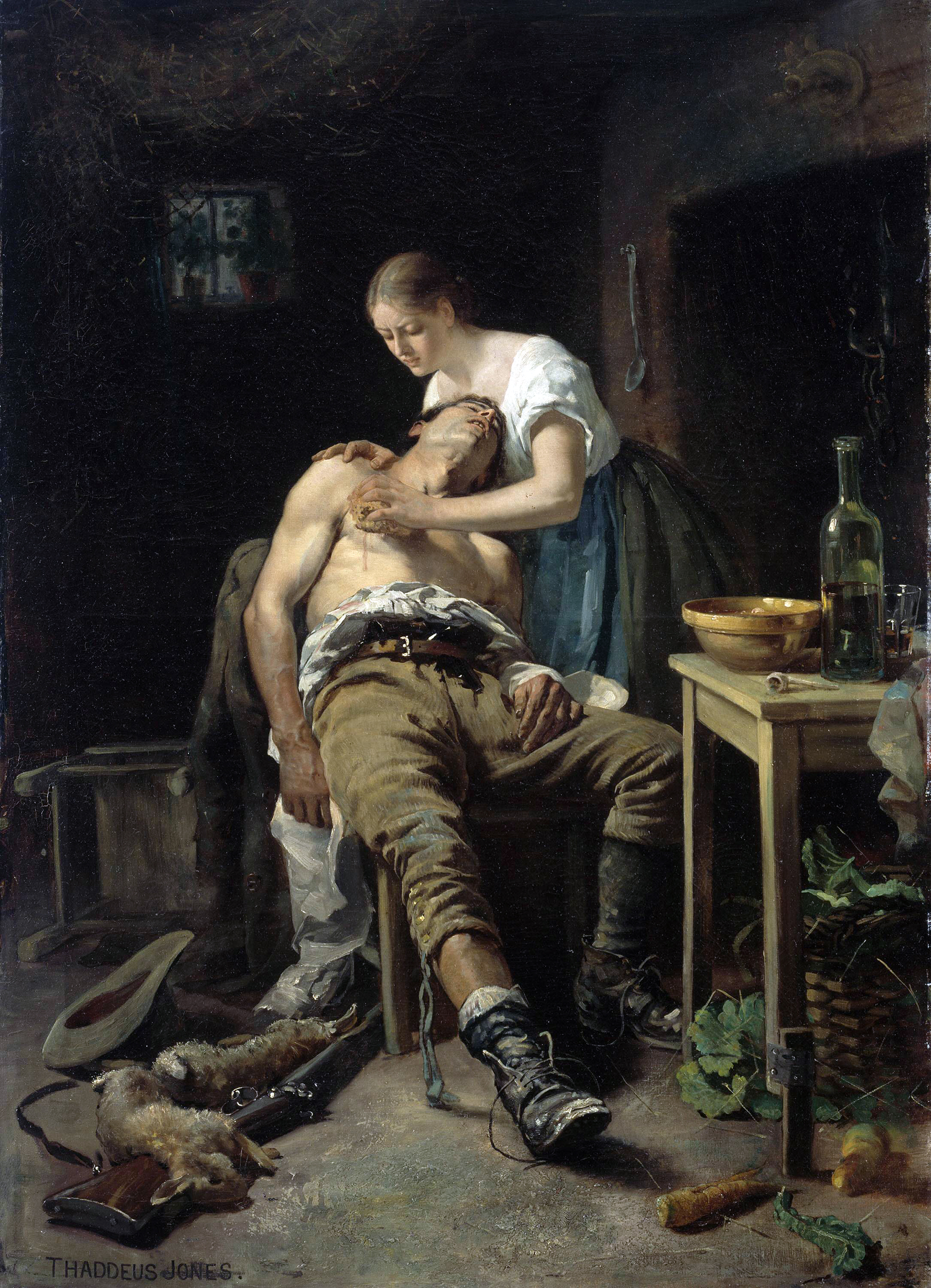 10 December 1769: Part of the northern ballad about Bill Brown, a Brightside (Sheffield) steelworker and hare-poacher killed by gamekeepers today near Rotherham
 8 February 1745: Pioneering but pennyless philologist Eugene Aram murders a wealthy Knaresborough wastrel
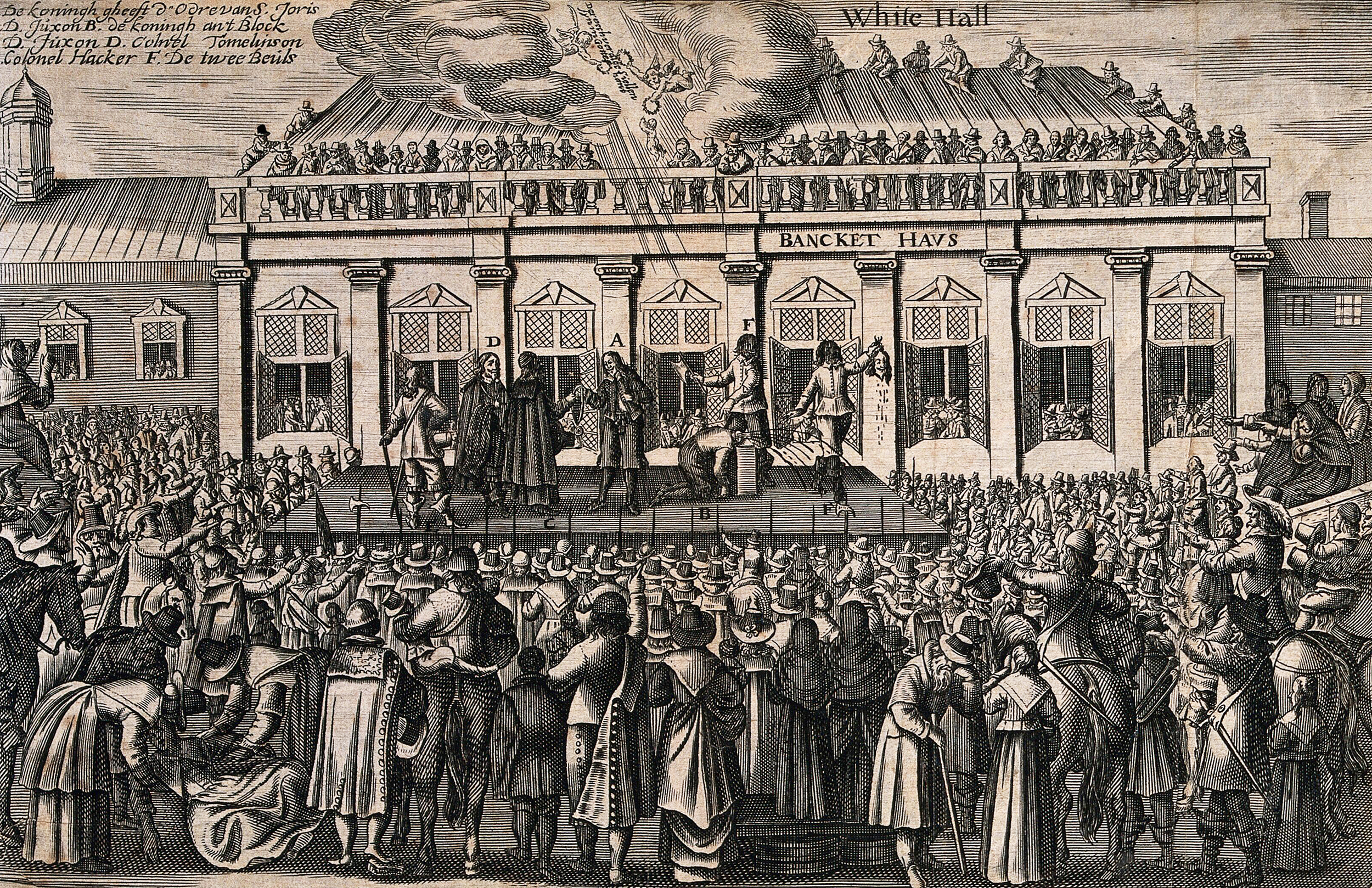 20 March 1649: Judge and Yorkshireman Francis Thorpe justifies to the grand jury at York the recent execution of Charles I
Comment
Comment
Some background to the novel:
D. F. E. Sykes, a Huddersfield solicitor married to the daughter of an Anglican clergyman, focused in Ben o’ Bills, The Luddite, which the author claimed to be based on oral testimony and ‘mostly true’, on a fictional family, the Bamforths, connected with the Particular Baptists at Powle Moor, near Slaithwaite, where the minister, Abraham Webster, was so decidedly against the new machines that old Mrs Bamforth ‘died in the belief that the curse of Scripture was upon them’. George Mellor, a cousin of the Bamforths in the novel, enters the story on Christmas Eve, 1811, intoning the first verse of ‘Christians Awake’. He goes along with the rest of the family to Christmas morning service at Slaithwaite Church, where ‘near all Slaithwaite’ had gathered ‘Methodies and Baptists and all; and even folk that went nowhere, Owenites they called them’, who ‘made a point of going to church that one morning of the year’. Mellor, who occasionally speaks in moderate tones, but elsewhere gives vent to Painite anti-clerical and republican sentiments, is portrayed presiding at a Luddite oath-taking ceremony with a Bible to hand. He refers to Benjamin Walker, the accomplice who betrayed him, whose family Sykes also links with the Baptists at Powle Moor, as a ‘Judas’, He is visited twice in his York prison cell by Abraham Webster, who prays with him on the eve of his execution. According to Sykes, this final pastoral visit inspired Mellor to offer words of forgiveness for his enemies from the scaffold, though Sykes was clearly using dramatic licence in allowing Webster to lead the singing of a Methodist hymn at Mellor’s execution, since all the contemporary accounts record this as a feature of the execution of another group of Luddites. At the end of the novel, Soldier Jack, a former militia-man-turned-Luddite, reflecting on Mellor’s fate, philosophizes: ‘”Yo’re dissenters at th’ Powle … an’ … if there’d been no dissenters there’d been no Luds, ‘an George Mellor ‘d noan ha’ danced out 0′ th’ world on nowt”‘.
Much of the background to Sykes’s novel is authentic, as are several of the key characters, including Abraham Webster, the Baptist minister at Powle Moor, the Reverend Charles Chew, the curate at Slaithwaite and the Luddites George Mellor and Benjamin Walker. A succession of popular evangelical Calvinistic Anglican curates in the Venn tradition at Slaithwaite and the reluctance of the earls of Dartmouth to release land on their estates for the building of Nonconformist places of worship had delayed the local development of both Wesleyanism and Dissent, a factor of which Sykes was clearly aware in his reconstruction of popular religion in the Colne Valley. In fact, no Wesleyan chapel was built at Slaithwaite until 1839, though a chapel had been opened in 1810 at Linthwaite, the first to be built in the Colne Valley, and cottage meetings were begun at Marsden in the same year. The Baptist secession had occurred as recently as 1787 and the Powle Moor Chapel was built· three years later on moorland waste in the neighbouring township of Scammonden, having been denied building land on the Dartmouth estates in the Colne Valley. The most recent historians of the chapel have, however, found no evidence in the chapel records to corroborate the links between Sykes’s characters and the chapel and dismissed Sykes’s account as purely fictional.
(Hargreaves 1990)
See also the official record of the trial (Howell 1823).
Something to say? Get in touch
Search
Subscribe/buy
Donate
Music & books
Place-People-Play: Childcare (and the Kazookestra) on the Headingley/Weetwood borders next to Meanwood Park.
Music from and about Yorkshire by Leeds's Singing Organ-Grinder.
 RSS feed
 Bluesky
 Extwitter