21 November 1855: Catherine Booth, co-founder of the Salvation Army, writes from Dewsbury of her hopes for her unborn child
Harold Begbie. 1920. The Life of General William Booth, the Founder of the Salvation Army, Vol. 1. New York: Macmillan. Get it:
.Unedited excerpt
If an excerpt is used in the book, it will be shorter, edited and, where applicable, translated.
In announcing to her parents that the itinerary of this revivalism was carrying them to Leeds, Mrs. Booth expresses an opinion which gives one an amusing view of her vigorous character:
I believe we are to have a very nice home, where there are no children, quite a recommendation, seeing how they are usually trained! I hope if I have not both sense and grace to train mine so that they shall not be a nuisance to everybody about them, that God will in mercy take them to Heaven in infancy.


Comment
Comment
Via Roy Hattersley, who comments:
The image of the dying infant – about to rise to glory, untainted by vice and redeeming its parents by its spotless example – was a constant source of inspiration to Victorian Methodism. But that was not quite what Catherine Booth meant (Hattersley 2000).
Something to say? Get in touch
Tags
Tags are assigned inclusively on the basis of an entry’s original text and any comment. You may find this confusing if you only read an entry excerpt.
- Catherine Booth (2) W/G ·
- 📌Dewsbury (21) W/G ·
- 📌Leeds (249) W/G ·
- Methodism (38) W/G ·
- Pregnancy (9) W/G ·
- Roy Hattersley (1) W/G ·
- The Salvation Army (2) W/G ·
- William Booth (2) W/G ·
Comment
Comment
Via Roy Hattersley, who comments:
The image of the dying infant – about to rise to glory, untainted by vice and redeeming its parents by its spotless example – was a constant source of inspiration to Victorian Methodism. But that was not quite what Catherine Booth meant (Hattersley 2000).
Something to say? Get in touch
Similar
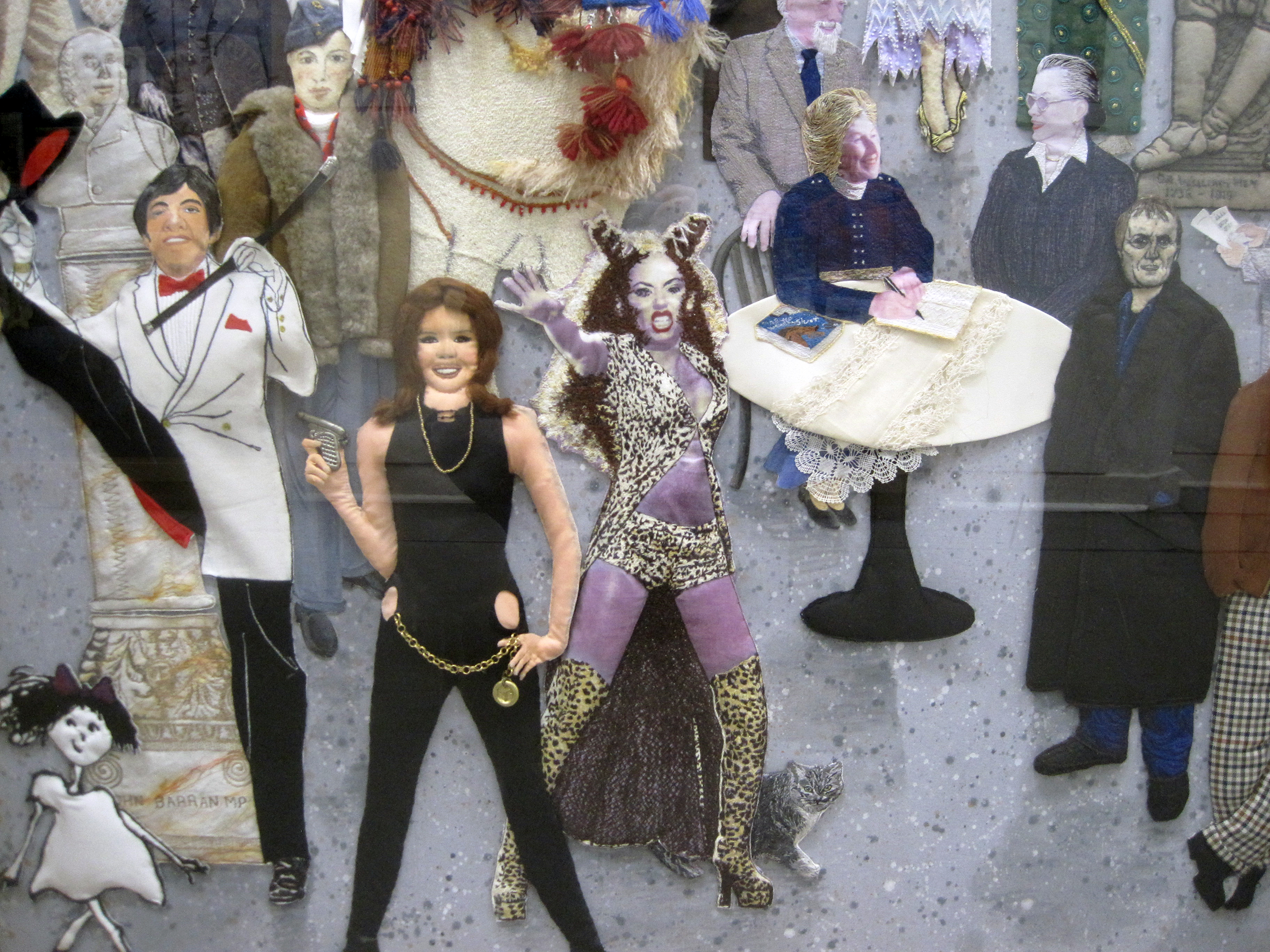 29 April 1969: Jimmy Savile sexually assaults a 15-year-old girl at Staincliffe Hospital (later Dewsbury and District Hospital), to the amusement of bystanders
 28 April 1747: John Wesley visits “the new house of the Germans” (the Moravians) at Pudsey, which is financed by overseas donations
Comment
Comment
Shirley is set in 1811 and 1812, and Luddism became a serious threat in the West Riding in early 1812. Easter Sunday was 29 March that year, so Whit Tuesday was 19 May – although Charlotte Brontë’s imagination, perhaps inspired by weather reports in the Leeds Mercury, which she consulted extensively, locates it in the last week of May. John Lock and Canon W.T. Dixon say (p.63) that the scene reworks a confrontation between Patrick Brontë and a drunk when he led the Whitsun procession in Dewsbury in 1810 (Lock 1965), but Herbert Wroot (p.78) has found in the Dewsbury Reporter of 12 December 1896 the report of an interview conducted by P.F. Lee in which the Rev. James Chesterton Bradley, the original of “Mr. Sweeting,” says that Charlotte Brontë reused more or less literally an actual episode:
At the head of the steep main street of Haworth is a narrow lane, which on a certain Whitsuntide was the scene of a similar event to the one related in this seventeenth chapter of ‘Shirley.’ The Church School procession had defiled into the lane, ‘had gained the middle of it,’ when ‘lo and behold! another – an opposition procession’ – was entering the other end of the lane at the same time, ‘headed also by men in black.’
It was interesting, Mr. Lee went on to say, “to hear from Mr. Bradley how Patrick Bronté, seeing the situation, at once assumed the offensive, and charging the enemy with his forces soon cleared the way.”
Wroot also says that “immediately upon the publication of the novel, Briarfield was identified, by all acquainted with the district, as Birstall” (Wroot 1966).
Something to say? Get in touch
Search
Subscribe/buy
Donate
Music & books
Place-People-Play: Childcare (and the Kazookestra) on the Headingley/Weetwood borders next to Meanwood Park.
Music from and about Yorkshire by Leeds's Singing Organ-Grinder.
 RSS feed
 Bluesky
 Extwitter