7 November 1866: James Robinson of Barnsley is observed teaching his dog to worry cats
Leeds Mercury. 1866/11/08. Cruelty to a Cat. Leeds. Get it:
.Unedited excerpt
If an excerpt is used in the book, it will be shorter, edited and, where applicable, translated.
At the Barnsley Police-court yesterday, James Robinson was charged with cruelty to animals on the 13th ult. The information was laid by Mr. Inspector Temperley, of the Leeds Society for the Prevention of Cruelty to Animals. Witnesses deposed to the defendant going to the house of Mary Gunsen, and taking away a young cat. When on the highway he pulled the animal out of his pocket and gave it to his dog, which commenced to worry it. Abraham Leak, school master of the village, saw the act, and asked the defendant what he was doing, to which he replied, “I am teaching my dog to worry cats.” Wm. Naylor saw the man patting the dog and encouraging it to worry the cat, which was struggling and apparently dying. The Chairman said the expenses were rather heavy, and imposed a fine of 1s. and the expenses, amounting to £1 1s., accompanied with the remark that the society must pay the expenses of the witnesses.


Comment
Comment
What kind of dog was it, and was the purpose of the exercise to then introduce it to worrying foxes or some such?
£1 2s. was just over £100 in January 2023.
Something to say? Get in touch
Tags
Tags are assigned inclusively on the basis of an entry’s original text and any comment. You may find this confusing if you only read an entry excerpt.
- Animal welfare (2) W/G ·
- 📌Barnsley (24) W/G ·
- Cat (4) W/G ·
- Dog (12) W/G ·
- Hunting (10) W/G ·
- Royal Society for the Prevention of Cruelty to Animals (2) W/G ·
Comment
Comment
What kind of dog was it, and was the purpose of the exercise to then introduce it to worrying foxes or some such?
£1 2s. was just over £100 in January 2023.
Something to say? Get in touch
Similar
 30 May 1835: Alfred Austin, future poet laureate, “Banjo-Byron that twangs the strum-strum,” is born into rural splendour at Ashwood, 48 Headingley Lane, Leeds
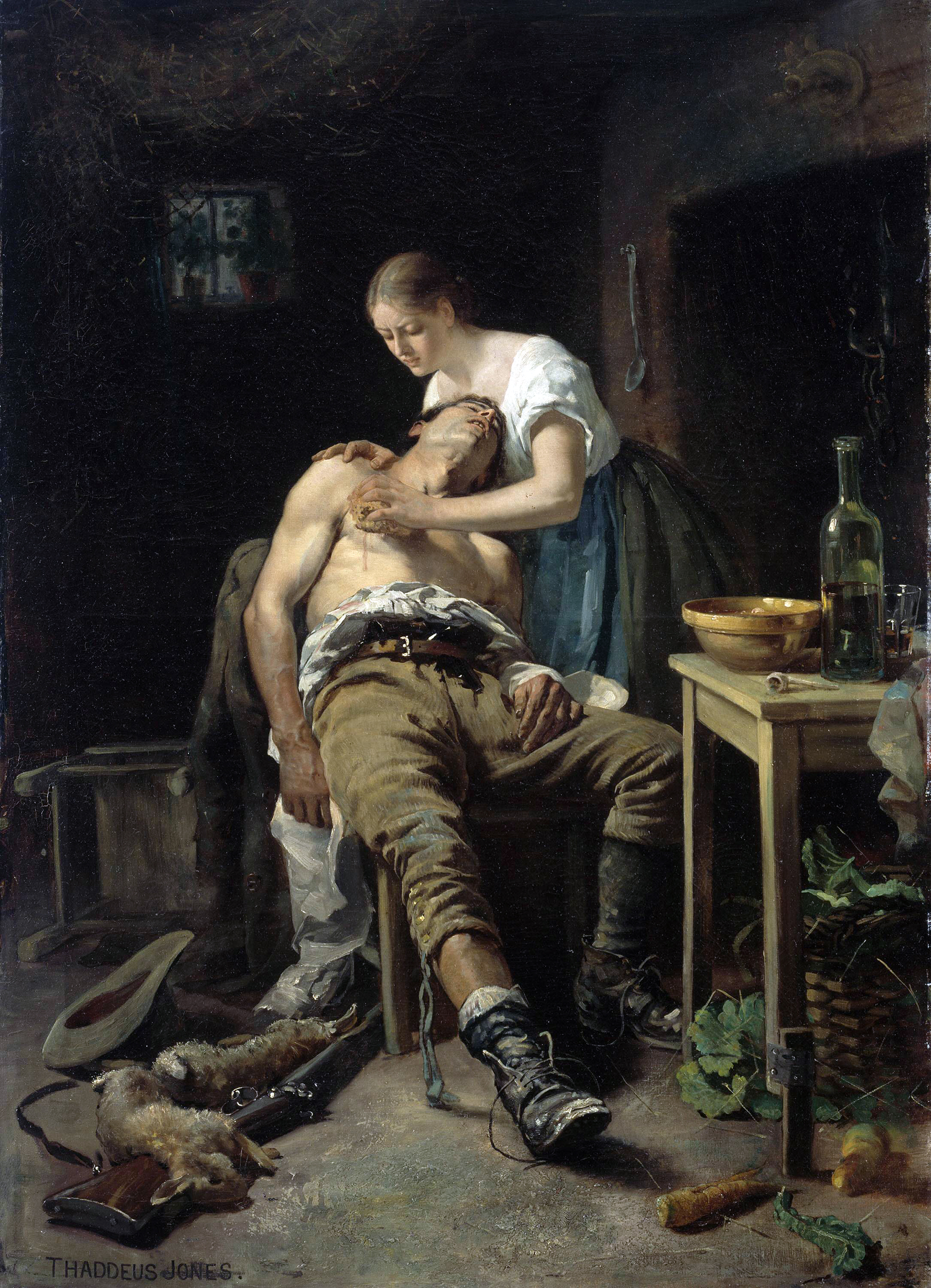 10 December 1769: Part of the northern ballad about Bill Brown, a Brightside (Sheffield) steelworker and hare-poacher killed by gamekeepers today near Rotherham
 4 July 1838: 26 girls and boys drown trying to escape via a tunnel from flash flooding in Huskar Colliery, Silkstone, Barnsley, after the steam lifts fail during a rainstorm
Comment
Comment
Re this wave of unofficial strikes:
Major-General Sir Noel Holmes, chairman of the north-eastern division of the National Coal Board, in a statement yesterday on the strike at Grimethorpe Colliery, said that 140 coal-face workers, out of 2,682 employed at the pit, were not doing a fair day’s work. A committee representing management and workmen had decided that the stint for the 140 workers should be increased by 2ft., but they refused to accept its findings and came out on strike. The other coal-face workers came out in sympathy. “As much as I dislike mentioning this fact,” said Sir Noel Holmes, “it is only right to recall that at Grimethorpe since January 1, 1947, and before the present strike, there have been 26 sectional unofficial stoppages, which have lost 33,000 tons of coal to the nation. The present stoppage up to date represents a further loss of more than 40,000 tons.” (Times 1947/08/27)
Holmes’s Wikipedia article curiously doesn’t mention this phase of his career.
I’m guessing that the Welsh ex-Puritan authoritarian Communist Arthur Horner is the voice of the NUM in the above – see e.g. the Times for 9 September.
Interesting comments on the wartime coal boards by T.S. Charlton, colliery manager at Cortonwood:
The management of the collieries is in the hands of men trained primarily in management of mines and miners. They have a working knowledge of all the machinery available and how best it can be used, but the details of this side are left to the mechanical and electrical engineer. Labour costs are two-thirds of production costs, and therefore the handling and the best use of men are of the greatest importance to managers. Why it should have been decided that labour leaders should be good labour directors is, apart from the political issue, difficult to understand, unless it is on the old adage of “poacher turned gamekeeper.” Unless and until the production director has control of his labour side, I can see little hope of his schemes proving effective.
The miners have put forward suggestions to improve output, but they appear to do no more than improve the position of the miner. Can it be said that any suggestion already put forward by the men has put up the output figure? Why should it be assumed the men’s side of the pit production committees should be able to improve output in any way? Their training, inclinations, and very job depend upon their obtaining the best for their electors rather than for production.
(Charlton 1943/12/01)
Charlton was clearly a clever and capable man – it would be good to know more about him.
Something to say? Get in touch
Search
Subscribe/buy
Donate
Music & books
Place-People-Play: Childcare (and the Kazookestra) on the Headingley/Weetwood borders next to Meanwood Park.
Music from and about Yorkshire by Leeds's Singing Organ-Grinder.
 RSS feed
 Bluesky
 Extwitter