26 April 1867: In a requiem to Hull’s whaling industry, the Diana sails into port at the end of its fateful Arctic voyage
Leeds Mercury. 1867/04/27. Arrival of the Diana at Hull. Leeds. Get it:
.Unedited excerpt
If an excerpt is used in the book, it will be shorter, edited and, where applicable, translated.
Yesterday morning, about half-past eight, the Diana arrived at the Hull roads. She was sighted about seven o’clock off Paull. The intimation of her approach had attracted thousands of persons to the South-end on the previous evening, and yesterday morning the throng was much greater. She at once entered the Humber Dock, and as she passed through, the quays and shipping on all sides became crowded. Of course the Diana was boarded by very many, and the yards were manned and other portions of the vessel crowded. The half-mast flag indicated the presence of a corpse on hoard, and it was seen that the shell containing the late Capt. Gravill was placed upon the bridge, being covered with canvas. The forlorn state of the ship was at once observable, and the deepest interest was manifested to communicate with those on board. So much excitement has never been manifested in regard to a Hull vessel, nor a wider-spread interest created, though at the best it is of a painful character. There is no parallel in the records of suffering and misfortune at the Greenland fishery, at least so far as Hull is concerned. The multitudes of expectant people who lined the piers and the quays of the decks this morning, assembling as they did as soon as the approach of the Diana became known, must have reminded many olderly people of the golden age of the whale fishery – when Hull sent a magnificent fleet of vessels to prosecute the arduous trade.
The shell containing the body of the late captain was carefully removed from the ship to the hearse by his old harpooners, and conveyed to his residence in Hessle Road. The funeral is arranged to take place on Monday, the 29th inst., leaving the house at 2 o’clock p.m., and arriving at the Springbank Cemetery at 2.30. The late Captain Gravill died on board the Diana on. Tuesday, December 26th, of inflammation of the liver and kidneys, and general dropsy, in the sixty-fifth year of his age, the ship at the time being beset in Davis’s Straits among very heavy ice, off the entrance of Frobisher’s Straits.


Comment
Comment
The Diana’s surgeon had long since given up his diary, but the published edition deals with her return to Hull (Smith 1922).
Something to say? Get in touch
Tags
Tags are assigned inclusively on the basis of an entry’s original text and any comment. You may find this confusing if you only read an entry excerpt.
- Arctic Ocean (9) W/G ·
- Davis Strait (3) W/G ·
- Diana (1840 ship) (8) W/G ·
- East Riding of Yorkshire (67) W/G ·
- Edema (2) W/G ·
- Frobisher Bay (1) W/G ·
- Holderness (16) W/G ·
- Hull General Cemetery (1) W/G ·
- Humber (21) W/G ·
- International trade (17) W/G ·
- 📌Kingston upon Hull (74) W/G ·
- Paull (1) W/G ·
- 📌Port of Hull (19) W/G ·
- Whaling in the United Kingdom (11) W/G ·
- Whaling (10) W/G ·
Comment
Comment
The Diana’s surgeon had long since given up his diary, but the published edition deals with her return to Hull (Smith 1922).
Something to say? Get in touch
Similar
 19 February 1866: The Diana, Hull’s first steam-assisted whaler and its last of any nature, leaves on its fateful voyage to the Arctic
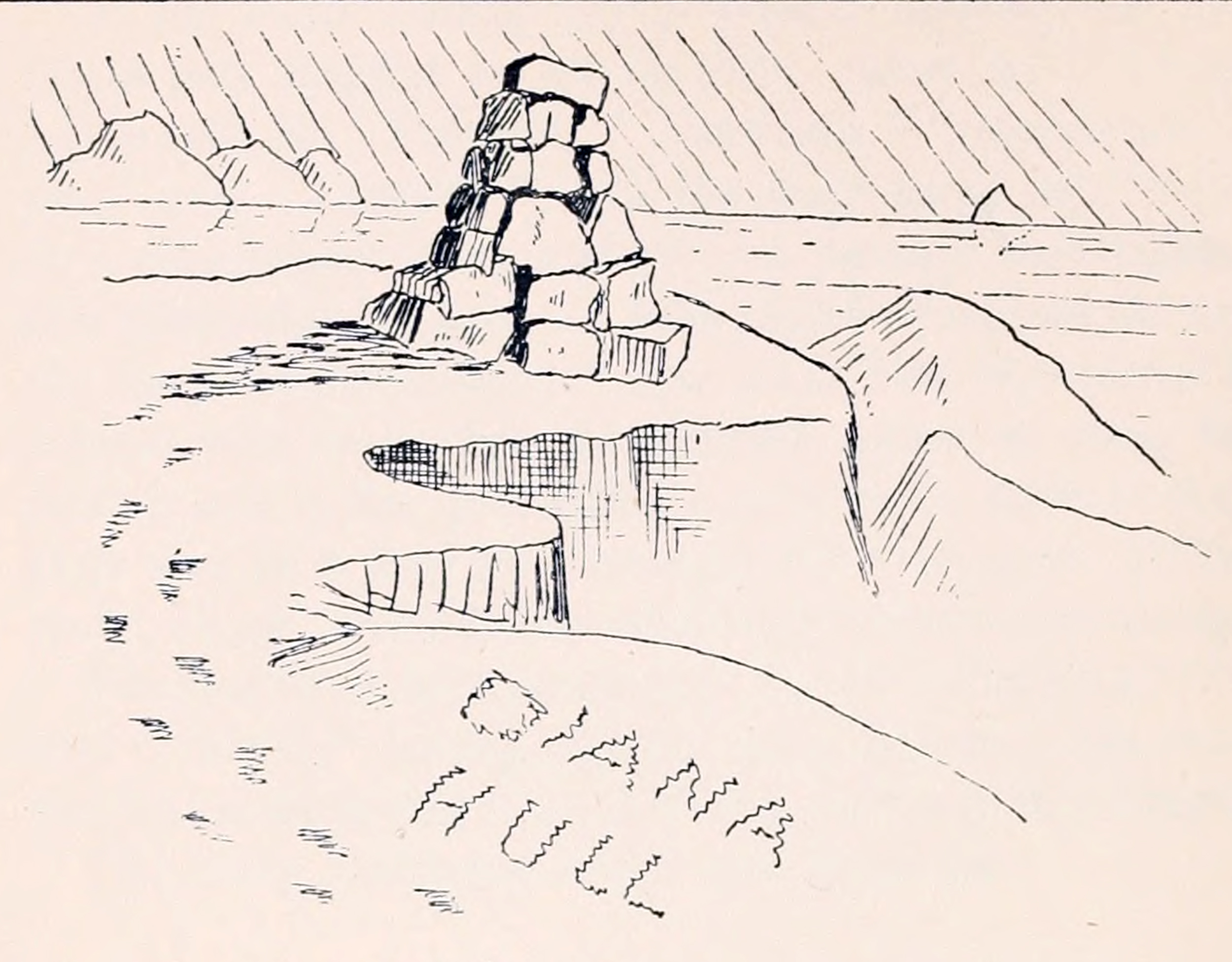 5 June 1866: Crew members of the whaler Diana (Hull) climb an Arctic hillside and leave a memento of home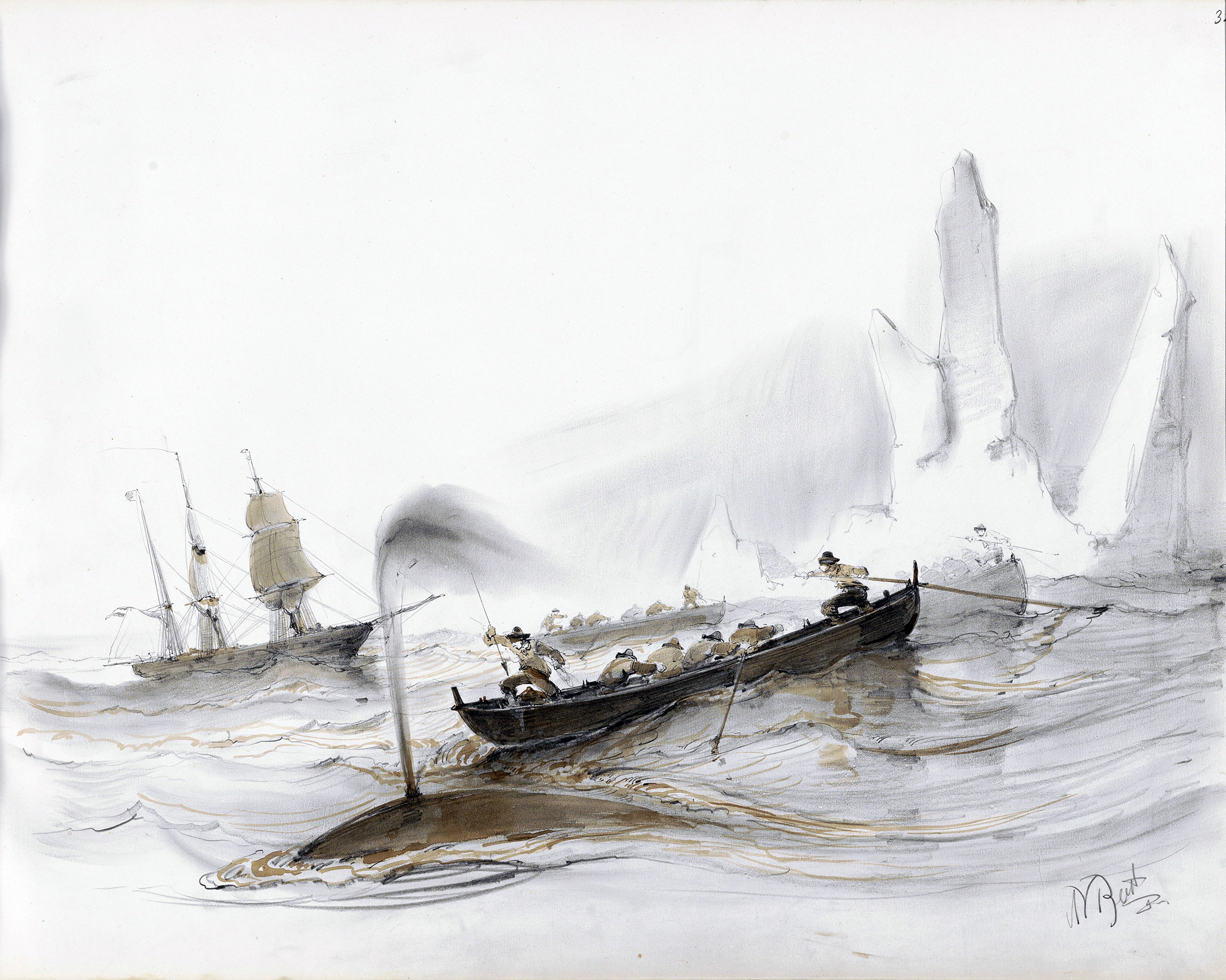

Comment
Comment
Smeaton’s scheme did not prosper. John Timperley:
Various schemes had been suggested for cleansing the dock of the mud brought in by the tide; one was by making reservoirs in the fortifications or old town ditches, with the requisite sluices, by means of which the mud was to be scoured out at low water; another by cutting a canal to the Humber, from the west end of the dock, where sluices had been provided, and put down for the purpose, when it was proposed to divert the ebb tide from the river Hull along the dock, and through the sluices and canal into the Humber, and so produce a current sufficient, with a little manual assistance, to carry away the mud. Both of these schemes were however abandoned, and the plan of a horse dredging machine adopted; this work began about four years after the Old dock was completed, and continued until after the opening of the Junction dock. The machine was contained in a square and flat bottomed vessel 61 feet 6 inches long, 22 feet 6 inches wide, and drawing 4 feet water: it at first had only eleven buckets, calculated to work in 14 feet water, in which state it remained till 1814, when two buckets were added so as to work in 17 feet water, and in 1827 a further addition of four buckets was made, giving seventeen altogether, which enabled it to work in the highest spring tides. The machine was attended by three men, and worked by two horses, which did it at first with ease, but since the addition of the last four buckets, the work has been exceedingly hard.
There were generally six mud boats employed in this dock before the Humber dock was made; since which there have been only four, containing, when fully laden, about 180 tons, and usually filled in about six or seven hours; they are then taken down the old harbour and discharged in the Humber at about a hundred fathoms beyond low water mark, after which they are brought back into the dock, sometimes in three or four hours, but generally more. The mud engine has been usually employed seven or eight months in the year, commencing work in April or May.
The quantity of mud raised prior to the opening of the Junction dock, varied from 12,000 to 29,000 tons, and averaged 19,000 tons per annum; except for a few years before the rebuilding of the Old lock, when, from the bad and leaky state of the gates, a greater supply of water was required for the dock, and the average yearly quantity was about 25,000 tons. As the Junction dock, and in part also the Humber dock, are now supplied from this source, a greater quantity of water flows through the Old dock, and the mud removed has of late been about 23,000 tons a year.
It may be observed, that the greatest quantity of mud is brought into the dock during spring tides, and particularly in dry seasons, when there is not much fresh water in the Hull; in neap tides, and during freshes in the river, very little mud comes in (Timperley 1842).
Something to say? Get in touch
Search
Subscribe/buy
Donate
Music & books
Place-People-Play: Childcare (and the Kazookestra) on the Headingley/Weetwood borders next to Meanwood Park.
Music from and about Yorkshire by Leeds's Singing Organ-Grinder.
 RSS feed
 Bluesky
 Extwitter