19 October 1909: Opening a nurses’ home in Dewsbury, Clifford Allbutt describes their predecessors in the Leeds fever hospital in the 1860s
Humphry Davy Rolleston. 1929. The Right Honourable Sir Thomas Clifford Allbutt. London: Macmillan. Get it:
.Unedited excerpt
If an excerpt is used in the book, it will be shorter, edited and, where applicable, translated.
At the Annual General Meeting of the Leeds House of Recovery on November 28, 1861, Allbutt was elected physician to the institution, his senior colleague being Dr. Charles Chadwick. This, in spite of a name rather suggesting a convalescent home, was one of the early fever hospitals to be established in this country, and diseases such as typhus and relapsing fever, now almost never seen, were then commonly admitted into its wards; at this time it was at Burmantofts, in the outskirts of Leeds, but in 1885 it ceased to be a charity and was taken over by the Leeds Corporation, being now at Seacroft. When opening a Home for nurses at Dewsbury on October 19, 1909, he described the nursing and nurses of more than forty years before at the Leeds House of Recovery; there were two wards, one for men, the other for women, each with forty beds, under the charge of three nurses, two for the day and one for the night work. “They were great, powerful, red-faced women, who all ate a great deal of beef and drank a great deal of beer, and lifted the patients as you would lift puppy dogs.”


Comment
Comment
Something to say? Get in touch
Tags
Tags are assigned inclusively on the basis of an entry’s original text and any comment. You may find this confusing if you only read an entry excerpt.
- Allbutt, Clifford (1836-1925) (22), Dewsbury-born physician (Leeds Infirmary 1861-89), inventor of the clinical thermometer, Regius Professor of Physic at the University of Cambridge 1892-his death W/G ·
- Beef (4) W/G ·
- Beer (36) W/G ·
- Burmantofts (3) W/G ·
- 📌Dewsbury (21) W/G ·
- Leeds House of Recovery (3) W/G ·
- 📌Leeds (249) W/G ·
- Nursing (2) W/G ·
- Physical strength (1) W/G ·
- Relapsing fever (1) W/G ·
- Typhoid fever (5) W/G ·
Comment
Comment
Something to say? Get in touch
Similar
 7 November 1920: In a guest sermon in the parish church where his father had officiated, Clifford Allbutt evokes the village of Dewsbury in the 1840s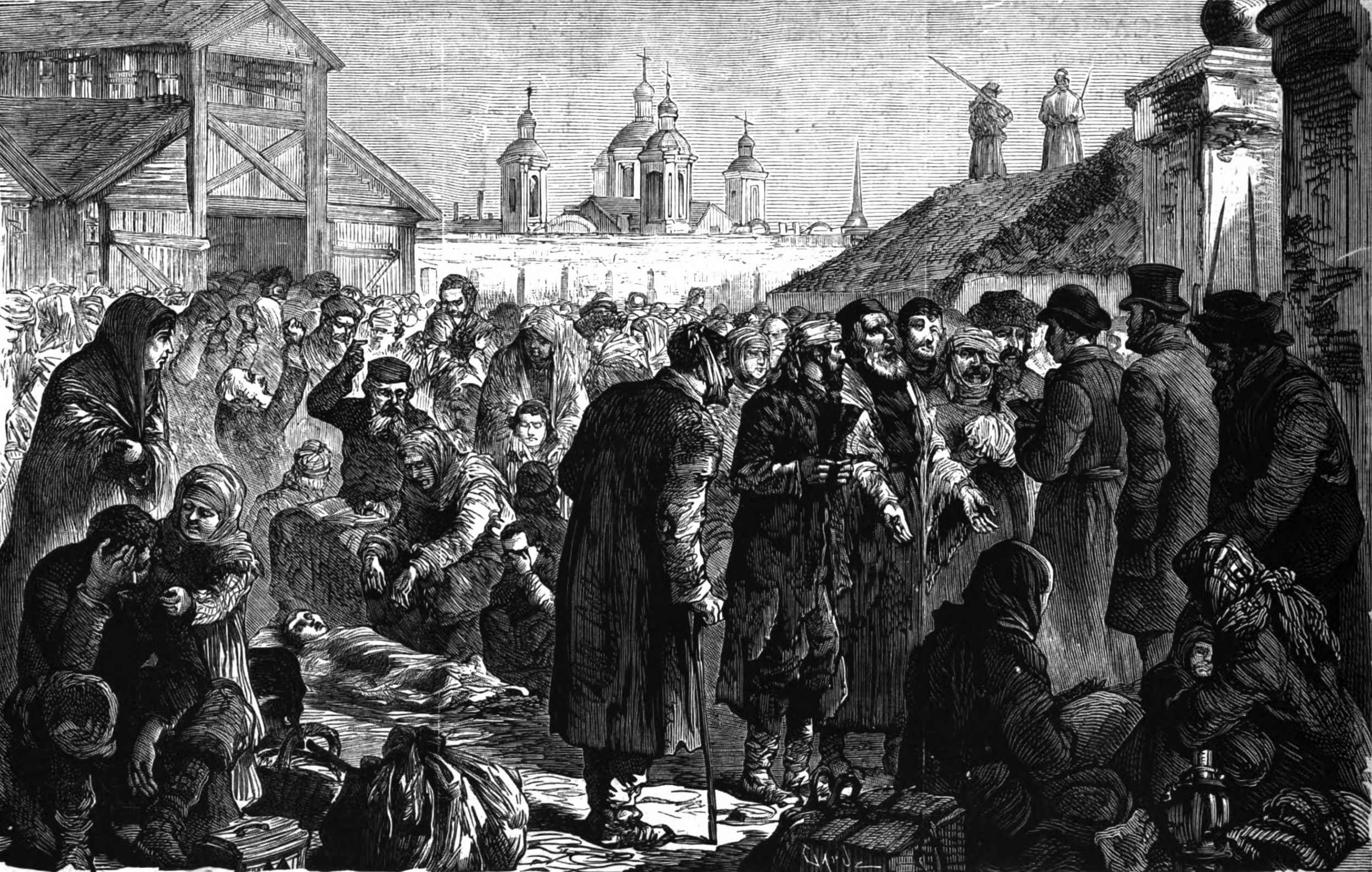
Comment
Comment
James Appell:
The wartime discord prompted some soul-searching within the community, which began questioning whether the economic and social bonds between Jew and non-Jew, forged in Leeds by the conditions of the tailoring trade, were really as strong as the trade unions and socialist movements might have portrayed. The Jewish Chronicle offered its own analysis just a few weeks after the Leeds riot concluded:
There has been a very large and sudden increase in the Jewish population of Leeds during the last few years, and that there has in consequence been considerable inconvenience in many directions to the indigenous inhabitants … Towns, like countries, can assimilate only a certain Jewish element in a certain time, and the Jewish addition to the population of Leeds has been too much and too fast.
The rapid entry of nearly 20,000 Jews into Leeds within the space of two generations clearly exerted pressures on the local population. In this respect Leeds may have differed from London and other provincial cities, where Jewish immigration from Eastern Europe was of a longer duration, where an Anglo-Jewish community already existed and where tensions were less marked than in Leeds. Poverty and mode of employment may have united the two groups, but ultimately religious difference divided them. In such circumstances, therefore, Leeds Jews’ identity as Yorkshiremen was only ever going to be fragile (Appell 2019).
Via Lola Fraser, who thinks the perception that Leeds’s (eastern European) Jews were evading military service would have been exacerbated by the Leeds socialist-pacifist convention on 3 June 1917 in support of revolutionary Russia’s withdrawal from World War I (Fraser N.d.).
Something to say? Get in touch
Search
Subscribe/buy
Donate
Music & books
Place-People-Play: Childcare (and the Kazookestra) on the Headingley/Weetwood borders next to Meanwood Park.
Music from and about Yorkshire by Leeds's Singing Organ-Grinder.
 RSS feed
 Bluesky
 Extwitter