17 September 1963: As RAF Fylingdales’ early warning systems go live, Tory minister (and Czech communist spy) Ray Mawby claims that carrier pigeons will not be confused
House of Commons. 1963/05/14. Communications Tower, Wootton-under-Edge. Hansard, Vol. 677. London: UK Parliament. Licensed under Open Parliament Licence, without modification. Get it:
.Unedited excerpt
If an excerpt is used in the book, it will be shorter, edited and, where applicable, translated.
Mr. Kershaw asked the Postmaster-General when he expects to make a decision on the siting of the communications tower in the Wootton-under-Edge area of Gloucestershire.
Mr. Mawby: I understand that my right hon. Friend, the Minister of Housing and Local Government, is at present studying his Inspector’s report on the public inquiry, and a decision will be announced soon.
Mr. Kershaw asked the Postmaster-General what effect the communications tower to be built in the Wootton-under-Edge area of Gloucestershire will have upon radio and television receivers in the immediate vicinity and upon the behaviour of homing pigeons.
Mr. Mawby: This tower will not affect sound broadcasting or television reception in the vicinity, either by its own transmissions or by reflections from its structure. I am sorry I am unable to say what effect the station will have on the behaviour of homing pigeons. The Post Office has many radio stations operating in a manner similar to that proposed for Wootton-under-Edge, and no reports have been received that they adversely affect the homing instinct of those birds.
Mr. Kershaw: Those who are interested in homing pigeons will be gratified by what my hon. Friend said. But is he quite sure of this, because Fylingdales has had a most unfortunate effect on homing pigeons, which fly round it in ever-decreasing circles? Can he assure us that that will not happen in this case, as I live very close to this machine?
Mr. Mawby: From all my information—and I particularly made special inquiries about this—I am reasonably sure that the emissions from the tower should not affect these birds, and I trust that the reverse will be equally true.


Comment
Comment
Following access by the BBC to previously secret files held by the current Czech Republic security services, it was revealed on 28 June 2012 that Mawby, who was given the code name “Laval”, had spied for the Czechoslovak Socialist Republic during the Cold War. He received £100 (equivalent to £2,270 in 2021) per nugget of information, and even signed a receipt for one payment.[4] He handed over handwritten floor plans of the Prime Minister’s office in the House of Commons, and details of who provided security at the office. He also promised to ask questions in the House on behalf of his paymasters.
During the decade that Mawby supplied information he handed over lists of parliamentary committees, and details about his fellow politicians, including a supposedly confidential parliamentary investigation into a Conservative peer. Meetings sometimes took place three or four times in a month, although this greatly decreased by the end of the 1960s, and ended completely in November 1971.
This old paper by two writers who probably weren’t on the communist payroll concluded that there was no effect:
Although a number of reports have been made of the perturbing effect of radar beams upon the flights of birds, there has hitherto been no record of a carefully controlled series of observations. Similarly, a statistical approach in such occurrences as have been reported has been conspicuously lacking, so it is difficult to assess the probability of a radio explanation of these effects. An outstanding case was published in one of the national daily newspapers in May 1963; the report stated that six racing pigeons had been released in the vicinity of the missile warning radar station on Fylingdales Moor, Yorkshire, and that they had been so affected by the beams of this station that their return home had been greatly delayed. Investigation of this incident through official channels revealed that no semblance of a test had been arranged; it was not even certain that the radar station had been operational at the time of the release of the birds. An approach to the editor of the newspaper concerned disclosed only that their correspondent’s contact with the source of his information had been lost. The matter was therefore discussed with S. W. E. Bishop, editor of Pigeon Racing, in the hope that one of his readers might have reported this very interesting and important incident. No such report had been made, but Mr. Bishop’s comments on this occurrence as an expert in pigeon racing were very pertinent. He stressed that it is a common occurrence for such losses of birds to occur when releases are made in an unknown area; unless the birds are carefully trained by gradually extending the range of their flights then it is useless to pretend that they will be able to home from an unfamiliar location, radio beams or no radio beams.
A careful search has been made for possible interaction between a radio beam and birds in flight as evidenced by their flight behaviour. Although some of the most powerful radar equipment ever built has been used in these observations and sensitive photographic recording devices have been employed to observe the tracks of the birds, no perturbing effects of the beams upon the birds have been observed.
When these experiments are considered in association with other observations such as the behaviour of birds in the proximity of power cables, telegraph wires, broadcast aerials, communication aerials, radar aerials, ships’ aerials and so on, it seems difficult to avoid the conclusion that any interaction between alternating electro-magnetic fields and the sensory equipment of birds can be of secondary importance only, if it exists at all. Such radiations appear to produce thermal effects only, the same in birds as in other creatures.
The homing pigeon Bermuda Triangle – Consett, Thirsk, and Wetherby – isn’t much of a triangle.
Something to say? Get in touch
Tags
Tags are assigned inclusively on the basis of an entry’s original text and any comment. You may find this confusing if you only read an entry excerpt.
- Anti-aircraft warfare (1) W/G ·
- Ballistic Missile Early Warning System (1) W/G ·
- Ballistic missile (2) W/G ·
- Bird (5) W/G ·
- Cold War (2) W/G ·
- Consett (1) W/G ·
- Czechoslovak Socialist Republic (1) W/G ·
- Domestic pigeon (3) W/G ·
- Early-warning radar (1) W/G ·
- Four-minute warning (1) W/G ·
- Gloucestershire (2) W/G ·
- Homing pigeon (1) W/G ·
- Kershaw, John Anthony (1915-2008) (1), Conservative MP (1955-87), junior minister in the 1970s, barrister, World War II cavalry officer W/G ·
- Magnetoreception (1) W/G ·
- Military Intelligence (Czech Republic) (1) W/G ·
- North York Moors (9) W/G ·
- Ornithology (3) W/G ·
- Pigeon racing (1) W/G ·
- Postmaster General of the United Kingdom (1) W/G ·
- RAF Fylingdales (1) W/G ·
- RCA (1) W/G ·
- Radar (1) W/G ·
- Radio wave (1) W/G ·
- Radome (1) W/G ·
- Ray Mawby (1) W/G ·
- Reginald Bevins (1) W/G ·
- Royal Air Force (2) W/G ·
- Soviet Union (3) W/G ·
- Thirsk (14) W/G ·
- United States Air Force (1) W/G ·
- United States (20) W/G ·
- War pigeon (1) W/G ·
- Wetherby (3) W/G ·
Comment
Comment
Following access by the BBC to previously secret files held by the current Czech Republic security services, it was revealed on 28 June 2012 that Mawby, who was given the code name “Laval”, had spied for the Czechoslovak Socialist Republic during the Cold War. He received £100 (equivalent to £2,270 in 2021) per nugget of information, and even signed a receipt for one payment.[4] He handed over handwritten floor plans of the Prime Minister’s office in the House of Commons, and details of who provided security at the office. He also promised to ask questions in the House on behalf of his paymasters.
During the decade that Mawby supplied information he handed over lists of parliamentary committees, and details about his fellow politicians, including a supposedly confidential parliamentary investigation into a Conservative peer. Meetings sometimes took place three or four times in a month, although this greatly decreased by the end of the 1960s, and ended completely in November 1971.
This old paper by two writers who probably weren’t on the communist payroll concluded that there was no effect:
Although a number of reports have been made of the perturbing effect of radar beams upon the flights of birds, there has hitherto been no record of a carefully controlled series of observations. Similarly, a statistical approach in such occurrences as have been reported has been conspicuously lacking, so it is difficult to assess the probability of a radio explanation of these effects. An outstanding case was published in one of the national daily newspapers in May 1963; the report stated that six racing pigeons had been released in the vicinity of the missile warning radar station on Fylingdales Moor, Yorkshire, and that they had been so affected by the beams of this station that their return home had been greatly delayed. Investigation of this incident through official channels revealed that no semblance of a test had been arranged; it was not even certain that the radar station had been operational at the time of the release of the birds. An approach to the editor of the newspaper concerned disclosed only that their correspondent’s contact with the source of his information had been lost. The matter was therefore discussed with S. W. E. Bishop, editor of Pigeon Racing, in the hope that one of his readers might have reported this very interesting and important incident. No such report had been made, but Mr. Bishop’s comments on this occurrence as an expert in pigeon racing were very pertinent. He stressed that it is a common occurrence for such losses of birds to occur when releases are made in an unknown area; unless the birds are carefully trained by gradually extending the range of their flights then it is useless to pretend that they will be able to home from an unfamiliar location, radio beams or no radio beams.
A careful search has been made for possible interaction between a radio beam and birds in flight as evidenced by their flight behaviour. Although some of the most powerful radar equipment ever built has been used in these observations and sensitive photographic recording devices have been employed to observe the tracks of the birds, no perturbing effects of the beams upon the birds have been observed.
When these experiments are considered in association with other observations such as the behaviour of birds in the proximity of power cables, telegraph wires, broadcast aerials, communication aerials, radar aerials, ships’ aerials and so on, it seems difficult to avoid the conclusion that any interaction between alternating electro-magnetic fields and the sensory equipment of birds can be of secondary importance only, if it exists at all. Such radiations appear to produce thermal effects only, the same in birds as in other creatures.
The homing pigeon Bermuda Triangle – Consett, Thirsk, and Wetherby – isn’t much of a triangle.
Something to say? Get in touch
Similar
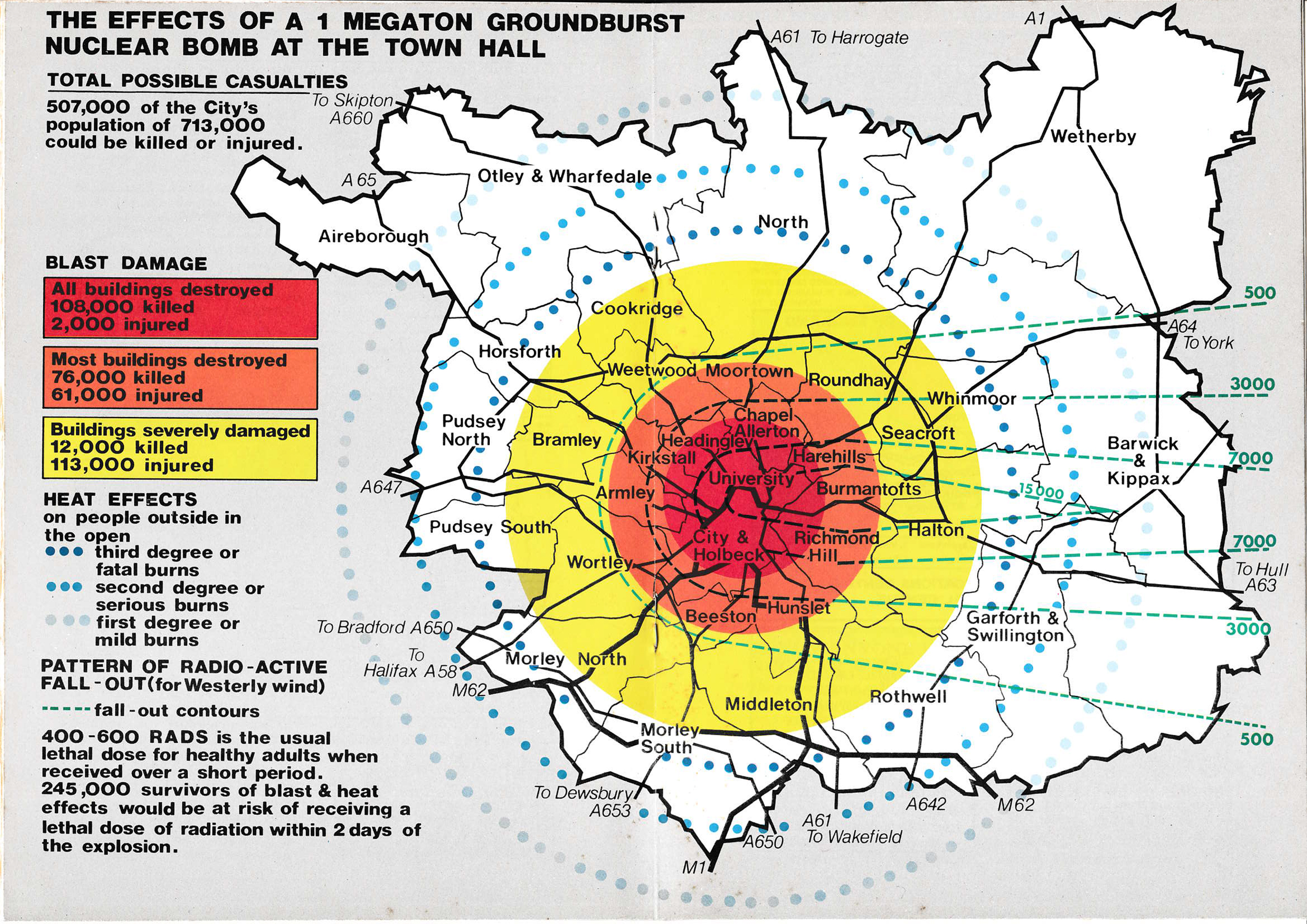 24 June 1981: Leeds City Council declares its opposition to nuclear weapons and resolves to inform the world thereof
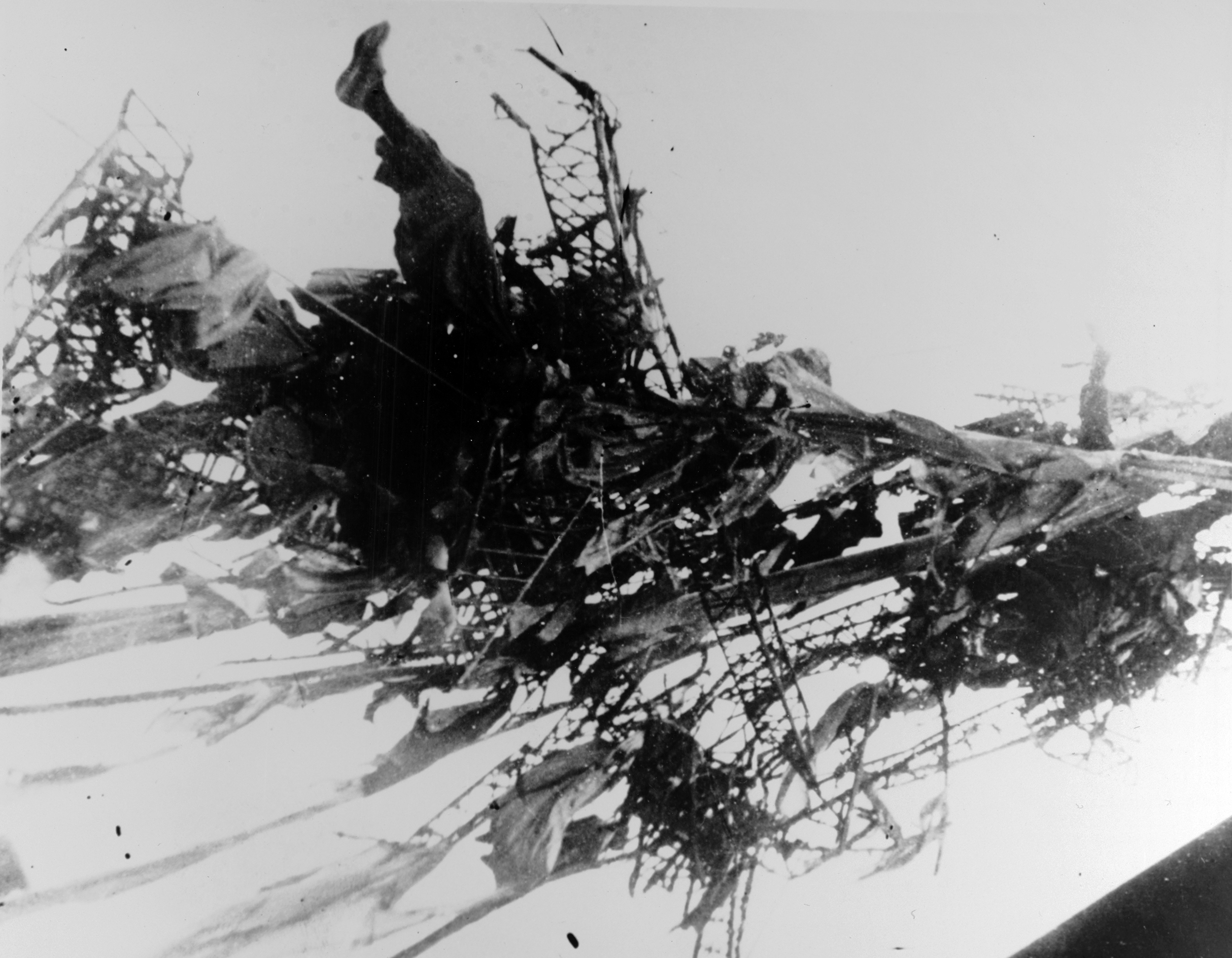 24 August 1921: The British-built United States Navy R.38 airship collapses, explodes, and crashes into the Humber at Hull, killing 44 of the 49 crew
 21 April 1883: Peter Inchbald observes nightingales at Harrogate for the first time, but their popularity is their undoing
 18 January 1966: Barbara Castle (Lab.) swings the Hull North by-election with a bridge over the Humber, convincing Harold Wilson that he has the momentum to win a general election
Comment
Comment
The funeral date is from the parish register.
His mother died shortly afterwards:
Less than two months after [another] letter was written my mother was dead – 12th July 1866 – and I had thus lost both parents within a year.
It is better not to dwell on mournful incidents of the past. Again Mr Jex-Blake had broken the bad news to me with kindly words, and as I waited at Rugby station that time I saw a black railway engine with just a green patch on it. I interpreted this to mean that my mother was still alive, and she was so on my arrival at home, just sufficiently to know me, but two nights later I was sent hurriedly to the Rectory to summon Mr Kingsley, whose house door had been left open so that I could go straight in and up to his bedroom. He woke up and came along within ten minutes. The end was very near, though it did not actually come until late in the following afternoon.
Let us pass on, for the blow had fallen, and reminiscences of it are futile.
Something to say? Get in touch
Search
Subscribe/buy
Donate
Music & books
Place-People-Play: Childcare (and the Kazookestra) on the Headingley/Weetwood borders next to Meanwood Park.
Music from and about Yorkshire by Leeds's Singing Organ-Grinder.
 RSS feed
 Bluesky
 Extwitter