28 November 1796: The Royal Navy seeks recruits among the seamen of Sculcoates, Cottingham and Little Weighton (ER)

James Duffield Harding (1798–1863), Fishermen’s Houses at Sculcoates near Hull, Yorkshire (Harding 1827).
Horace Baker Browne. 1912. The Story of the East Riding of Yorkshire. London: A. Brown and Sons. H.B. Browne appears to have been white-haired but alive in 1949 (see The Story of Whitby Museum), but I have found no trace thereafter. Get it:
.Unedited excerpt
If an excerpt is used in the book, it will be shorter, edited and, where applicable, translated.
For the parishes of Sculcoates, Cottingham, and Little Weighton, A few able-bodied SEAMEN or LANDMEN to serve in His Majesty’s Navy during the present War ONLY…. The Families and Friends of Volunteers will receive Monthly Pay, and the Volunteers themselves will have a bountiful supply of Cloathing, Beef, Grog, Flip, and Strong Beer, also a certainty of Prize Money, as the men entered for this service will be sent to capture the rich Spanish Galleons, and in consequence will return loaded with Dollars and Honour, to spend their Days in Peace and Plenty.
Hull, November 28th, 1796.


Comment
Comment
Something to say? Get in touch
Tags
Tags are assigned inclusively on the basis of an entry’s original text and any comment. You may find this confusing if you only read an entry excerpt.
- Admiralty (5), government department responsible for the Royal Navy until 1964 W/G ·
- Caribbean Sea (3) W/G ·
- Cottingham, East Riding of Yorkshire (1) W/G ·
- East Riding of Yorkshire (67) W/G ·
- France (34) W/G ·
- French Revolutionary Wars (8) W/G ·
- Gold (3) W/G ·
- 📌Kingston upon Hull (74) W/G ·
- Little Weighton (1) W/G ·
- Royal Navy (11) W/G ·
- 📌Sculcoates (2) W/G ·
- Silver (3) W/G ·
- Spain (9) W/G ·
- Spanish Empire (1) W/G ·
- Spanish treasure fleet (1) W/G ·
Comment
Comment
Something to say? Get in touch
Similar
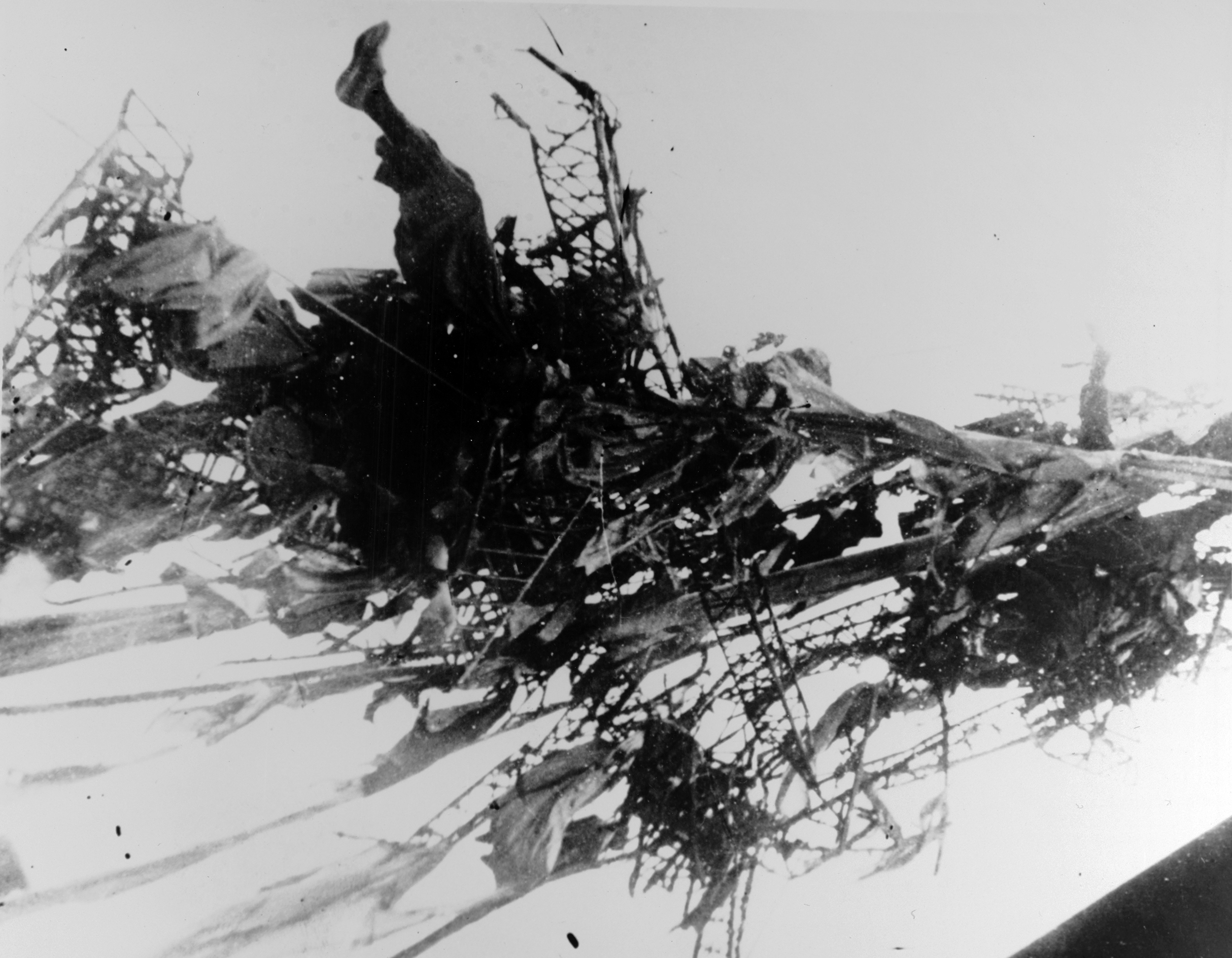 24 August 1921: The British-built United States Navy R.38 airship collapses, explodes, and crashes into the Humber at Hull, killing 44 of the 49 crew
 25 September 1779: The Rev. William Whytehead writes from Hornsea to his cousin four miles away with news of the Battle of Flamborough Head
Comment
Comment
Titles of this act, the succeeding one in 1707, also applicable to the West Riding, and similar legislation passed for the North and East Ridings, taken from the consolidating act of 1884:
- 2 & 3 Anne, c. 4. An Act for the publick registring of all deeds, conveyances, and wills that shall be made of any honors, manors, lands, tenements, or hereditaments within the west riding of the county of York after the nine-and-twentieth day of September one thousand seven hundred and four.
- 6 Anne, c. 20. An Act for inrollments of bargains and sales within the west riding of the county of York in the register office there lately provided, and for making the said register more effectual.
- 6 Anne, c. 62. An Act for the publick registring of all deeds, conveyances, wills, and other incumbrances that shall be made of or that may affect any honors, manors, lands, tenements, or hereditaments within the east riding of the county of York or the town and county of the town of Kingston-upon-Hull after the nine-and-twentieth day of September one thousand seven hundred and eight, and for the rendring the register in the west riding more complete.
- 8 Geo. II. c. 6. An Act for the publick registring of all deeds, conveyances, wills, and other incumbrances that shall be made of or that may affect any honors, manors, lands, tenements, or hereditaments within the north riding of the county of York after the nine-and-twentieth day of September one thousand seven hundred and thirty-six.
(HMG 1884)
The act apparently says that Wakefield was chosen as “the nearest market town to the centre or middle of the said West Riding” (Wakefield Town Council 1864).
The West Riding Registry of Deeds was not the oldest, “the Bedford Level registry … having been established after the Bedford Level Corporation charter of 1637 and the act of parliament of 1649, and recognised as a registry, if not before, at any rate in 1663, when the governor and company were constituted commissioners of sewers for the Level.”
Elections were held, and “competition for the appointment was very keen, for the registrar took all fees after paying the modest administrative expenses, which were very small in proportion to the gross receipts,” although, election expenses may have approached or exceeded income.
In 1817 it is reported that “a considerable part of the hall was literally crowded with beauty and fashion, which contributed not a little to enliven and adorn the scene.” In 1842,
During the whole of the morning of the first day, the officers had experienced great difficulty in resisting the pressure of votes endeavouring to reach the poll-booths, and at about half-past two the force became so great as to break down the barriers which had been erected, and the body of voters borne along by those behind were driven forward to the tables, which were upset and broken in all directions. The election was now carried on amid a scene of violence seldom surpassed (Tate 1944).
I haven’t yet read Jean Howell’s Deeds registration in England: a complete failure? (Howell 1999/07).
Something to say? Get in touch
Search
Subscribe/buy
Donate
Music & books
Place-People-Play: Childcare (and the Kazookestra) on the Headingley/Weetwood borders next to Meanwood Park.
Music from and about Yorkshire by Leeds's Singing Organ-Grinder.
 RSS feed
 Bluesky
 Extwitter