29 May 1934: Maurice Wilson of Bradford begins his solo ascent of Everest, equipped with some knowledge of yoga, a small tent, three loaves of bread, two tins of porridge and a camera
Times. 1934/07/20. Mount Everest Climb. London. Get it:
.Unedited excerpt
If an excerpt is used in the book, it will be shorter, edited and, where applicable, translated.
Calcutta, July 19
The report that Mr. Maurice Wilson, a member of the London Aero Club, had attempted to climb Mount Everest alone is confirmed from Darjeeling. It appears that three porters accompanied Mr. Wilson as far as Camp 3 of the Ruttledge expedition, at 21,000 ft., where they declared that they were unable to advance without ropes and help. Mr. Wilson therefore decided to go on alone, carrying a small tent, three loaves of bread, two tins of porridge, and a camera. He was last seen making off along the glacier. The porters were ordered to wait at Camp 3 for a fortnight. They waited a month, when they were almost foodless, as well as being ill-clothed for the height, and returned then to Kalimpong, arriving on July 7, and thence to Darjeeling. Mr. Wilson’s last advance was to be his final assault. He expected to find the track and ropes left by the Ruttledge party. From Camp 3 the track goes over a glacier continually swept by avalanches, where the temperature is probably 50 degrees below zero [-46°C]. There are no hopes of his having survived.
Mr. Wilson left Darjeeling with the three porters, all in Tibetan clothes, about March 25, and his disappearance was noted on March 28. He reached Rungpo on the evening of March 25, passed the outpost unsuspected, and crossed Sikkim by night marches. Once in Tibet he wore European clothes, as there was little likelihood of his being stopped except by direct orders from Lhasa, since he was then ahead of the possibility of being caught by political communications from the rear.
He reached Rongbuk Monastery on April 18 -that is, 25 days from Darjeeling – beating the 1933 expedition’s time by 10 days, a remarkable feat, especially as part of the route was covered by night and he had only three porters and one pack pony. He rested one day at Rongbuk and then went on to Ruttledge’s Camp 2, using a light tent, while the porters used a Tibetan tent. After some days he returned to Rongbuk for a rest, whence, refreshed, he set out on April 30 by slow marches to Camp 3. From there, on May [29], he started on the last climb. From the porters’ story this is likely to have ended at about 23,000ft.
The three porters knew Everest. When they returned to Darjeeling they told the complete story to the police. Mr. Wilson had long been pondering the attempt. He believed that most expeditions had been hampered by their size and the weight of their stores. He had been known to say that the man who would get up Everest was an Indian yogi, who had no possessions and was inured to hard and simple living. In this faith he appears to have dared and died.
Mr. Maurice Wilson, who is the son of the late Mr. Mark Wilson, a Bradford manufacturer, served in The West Yorkshire Regiment during the War and was awarded the Military Cross. He flew to India a year ago in a light acroplane, stating that it was his intention to attempt to land the machine 10,000ft. below the summit of Everest and then climb to the top. He was, however, refused permission to fly over Nepal.


Comment
Comment
The Times gives the start date of Wilson’s final attempt as 17 May, but that is contradicted by the month spent waiting by the sherpas and by Wilson’s diary, which says 29 (Unsworth 2000).
Something to say? Get in touch
Tags
Tags are assigned inclusively on the basis of an entry’s original text and any comment. You may find this confusing if you only read an entry excerpt.
- Aircraft (1) W/G ·
- 📌Bradford (73) W/G ·
- British Army (19) W/G ·
- Darjeeling (1) W/G ·
- De Havilland DH.60 Moth (1) W/G ·
- Eric Shipton (1) W/G ·
- Fasting (2) W/G ·
- Glacier (2) W/G ·
- Hugh Ruttledge (1) W/G ·
- India (6) W/G ·
- Kolkata (1) W/G ·
- Lost Generation (1) W/G ·
- Maurice Wilson (1) W/G ·
- Military Cross (1) W/G ·
- Mount Everest (1) W/G ·
- Mountaineering (3) W/G ·
- Nepal (1) W/G ·
- Porridge (2) W/G ·
- Sherpa people (1) W/G ·
- Tibet (1) W/G ·
- West Yorkshire Regiment (2) W/G ·
- World War I (1914-19) (21) W/G ·
- Yoga (1) W/G ·
Comment
Comment
The Times gives the start date of Wilson’s final attempt as 17 May, but that is contradicted by the month spent waiting by the sherpas and by Wilson’s diary, which says 29 (Unsworth 2000).
Something to say? Get in touch
Similar
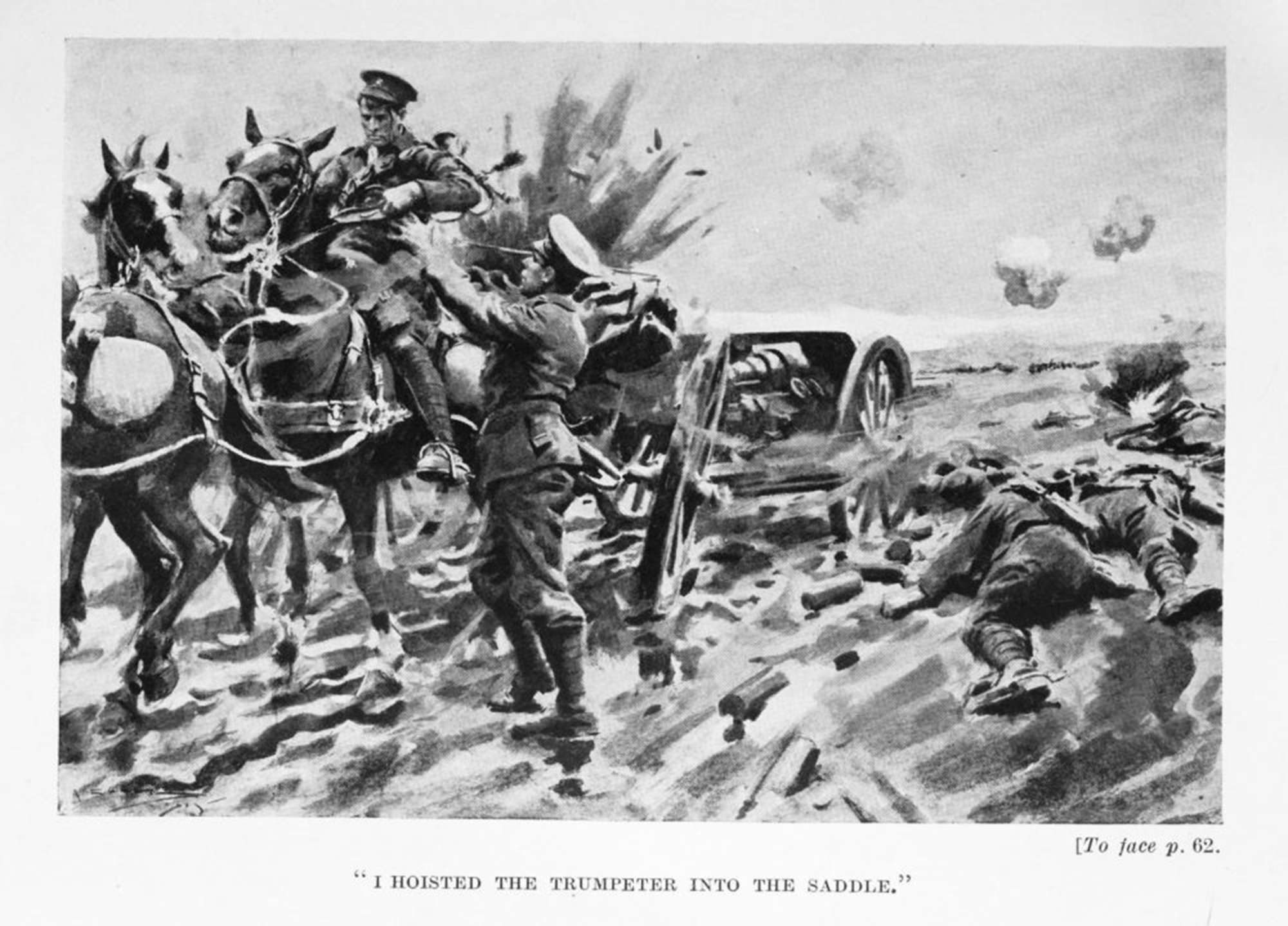 26 August 1914: From Pontefract to the mines on the Franco-Belgian border: Cpl. Frederick William Holmes wins a VC at Le Cateau
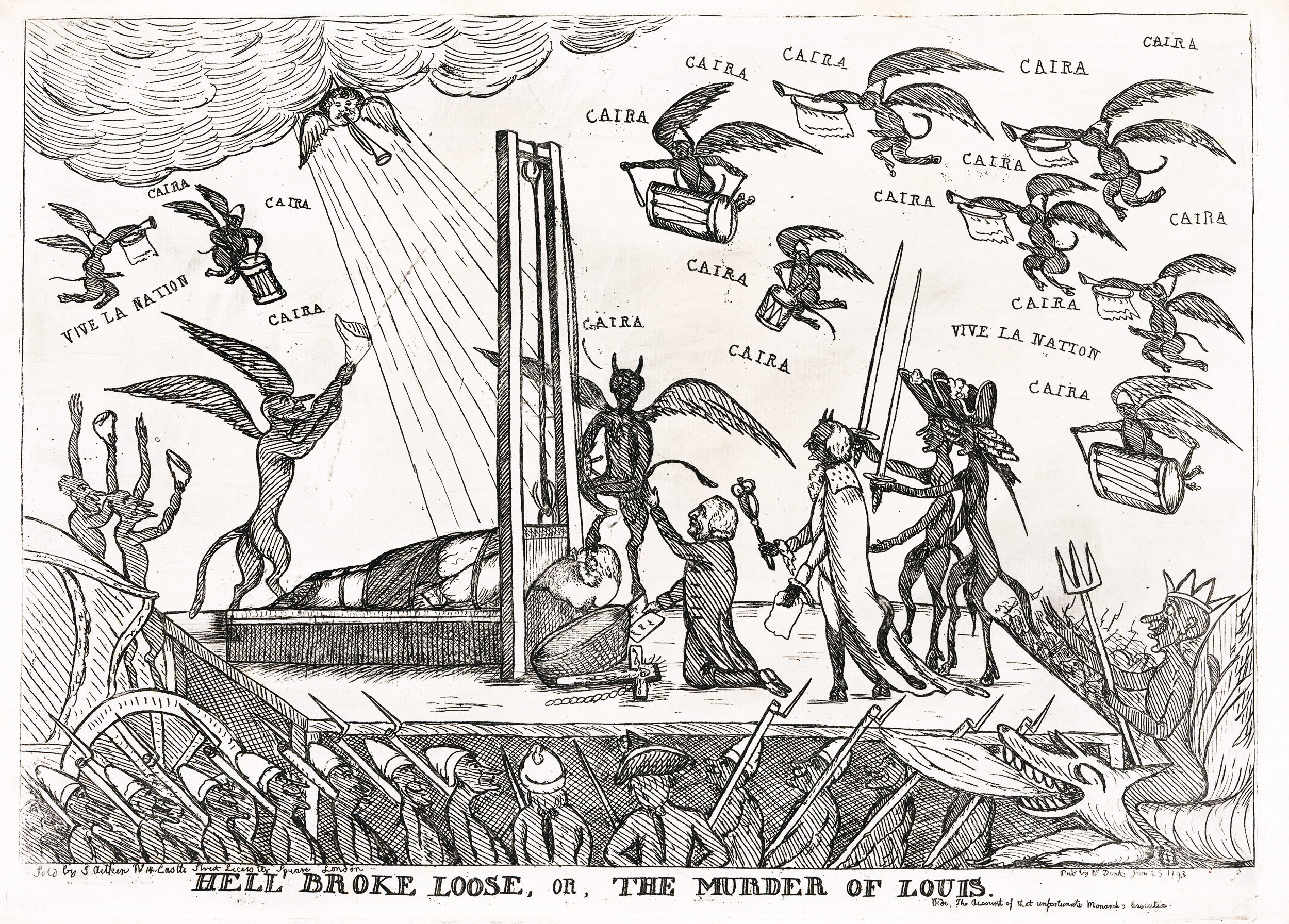 23 May 1793: The 14th Foot, predecessors of the West Yorkshire Regiment, chant a French Revolutionary song as they storm enemy trenches at Famars (Valenciennes)
 30 May 1835: Alfred Austin, future poet laureate, “Banjo-Byron that twangs the strum-strum,” is born into rural splendour at Ashwood, 48 Headingley Lane, Leeds
Comment
Comment
Via Chris Hobbs, who has traced some of Colgrave’s life and death, but doesn’t seem to have met with the following sensational account by Tim Carew of the events of 30 October 1914:
This preamble leads up to one story of what happened during the fighting round Messines.
A certain sector of the line became untenable, and the order came from the 3rd Cavalry Brigade for a general retirement. The orders did not reach Captain Forbes, commanding the Punjabi Mussulman Company of the 57th Rifles, and they were attacked frontally, from both flanks and surrounded. They fought back valiantly with bayonets, rifle butts, boots and fists, but Captain Forbes received severe wounds from which he subsequently died and Lieutenant Clarke was killed. A bare half company – some forty men in all – managed to escape.
All the Indian officers had become casualties, and there was no one above the rank of naik left alive in the company: the bugbear of jimmiwari was ruthlessly exposed.
Obeying some herd instinct the survivors sought the temporary shelter of a shell-torn barn, where they huddled together in miserable groups, awaiting what fate had in store for them.
It may seem that the conduct of these men was not entirely creditable. They had no British officers and no orders; they did not know where they were. But one and all had fought with the greatest gallantry against an enemy who had outnumbered them by something like ten to one; they were not afraid, they simply did not know what to do. They needed a leader, and they needed him quickly.
They were soon to get one, in the improbable shape of Corporal Colgrave of the 5th Lancers.
Colgrave was a Kiplingesque character. Once, a long time ago, he had been a Squadron Quartermaster-Sergeant. But a fondness for liquor, first in a trickle, and then in a rush, had brought him down. He claimed intimate acquaintance with General Allenby, which was true in a way because Allenby, when Commanding Officer of the 5th Lancers, had ‘busted’ Colgrave to the ranks.
Now Corporal Colgrave was climbing the weary promotion ladder once more. His officers had looked for qualities of leadership in him and looked in vain; it seemed almost certain that the two stripes he wore, precarious at that, represented the peak of his promotion prospects.
Colgrave and a squad of a dozen men had been looking after horses about a mile in rear of Messines, when an urgent order summoned them forward to a point in the line where the addition of thirteen more rifles would be of incalculable value. The barn on which they happened looked tempting, and Corporal Colgrave ordered five minutes’ halt for a smoke.
‘Got a fag, Corp?’ asked a trooper hopefully outside the barn. ‘Only got one,’ said Colgrave.
‘I only want one.’
‘Less of your lip. Get inside.’
Corporal Colgrave had done many years’ service in India, and regaled newly-joined young soldiers with largely untrue stories of gory encounters on the North-West Frontier against the wily ‘Paythan’, massive commercial deals in bazaars and gargantuan copulation in native brothels. Like many another vintage British soldier, he was firmly convinced that he was a fluent speaker of Hindustani.
The Lancers entered the barn and gazed upon forty miserable Indian faces; when he is really downcast, no race of man can wear a darker mask of woe than an Indian.
‘Blimey, what a bunch,’ said the corporal; then loudly, ‘Sab thik hai idher?’
Clearly, everything was very far from being ‘thik‘. The Indians eyed him warily and without enthusiasm. On the other hand, although he was not a Sahib he had a white face and wore the two stripes of a naik and might take on the jimmiwari.
‘Kis waste this ‘ere? asked Colgrave. ‘Sahib kidher hai?’
‘Sahib margya,’ said a dozen sad voices.
‘Well, blimey,’ said Colgrave, in trouble with the language already, ‘you want to marrow the fuckin’ Germans, don’t you, malum?’
The idea was beginning to catch on. ‘Jee-han!’ said a dozen voices.
Corporal Colgrave winked at the other Lancers, one of whom was heard to say ‘old Charlie fancies ‘isself as a fuckin’ general’.
Smiles were beginning to appear on downcast brown faces; there was something about the gamey, ribald approach of Corporal Colgrave which seemed to be a positive denial of defeat. Murderous shelling, which had blown men to pieces and buried men alive, had taken some of the heart out of the Punjabi Mussulmans, but Colgrave was putting it back.
‘Right, then, you miserable-looking lot of buggers,’ said Corporal Colgrave with affection, ‘idher ao: Abhi wapas, got it? Marrow all the German soors. Abhi thik hai?’
‘Thik hai!’ said forty voices in unison.
‘Achi bat. Now, then, who’s going to win the bleedin’ V.C.? Chalo!’
And so thirteen Lancers went into the line, with the priceless addition of forty by now one-hundred-per-cent belligerent Indians, and that particular sector of line was held for the next twenty-four hours.
(Carew 1974)
Carew’s footnote:
Some sort of glossary of this strange conversation is required. Sab thik hai idher is ‘everything all right here?’ (clearly it was not); margya is dead; malum, literally translated, means ‘know’; jee-han is ‘yes’; idher ao is ‘come here’; abhi wapas roughly means ‘we are going back now’; achi bat, in the language of a British N.C.O., can be construed as ‘right, then’; chalo, literally translated means ‘dive’, but in this context can be taken as meaning ‘let’s go’; ‘kis waste this ‘ere’ almost explains itself – it is ‘what’s going on here, then?’, the rhetorical question asked by English policemen in almost any circumstance.
Who was his source? Not everybody trusts him!
Ciarán Byrne says that Colgrave’s band were also from the 129th Baluchis, but I trust Carew more. I think that, in General Willcocks’s discussion of the 57th at Hollebeke, Colgrave is the officer referred to here:
It is instructive to read in the reports that some of the men in Messines “had the good fortune” to come across an officer who spoke Hindustani, and was thus able to direct them to rejoin their Headquarters (Willcocks 1920).
Khudadad Khan of the 129th Baluchis won a VC on the following day:
In October 1914, when the Germans launched the First Battle of Ypres, the newly arrived 129th Baluchis were rushed to the frontline to support the hard-pressed British troops. On 31 October, two companies of the Baluchis bore the brunt of the main German attack near the village of Gheluvelt in Hollebeke Sector. The out-numbered Baluchis fought gallantly but were overwhelmed after suffering heavy casualties. Sepoy Khudadad Khan’s machine-gun team, along with one other, kept their guns in action throughout the day, preventing the Germans from making the final breakthrough. The other gun was disabled by a shell and eventually, Khudadad Khan’s own team was overrun. All the men were killed by bullets or bayonets except Khudadad Khan who, despite being badly wounded, had continued working his gun. He was left for dead by the enemy but managed to crawl back to his regiment during the night. Thanks to his bravery, and that of his fellow Baluchis, the Germans were held up just long enough for Indian and British reinforcements to arrive. They strengthened the line, and prevented the German Army from reaching the vital ports; Khan was awarded the Victoria Cross.
Khan also figures in Carew.
Michael Keary has some excellent excerpts from the letters of Henry D’Urban Keary, who commanded an Indian Division on the Western Front, e.g.
Douglas Haig and French hate the Indian Army and want to get rid of the whole thing… No recognition of anything good … I think no-one in the Indian Corps feels safe or induced to do his best… I suppose this is the penalty for going into the Indian Army and having the bad luck to be sent to France where we are in a minority, rather than to Egypt or Dardanelles where they are equal or a majority (Keary 2021).
Something to say? Get in touch
Search
Subscribe/buy
Donate
Music & books
Place-People-Play: Childcare (and the Kazookestra) on the Headingley/Weetwood borders next to Meanwood Park.
Music from and about Yorkshire by Leeds's Singing Organ-Grinder.
 RSS feed
 Bluesky
 Extwitter