25 September 1779: The Rev. William Whytehead writes from Hornsea to his cousin four miles away with news of the Battle of Flamborough Head

Scottish-born American naval officer and privateer John Paul Jones shooting a sailor (Lieut. Grubb in some accounts) for attempting to lower a curious American flag during an engagement with the Royal Navy off Flamborough Head (Anon after John Collet 1779ish).
T.B. Whytehead. 1905. Paul Jones, Pirate. Yorkshire Archaeological Journal, Vol. 18. Leeds: John Whitehead and Son for the Yorkshire Archaeological Society. Get it:
.Unedited excerpt
If an excerpt is used in the book, it will be shorter, edited and, where applicable, translated.
Madam,
Supposing that you are desirous of hearing all the Reports in this Town concerning Paul Jones’s Squadron, have sent you what is stirring here since the Departure of your Servt. One of our neighbours was at Burlington yesterday, & brings us word that there was a desperate and bloody engagement off Flamboro Head on Thursday night between two of our armed ships, which had a Fleet of loaden Ships from the Baltic under convoy; that they engaged the large Man of War that Jones commands for two hours, & were upon the point of boarding her when the two other Frigates belonging to them came up to his assistance, so that our two ships were then obliged to strike; it is said his Ship is greatly shattered & that he has lost 70 of his men killd in the engagment. Two english sailors during the hurry of the Fight swum on shore, and he shot another for not fighting valiantly. He takes no ships, they say, but sinks them after he has taken out their Hands; 14 sail are sunk by him already. But I hope soon to hear better news about Him, for they say there are now in Bridlington Bay 2 small men of war waiting for a reinforcement of 3 ships more from Yarmouth Roads, and as the wind now blows fresh at South they cannot be long in coming from thence, so that if he continues about the Head a Day or two longer we may expect to hear of another Engagement. He spent most of yesterday there in refitting.
As I was returning Home on Thursday Even from Silston Mr. Bethels Steward overtook me & told me that they had taken up 7 of Jones’s men near Pattrington, but I hear since that they are Deserters from one of His Majesty’s Ships at Hull, and that the three men whom your Brother Constable sent to the Key yesterday belong to the same gang. If we continue quiet untill Monday I purpose to fetch Rachel then. With my wife’s most respectful Compts.
I am, Madam,
Yr. most obliged hble. Servt.,
Wm. Whytehead.
Hornsea, 25th Sept.
P.S. Noon. I have been enquiring of a Person just come from Burlington what news is stirring there this morn. He says that the Baltic Fleet are all safe in Scarbro’ Piers, that Mr. Greame of Swerby had left their house, & Mrs. Heblethwaite of Burlington.
P.S. The good family at Wassand have sent us word that they intend to honour us with their Company tomorrow in ye afternoon.

Comment
Comment
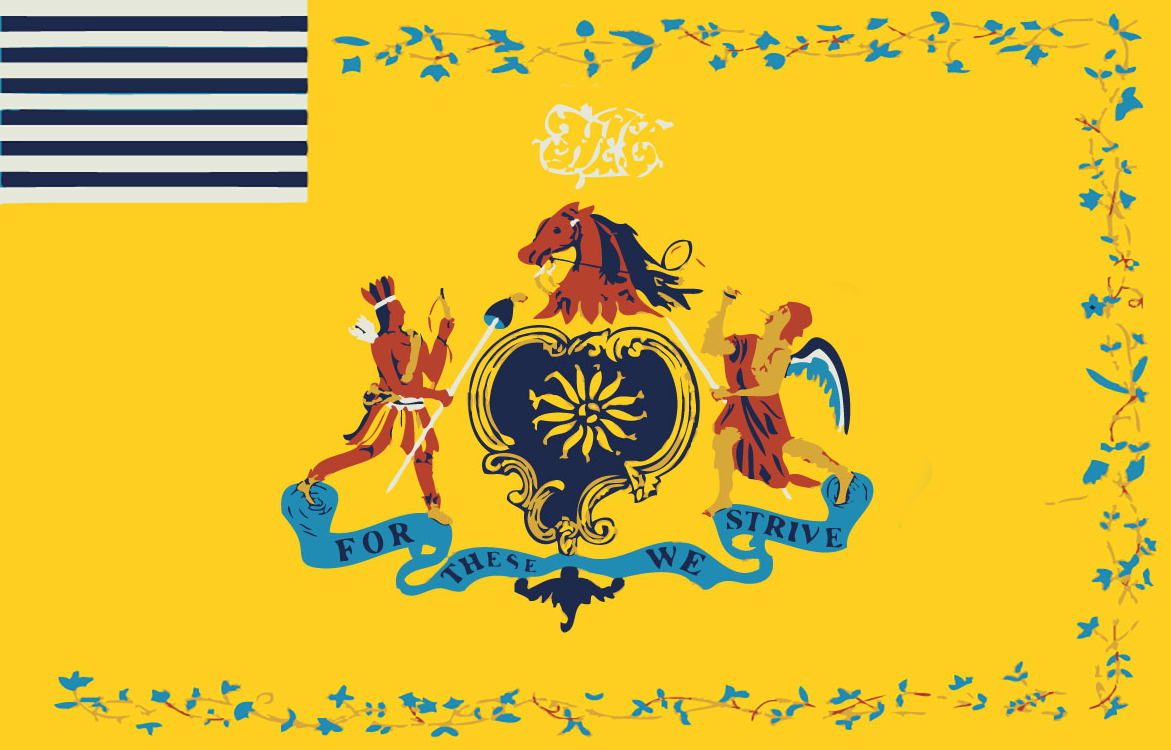
I think the blue-and-white-striped flag is artistic idealism, and that it reminds readers to the (ahem) barry (field) of thirteen azure (deep ultramarine) and argent (silver) on the canton of the flag given in 1775 by Abraham Markoe to his Philadelphia Light Horse, later the First Troop Philadelphia City Cavalry, which, according to Wikipedia, fought at the battles of Trenton, Princeton, Brandywine, and Germantown, and which often served as George Washington’s personal bodyguard:
Similarly, the stars and stripes design shown in The Life and History of PAUL JONES, the English Corsair wasn’t afaik in circulation or perhaps even existence in 1779, and reflects instead popular vexillology at the time and place of the book’s publication – Portsea in around 1820:

What symbols was the so-called pirate/privateer Jones actually displaying that day? I’ve read an attempt to answer the question, but can’t remember where.
Something to say? Get in touch
Tags
Tags are assigned inclusively on the basis of an entry’s original text and any comment. You may find this confusing if you only read an entry excerpt.
- American Revolutionary War (2) W/G ·
- Baltic Sea (6) W/G ·
- Baltic maritime trade (c. 1400–1800) (6) W/G ·
- Battle of Brandywine (1) W/G ·
- 📌Battle of Flamborough Head (1), naval battle on 23 September 1779 between a combined Franco-American squadron, led by Continental Navy officer John Paul Jones, and two British escort vessels protecting a large merchant convoy; one of the most celebrated naval actions of the war in America, despite its relatively small size and a dispute over what had actually occurred W/G ·
- Battle of Germantown (1) W/G ·
- Battle of Princeton (1) W/G ·
- Battle of Trenton (1) W/G ·
- Betsy Ross flag (1), early design for the US flag implementing the 1777 Flag Act, which specified 13 alternating red and white horizontal stripes and 13 white stars in a blue canton, fictionally created by upholsterer and flag maker Betsy Ross W/G ·
- Bridlington (10) W/G ·
- Desertion (1) W/G ·
- Flag of the United States (1) W/G ·
- 📌Flamborough Head (5) W/G ·
- France (34) W/G ·
- Frigate (1) W/G ·
- George Washington (1) W/G ·
- HMS Serapis (1779) (1) W/G ·
- 📌Hornsea (3), seaside town and civil parish in the East Riding W/G ·
- Jones, John Paul (1747-92) (1), Scottish-born American naval officer and privateer in the Continental Navy during the Revolutionary War, attacking shipping around British coasts, often referred to as the "Father of the American Navy" W/G ·
- 📌Kingston upon Hull (74) W/G ·
- Man-of-war (1) W/G ·
- Naval warfare (2) W/G ·
- Patrington (2) W/G ·
- Royal Navy (11) W/G ·
- 📌Scarborough (21) W/G ·
- Serapis flag (1) W/G ·
- 📌Sigglesthorne (1), small village and civil parish in the East Riding, 4.8 km west of Hornsea on the A1035 where it meets the B1243 W/G ·
- USS Alliance (1778) (1) W/G ·
- United States Navy (2) W/G ·
- United States (20) W/G ·
- William Whytehead (1) W/G ·
- Yarmouth Roads (2) W/G ·
Comment
Comment
I think the blue-and-white-striped flag is artistic idealism, and that it reminds readers to the (ahem) barry (field) of thirteen azure (deep ultramarine) and argent (silver) on the canton of the flag given in 1775 by Abraham Markoe to his Philadelphia Light Horse, later the First Troop Philadelphia City Cavalry, which, according to Wikipedia, fought at the battles of Trenton, Princeton, Brandywine, and Germantown, and which often served as George Washington’s personal bodyguard:
Similarly, the stars and stripes design shown in The Life and History of PAUL JONES, the English Corsair wasn’t afaik in circulation or perhaps even existence in 1779, and reflects instead popular vexillology at the time and place of the book’s publication – Portsea in around 1820:
What symbols was the so-called pirate/privateer Jones actually displaying that day? I’ve read an attempt to answer the question, but can’t remember where.
Something to say? Get in touch
Similar
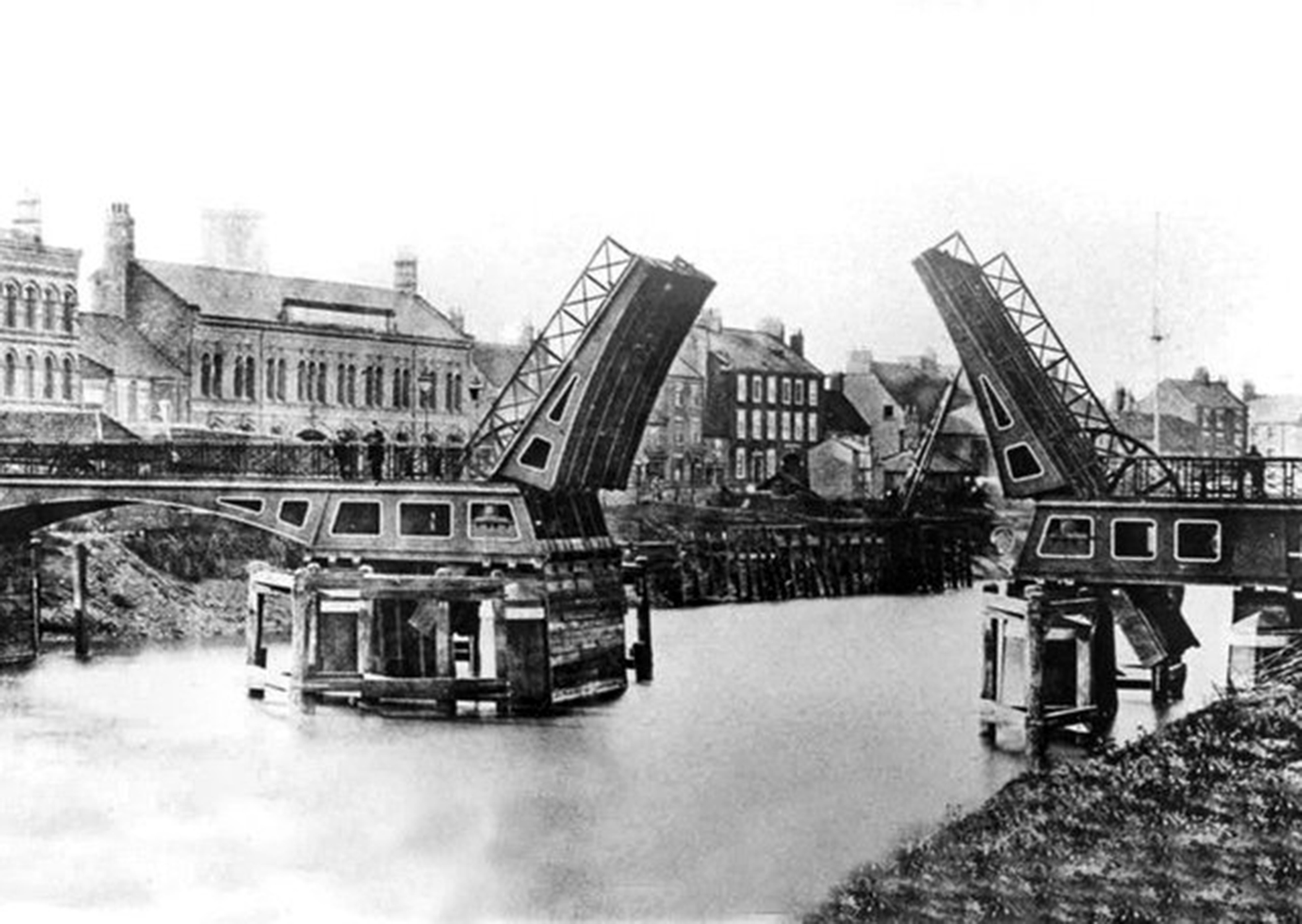 1 July 1840: The opening of the Hull and Selby Railway terminates the threat to Hull’s port from Goole, Scarborough and Bridlington
 28 November 1796: The Royal Navy seeks recruits among the seamen of Sculcoates, Cottingham and Little Weighton (ER)
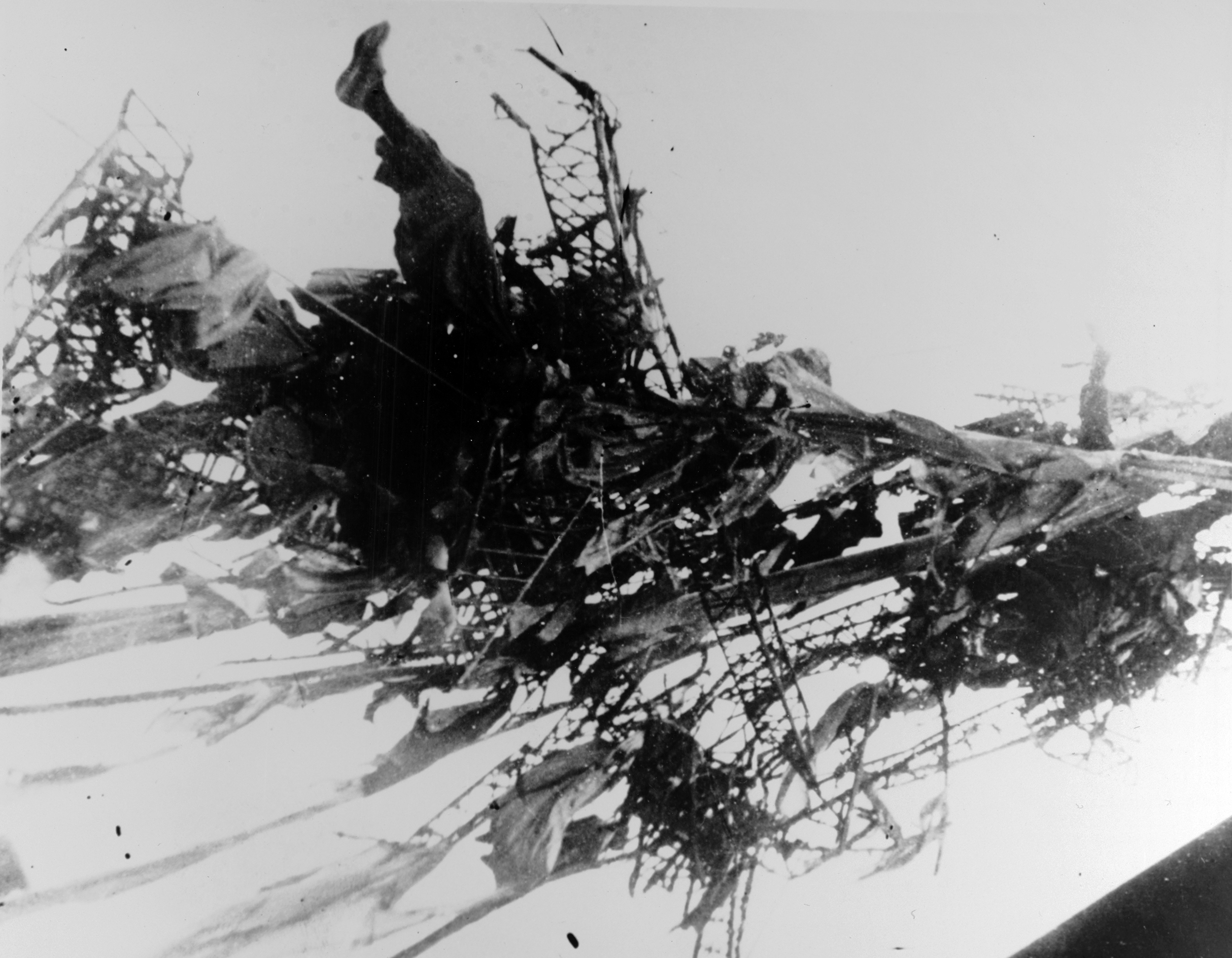 24 August 1921: The British-built United States Navy R.38 airship collapses, explodes, and crashes into the Humber at Hull, killing 44 of the 49 crew
 16 December 1914: The Imperial German Navy’s official report on the bombardment today of Scarborough by the southern cruiser group under Rear Admiral Tapken
 Reproduction through the blind benevolence of Leeds Other Paper (RIP).1 April 1979: Amid motorway mania in Leeds, West Yorkshire Council is today to reveal plans to link Chapeltown and Woodhouse by a ¼-mile suspension bridge across Meanwood Beck
Comment
Comment
Via Remember LOP, a feed by Tony Harcup which pays tribute to some splendid local journalism, unimaginable today.
Council sources claim the scheme was a victim of the first wave of cuts imposed by Margaret Thatcher following her General Election victory a month later.
Something to say? Get in touch
Search
Subscribe/buy
Donate
Music & books
Place-People-Play: Childcare (and the Kazookestra) on the Headingley/Weetwood borders next to Meanwood Park.
Music from and about Yorkshire by Leeds's Singing Organ-Grinder.
 RSS feed
 Bluesky
 Extwitter