14 November 1879: Alemayehu, orphaned son of the deposed Emperor Tewodros II of Ethiopia, dies at the Headingley home of his tutor at Rugby School, Professor Ransome
Members of Rugby School. 1879/12/02. In Memoriam. Meteor, Vol. 143. Rugby: Rugby School. Get it:
.Unedited excerpt
If an excerpt is used in the book, it will be shorter, edited and, where applicable, translated.
All Rugby was touched by the death of our old schoolfellow, ALAMAYU, Friday, November the fourteenth. He had been prayed for in chapel for some days, and more than once had been thought by the physicians to be sinking; but he had rallied three times, and his death was almost sudden at the last. He died at the house of Professor Ransome, at Headingley, near Leeds; having left Rugby on October the 6th, in perfect health. His death was due to pleurisy, the same illness that carried off Sharpe in 1875, and Sadler in 1877; and pleurisy was brought on by a chill, caught by needless exposure of himself to night air October 11th. His schoolfellows will remember that he was very good at football, plucky and enduring; and in his last illness his endurance and courage were very striking. He never once complained. He said within three days of his death to one who had seen much of him, “I am not afraid to die, but I do wish to live.” The only other wish he expressed, was, to be again a Rugby boy: adding, “I am not nineteen yet; and fellows do not leave till nineteen.”
Alamayu was born April 23, 1861, at Debra Tabor, high on the Abyssinian mountains east of Lake Tsana, now the capital of his father’s enemy, King John as he is now, Kasai as he was till the death of Theodore. The Abyssinians are Christians, and the Mussulman they regard as their natural enemy.
The Mother of Alamayu was Teruwark, daughter of Oobeay, Prince of Teegray, whom Theodore married in the most solemn way, after joint participation in the holy communion. Her death was very like her son’s; inflammation of the lungs, caused by cold: and she rallied in the same way; was extremely affected by changes of temperature in the same way; and died suddenly at last, May the 15th, 1878, accompanying her son to England. She was buried at Chelicut in Northern Abyssinia, in the same vault as her father’s father. She was little more than a child when her beauty and her intentness on her prayers caught the eye of Theodore in church; and she died young.
Alamayu came to England by his father’s desire, with Lord Napier of Magdala, who never lost sight of him, and had asked him to come this winter to Gibraltar. He was placed under the care of Captain Speedy, who spoke Amahric and had served under Theodore, and went with him to India and Penang. He was an inmate of Dr. Jex Blake’s family for the last eight years of his life; he spent two years in the Junior Department of Cheltenham College; three years as a member of Mr. Elsee’s house at Rugby, and one year at Sandhurst. He was treated with great kindness by the Queen; and by Her Majesty’s desire was buried at St. George’s Chapel, Windsor, with choral service exquisitely performed, November the 21st. The coffin bore the simple inscription:
PRINCE ALAMAYU,
Of Abyssinia,
Born April 22nd, 1861,
Died Nov. 13th 1879.


Comment
Comment
The obituary conveniently omits the fact that Alemayehu’s father Tewodros committed suicide after his defeat by the British, led by Napier, at the conclusion of the British Expedition to Abyssinia in 1868. Cyril Ransome had tutored him at Rugby, and he moved in with Ransome after dropping out of Sandhurst. He died five years before the birth of Arthur Ransome at 6 Ash Grove, Headingley, by which stage (and perhaps previously) Cyril was Professor of History and Literature at the Yorkshire College, the forerunner of Leeds University.
Something to say? Get in touch
Tags
Tags are assigned inclusively on the basis of an entry’s original text and any comment. You may find this confusing if you only read an entry excerpt.
- Alemayehu (1861-79) (1), son of Emperor Tewodros II and Empress Tiruwork Wube of Ethiopia W/G ·
- Amharic (1) W/G ·
- Battle of Magdala (1) W/G ·
- British Expedition to Abyssinia (1) W/G ·
- Christianity (9) W/G ·
- Ethiopia (1) W/G ·
- 📌Headingley (15) W/G ·
- Islam (5) W/G ·
- Pleurisy (1) W/G ·
- Queen Victoria (10) W/G ·
- Ransome, Arthur (1884-1967) (2), author of inter alia the Swallows and Amazons series, journalist W/G ·
- Ransome, Cyril (1851-1897) (2), tutor at Rugby School, professor of history at the Yorkshire College in Leeds, father of Arthur Ransome W/G ·
- Robert Napier, 1st Baron Napier of Magdala (1) W/G ·
- Royal Military College, Sandhurst (1) W/G ·
- Rugby School (3) W/G ·
- Speedy, Tristram (1836-1911) (1), "Captain Speedy," explorer and adventurer W/G ·
- St George’s Chapel, Windsor Castle (1) W/G ·
- Tewodros II (1818-68) (1), modernising, centralising Emperor of Ethiopia from 1855 until his suicide during deposition by the British in 1868 W/G ·
- Thomas Jex-Blake (2) W/G ·
- Tiruwork Wube (1) W/G ·
- University of Leeds (8) W/G ·
- Windsor Castle (1) W/G ·
- Yohannes IV (1) W/G ·
Comment
Comment
The obituary conveniently omits the fact that Alemayehu’s father Tewodros committed suicide after his defeat by the British, led by Napier, at the conclusion of the British Expedition to Abyssinia in 1868. Cyril Ransome had tutored him at Rugby, and he moved in with Ransome after dropping out of Sandhurst. He died five years before the birth of Arthur Ransome at 6 Ash Grove, Headingley, by which stage (and perhaps previously) Cyril was Professor of History and Literature at the Yorkshire College, the forerunner of Leeds University.
Something to say? Get in touch
Similar
 14 October 1854: During the Crimean War, Queen Victoria visits the docks at Hull, and comparisons are made with the capital of our Turkish ally
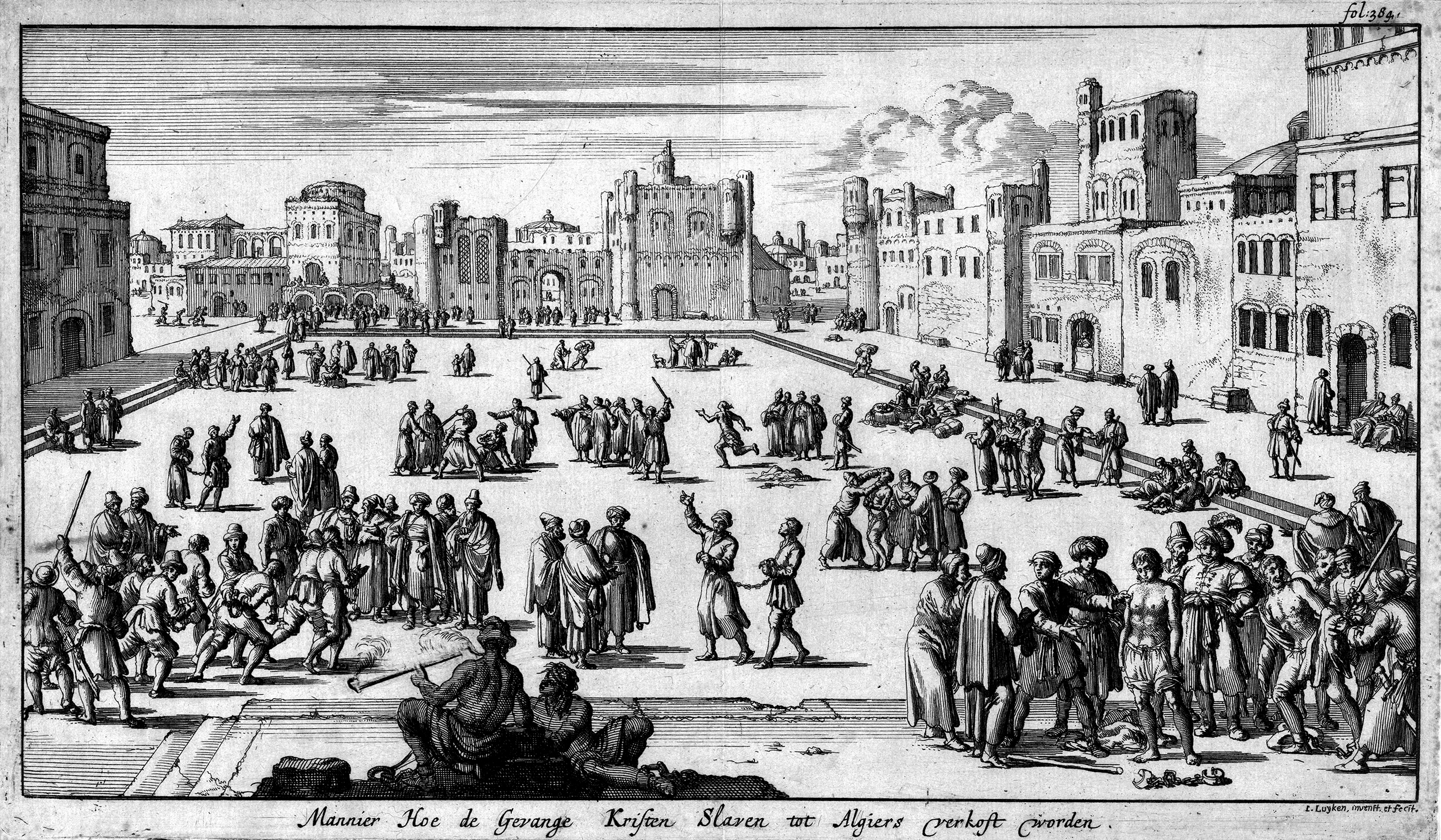 20 June 1681: A Leeds court hears of the enslavement by North African pirates of the son of Alderman Foxcroft
Comment
Comment
Via Chris Hobbs, who has traced some of Colgrave’s life and death, but doesn’t seem to have met with the following sensational account by Tim Carew of the events of 30 October 1914:
This preamble leads up to one story of what happened during the fighting round Messines.
A certain sector of the line became untenable, and the order came from the 3rd Cavalry Brigade for a general retirement. The orders did not reach Captain Forbes, commanding the Punjabi Mussulman Company of the 57th Rifles, and they were attacked frontally, from both flanks and surrounded. They fought back valiantly with bayonets, rifle butts, boots and fists, but Captain Forbes received severe wounds from which he subsequently died and Lieutenant Clarke was killed. A bare half company – some forty men in all – managed to escape.
All the Indian officers had become casualties, and there was no one above the rank of naik left alive in the company: the bugbear of jimmiwari was ruthlessly exposed.
Obeying some herd instinct the survivors sought the temporary shelter of a shell-torn barn, where they huddled together in miserable groups, awaiting what fate had in store for them.
It may seem that the conduct of these men was not entirely creditable. They had no British officers and no orders; they did not know where they were. But one and all had fought with the greatest gallantry against an enemy who had outnumbered them by something like ten to one; they were not afraid, they simply did not know what to do. They needed a leader, and they needed him quickly.
They were soon to get one, in the improbable shape of Corporal Colgrave of the 5th Lancers.
Colgrave was a Kiplingesque character. Once, a long time ago, he had been a Squadron Quartermaster-Sergeant. But a fondness for liquor, first in a trickle, and then in a rush, had brought him down. He claimed intimate acquaintance with General Allenby, which was true in a way because Allenby, when Commanding Officer of the 5th Lancers, had ‘busted’ Colgrave to the ranks.
Now Corporal Colgrave was climbing the weary promotion ladder once more. His officers had looked for qualities of leadership in him and looked in vain; it seemed almost certain that the two stripes he wore, precarious at that, represented the peak of his promotion prospects.
Colgrave and a squad of a dozen men had been looking after horses about a mile in rear of Messines, when an urgent order summoned them forward to a point in the line where the addition of thirteen more rifles would be of incalculable value. The barn on which they happened looked tempting, and Corporal Colgrave ordered five minutes’ halt for a smoke.
‘Got a fag, Corp?’ asked a trooper hopefully outside the barn. ‘Only got one,’ said Colgrave.
‘I only want one.’
‘Less of your lip. Get inside.’
Corporal Colgrave had done many years’ service in India, and regaled newly-joined young soldiers with largely untrue stories of gory encounters on the North-West Frontier against the wily ‘Paythan’, massive commercial deals in bazaars and gargantuan copulation in native brothels. Like many another vintage British soldier, he was firmly convinced that he was a fluent speaker of Hindustani.
The Lancers entered the barn and gazed upon forty miserable Indian faces; when he is really downcast, no race of man can wear a darker mask of woe than an Indian.
‘Blimey, what a bunch,’ said the corporal; then loudly, ‘Sab thik hai idher?’
Clearly, everything was very far from being ‘thik‘. The Indians eyed him warily and without enthusiasm. On the other hand, although he was not a Sahib he had a white face and wore the two stripes of a naik and might take on the jimmiwari.
‘Kis waste this ‘ere? asked Colgrave. ‘Sahib kidher hai?’
‘Sahib margya,’ said a dozen sad voices.
‘Well, blimey,’ said Colgrave, in trouble with the language already, ‘you want to marrow the fuckin’ Germans, don’t you, malum?’
The idea was beginning to catch on. ‘Jee-han!’ said a dozen voices.
Corporal Colgrave winked at the other Lancers, one of whom was heard to say ‘old Charlie fancies ‘isself as a fuckin’ general’.
Smiles were beginning to appear on downcast brown faces; there was something about the gamey, ribald approach of Corporal Colgrave which seemed to be a positive denial of defeat. Murderous shelling, which had blown men to pieces and buried men alive, had taken some of the heart out of the Punjabi Mussulmans, but Colgrave was putting it back.
‘Right, then, you miserable-looking lot of buggers,’ said Corporal Colgrave with affection, ‘idher ao: Abhi wapas, got it? Marrow all the German soors. Abhi thik hai?’
‘Thik hai!’ said forty voices in unison.
‘Achi bat. Now, then, who’s going to win the bleedin’ V.C.? Chalo!’
And so thirteen Lancers went into the line, with the priceless addition of forty by now one-hundred-per-cent belligerent Indians, and that particular sector of line was held for the next twenty-four hours.
(Carew 1974)
Carew’s footnote:
Some sort of glossary of this strange conversation is required. Sab thik hai idher is ‘everything all right here?’ (clearly it was not); margya is dead; malum, literally translated, means ‘know’; jee-han is ‘yes’; idher ao is ‘come here’; abhi wapas roughly means ‘we are going back now’; achi bat, in the language of a British N.C.O., can be construed as ‘right, then’; chalo, literally translated means ‘dive’, but in this context can be taken as meaning ‘let’s go’; ‘kis waste this ‘ere’ almost explains itself – it is ‘what’s going on here, then?’, the rhetorical question asked by English policemen in almost any circumstance.
Who was his source? Not everybody trusts him!
Ciarán Byrne says that Colgrave’s band were also from the 129th Baluchis, but I trust Carew more. I think that, in General Willcocks’s discussion of the 57th at Hollebeke, Colgrave is the officer referred to here:
It is instructive to read in the reports that some of the men in Messines “had the good fortune” to come across an officer who spoke Hindustani, and was thus able to direct them to rejoin their Headquarters (Willcocks 1920).
Khudadad Khan of the 129th Baluchis won a VC on the following day:
In October 1914, when the Germans launched the First Battle of Ypres, the newly arrived 129th Baluchis were rushed to the frontline to support the hard-pressed British troops. On 31 October, two companies of the Baluchis bore the brunt of the main German attack near the village of Gheluvelt in Hollebeke Sector. The out-numbered Baluchis fought gallantly but were overwhelmed after suffering heavy casualties. Sepoy Khudadad Khan’s machine-gun team, along with one other, kept their guns in action throughout the day, preventing the Germans from making the final breakthrough. The other gun was disabled by a shell and eventually, Khudadad Khan’s own team was overrun. All the men were killed by bullets or bayonets except Khudadad Khan who, despite being badly wounded, had continued working his gun. He was left for dead by the enemy but managed to crawl back to his regiment during the night. Thanks to his bravery, and that of his fellow Baluchis, the Germans were held up just long enough for Indian and British reinforcements to arrive. They strengthened the line, and prevented the German Army from reaching the vital ports; Khan was awarded the Victoria Cross.
Khan also figures in Carew.
Michael Keary has some excellent excerpts from the letters of Henry D’Urban Keary, who commanded an Indian Division on the Western Front, e.g.
Douglas Haig and French hate the Indian Army and want to get rid of the whole thing… No recognition of anything good … I think no-one in the Indian Corps feels safe or induced to do his best… I suppose this is the penalty for going into the Indian Army and having the bad luck to be sent to France where we are in a minority, rather than to Egypt or Dardanelles where they are equal or a majority (Keary 2021).
Something to say? Get in touch
Search
Subscribe/buy
Donate
Music & books
Place-People-Play: Childcare (and the Kazookestra) on the Headingley/Weetwood borders next to Meanwood Park.
Music from and about Yorkshire by Leeds's Singing Organ-Grinder.
 RSS feed
 Bluesky
 Extwitter